
Most sixteen-year-olds discover technology by using it. Aditi Razdan discovered it by asking a different question: who is it leaving behind?
That question first led her to build HAVN, a nonprofit supporting migrant workers in Singapore. It has since taken her into machine learning research at Nanyang Technological University and to the front of a movement bringing more girls into computer science. The settings change. The question does not.
From Goodies Bags to a Social Movement
When Aditi started HAVN, she was handing out small goodies and food at a dormitory, unsure where it would lead. Dormitory managers were not used to being approached by a teenager with a social mission. But she kept showing up, and the doors began to open. What she built over time was not a charity drop-off. It was a platform designed around a principle she returns to again and again: listen first, then act.
That principle was tested the moment she launched the Havn app on the Apple App Store. The platform lets migrant workers articulate their needs directly and donors respond. But after launch, Aditi discovered that most migrant workers carry Android devices, not iPhones. The app she had spent months building could not reach the people it was designed for. "It was a good reminder," she has said. "Our purpose is to help where and when they need, versus our version of their need." The team pivoted, consolidating needs through available iOS devices while beginning work on an Android version.
Then something shifted. After HAVN's Diwali Carnival drew media attention across Singapore, the Dormitories Association of Singapore invited her to partner at the Woodlands Recreation Centre, where 25,000 to 30,000 workers gather every week. College medical students from NTU saw her programs and asked to collaborate on mental wellness, a gap Aditi had identified through years of working directly with workers. The first joint event drew hundreds of walk-ins. At the start, there was awkwardness on both sides. But with the help of local interpreters, the workers opened up, and the organizers asked to expand the program, bringing in doctors and health professionals.
HAVN now operates as a connector as much as a coordinator. Student teams from Raffles School run digital literacy workshops on scam prevention. Students from Hwa Chong Institution produce video spotlights sharing workers' stories. Just last week, a secondary school approached asking how they could educate their students about migrant worker issues and help integrate them into the social fabric of Singapore. That, Aditi says, was exactly the intent from the beginning: to create the spark. Ownership is distributed across teams. The younger students she has trained now lead their own sessions. What started as a personal passion has become a platform that others build on top of.
Teaching Machines to See What Employers Miss
Aditi's work with migrant workers showed her what happens when vulnerable communities go unnoticed. Her most recent research asks whether technology can be built to notice before it is too late.
She approached Professor Vivek Choudhary at NTU with an idea: a machine learning system that could detect early signs of burnout and safety risks among gig economy drivers and trigger interventions before a crisis unfolds. The system generates a well-being score for each driver from 0 to 100, weighted across physical fatigue risk, mental stress risk, and safety risk. It draws on variables including shift duration, orders per hour, night-shift status, consecutive days worked, self-reported sleep and stress, near-miss incidents, harsh braking events, and income relative to target.
One finding caught her off guard. The model showed that longer rest durations, which seem like an obvious intervention, can actually increase stress. For gig workers paid by the delivery, time off the road means lost income. Rest becomes a source of anxiety rather than relief. It was exactly the kind of tension that drew Aditi to this work. "They are both underrepresented communities who face similar struggles," she has said of gig workers and migrant workers. "High occupational and financial stress, and some level of invisibility."
Making the Room Look Different
The instinct to build for people who have been left out started closer to home.
When Aditi first entered her computer science classes, she was one of three girls in a room of thirty. At home, tech felt like her older brother's territory. At school, the numbers said the same thing. "It felt intimidating," she has said. "And I did not want other girls to feel like coding was not something they were capable of, or that it was a guy thing."
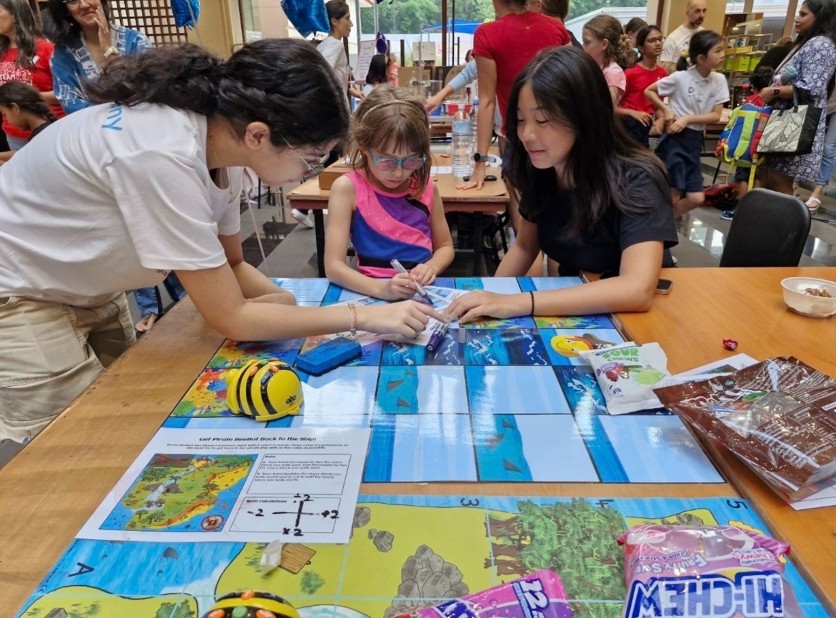
Now the elected President of Girls Who Code at Singapore American School, Aditi has led three hackathons serving over 120 students and built an eight-module curriculum covering Python and web design, taking students from zero experience to working fluency. She has mentored more than ten girls and taught over twenty underprivileged children at a local recreational center, where kids are being exposed to technology for the first time. Watching them discover something they are passionate about, she says, is the most rewarding part of the work.
What she notices most is the pattern at the start. Girls often arrive because their parents made them. But over time, almost without exception, they fall in love with it. That arc, from reluctance to ownership, is one Aditi knows personally. She was not born into this. She chose it, and she has spent the years since making sure the choice is available to others.
The Thread That Holds It Together
Technology, in Aditi's hands, is never the destination. It is the lever. Whether she is building platforms that let migrant workers speak for themselves, training algorithms to notice when a gig driver is breaking down, or designing curricula that bring girls into rooms they were never invited to, the logic is the same. She starts with the people. She works backward in the system. And then she builds. And she builds for social justice.
ⓒ 2026 TECHTIMES.com All rights reserved. Do not reproduce without permission.


