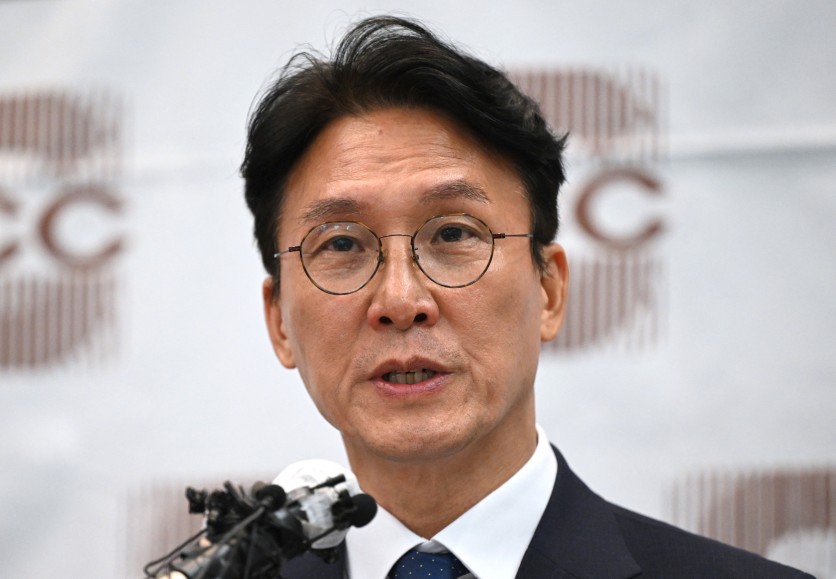
South Korea's government issued its starkest warning yet against a Samsung Electronics strike on Sunday, with Prime Minister Kim Min-seok publicly threatening to invoke emergency arbitration — a legal mechanism used only four times since 1963 — if labor and management fail to reach a deal. Hours later, on Monday, the Suwon District Court handed Samsung a partial legal win, ordering the union to maintain full safety staffing and wafer-protection operations throughout any walkout. The court's ruling does not ban the strike, but it significantly narrows what a stoppage could accomplish.
Both developments arrive as the two sides sit down today at the National Labor Relations Commission in Sejong for what the prime minister called "the last opportunity" to avert an 18-day general strike scheduled to begin Thursday, May 21.
What the Court Ruled and What It Does Not Block
The Suwon District Court partially accepted an injunction request that Samsung had filed on April 16. Under the ruling, the Samsung Electronics Company Union and its chair, Choi Seung-ho, are barred from interfering with safety protection facilities or work required to prevent facility damage and wafer deterioration. They are also prohibited from occupying company premises, installing locks, or blocking employees from entering during any period of industrial action.
The court stopped short of banning the strike itself. An estimated 50,000 union members — out of a membership now exceeding 90,000, or more than 70% of Samsung's South Korean workforce — are still expected to walk out Thursday if today's talks collapse.
The Numbers Behind the Government's Alarm
Prime Minister Kim placed a specific figure on what a strike would cost. A single day of suspension at Samsung's semiconductor fabrication lines would produce direct losses of up to 1 trillion won, roughly $668 million, he said after convening an emergency ministerial meeting on Sunday. A prolonged stoppage — one that forces materials to be discarded mid-process — could balloon total economic damage to 100 trillion won, approximately $67 billion, once supply-chain disruptions and broader economic effects are included.
Finance Minister Koo Yun-cheol said earlier this week that a strike "must be avoided at all costs," while Industry Minister Kim Jung-kwan warned that wafer-processing cycles run more than five months, making the consequences of a full shutdown "irreversible." Samsung accounts for 22.8% of South Korea's total exports.
What the Dispute Is Actually About
The walkout has been in preparation since Samsung's first-ever strike, which lasted 25 days in 2024 and ended without the structural bonus reform the union sought. The current dispute is larger and angrier. The union, which has grown from 32,000 members in 2024 to more than 90,000 today, is demanding that Samsung scrap its existing cap on performance bonuses — currently set at 50% of base salary — and commit in writing to allocating 15% of annual operating profit into the employee bonus pool.
Samsung's 2026 operating profit is projected by market analysts at roughly 300 trillion won. Under the union's formula, that would translate to per-employee semiconductor-division bonuses approaching 600 million won, or about $408,000. Management has proposed a 10% operating-profit pool alongside a special one-time reward tied to the DS division reclaiming domestic first place — a condition the union has dismissed as a ceiling in disguise.
The fracture was deepened by events the union sees as evidence of structural unfairness. In 2024, Samsung paid zero performance bonuses after its chip division posted operating losses throughout the memory downturn. The AI-driven recovery produced a Q1 2026 operating profit increase of nearly eightfold to a record, yet workers again received no portion of that windfall under the existing system. Over the same period, rival SK Hynix eliminated its bonus cap in September 2025, and per-capita bonuses at SK Hynix are now projected to reach 700 million won in 2026 — more than double Samsung's. Union chair Choi Seung-ho told reporters that roughly 200 Samsung engineers have left for SK Hynix in the past four months alone.
Samsung's Escalating Concessions — and Their Limits
Samsung has mounted an unusually visible campaign to reset the talks since negotiations collapsed in the early hours of May 13 after nearly 17 hours at the commission. Eighteen division presidents issued a joint apology on May 15. Senior executives from the Device Solutions division traveled in person to the union's Pyeongtaek office the same day. On May 16, Chairman Lee Jae-yong stepped off a flight from Japan and, before reporters at Seoul's Gimpo Business Aviation Center, bowed his head in public apology for causing concern over the company's "internal" issues. Samsung also replaced its chief negotiator before Monday's session.
Management's substantive position, however, has not shifted. The company continues to oppose permanently removing the bonus cap, arguing that binding a fixed ratio of profit to compensation would be "unsustainable long-term" given the semiconductor industry's earnings volatility and the 60–70 trillion won investment requirements per fabrication plant.
Labor Groups Push Back Against Emergency Arbitration
The government's arbitration threat has drawn sharp criticism from organized labor beyond Samsung's own union. The Federation of Korean Trade Unions, South Korea's largest labor federation, said Sunday that invoking emergency arbitration based on inflated economic damage estimates would only deepen tensions. The dispute "should not be reduced to excessive demands by highly paid workers, but should prompt broader discussion about how corporate profits are shared among workers, suppliers and society," the federation said, pushing back against portrayals of Samsung's chip workers as an "aristocratic" labor group.
Under South Korean labor law, emergency arbitration can only be invoked after a strike begins, not before. Once invoked, all industrial action is prohibited for 30 days while the National Labor Relations Commission conducts mediation and binding arbitration. The measure was last used in December 2005 during pilot strikes at Korean Air and Asiana Airlines.
Global Supply Chain Risk and the Cost to Consumers
The stakes extend well beyond Korea. Samsung holds approximately 36% of global DRAM production and 28% of NAND output. Alongside SK Hynix and Micron, it is one of three companies that produce high-bandwidth memory — the chips that AI data centers cannot run without. A one-day work action in April already reduced Samsung's memory fabrication output by 18% on the affected shift and dropped contract foundry production by 58%.
The American Chamber of Commerce in Korea, in its first-ever formal statement on a Samsung labor dispute, warned that any significant production disruption could "place additional strain on the global memory semiconductor market" and that competing regional manufacturing hubs stand to benefit from procurement diversification away from Korea.
KB Securities analyst Kim Dong-won has noted that restarting Samsung's highly automated production lines after an 18-day shutdown requires an additional two to three weeks of stabilization work — stretching the effective production gap to roughly six weeks. JPMorgan estimates total losses at 26–43 trillion won if the strike proceeds as planned.
For consumers, that disruption has a direct price tag. Major PC manufacturers including Lenovo, Dell, HP, Acer, and Asus have already warned of price increases of 15–20% in the second half of 2026, with Asus projecting increases of up to 30% on some laptop lines. Smartphone prices are projected to rise 13% by year-end compared with 2025 levels, according to Gartner. Buyers who can act before Q3 2026 face significantly lower prices than those who wait.
What Happens Next
If today's mediation session ends without agreement, the union has stated it will proceed with the 18-day walkout starting Thursday. The government can invoke emergency arbitration only after the strike begins — meaning the initial hours of any walkout are unprotected. South Korean President Lee Jae Myung posted on X today calling for both labor and management rights to be respected, adding that "excess is not beneficial; extremes lead to reversal."
The outcome will determine how much of the global AI memory supply is disrupted at a moment when the market is already critically tight, DRAM contract prices surged 90–95% in Q1 2026, and Samsung's entire 2026 production run is reportedly pre-contracted and sold out. Whether Seoul ultimately uses a measure it has not reached for in two decades — and whether that use holds up against the labor-rights challenge the Federation of Korean Trade Unions has already signaled — will be answered within days.
ⓒ 2026 TECHTIMES.com All rights reserved. Do not reproduce without permission.


