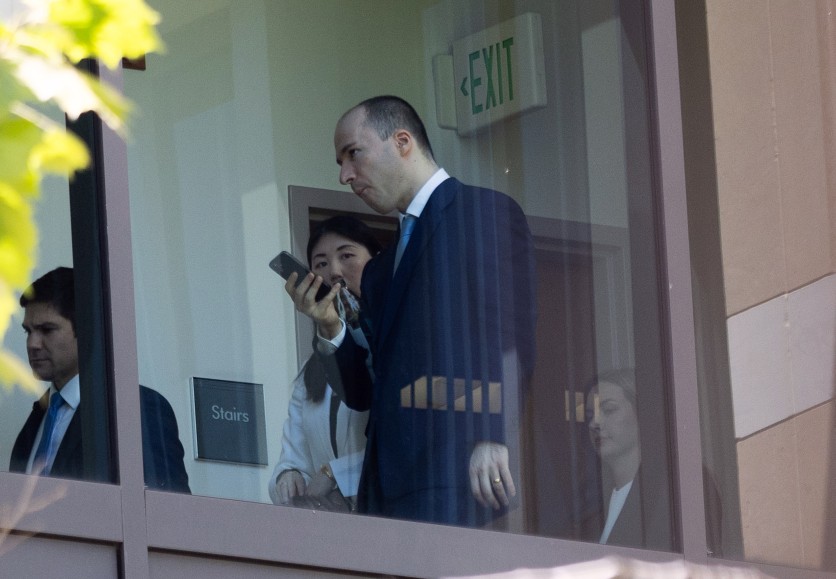
A nine-person jury in Oakland began deliberating Monday in the most consequential corporate governance trial in the history of American artificial intelligence, weighing whether OpenAI CEO Sam Altman and president Greg Brockman violated charitable-trust law when they converted a nonprofit AI research lab into an $852 billion public benefit corporation — and, in doing so, whether the safety obligations that currently bind that company to protect its users would survive a ruling in Musk's favor or quietly dissolve in a fully commercial restructure.
The answer to that question matters to every one of the more than 700 million people who use ChatGPT each week. A ruling for Musk that forces the unwinding of OpenAI's October 2025 recapitalization would introduce immediate uncertainty over the company's governance, its ability to raise capital for a projected IPO near a $1 trillion valuation, and the enforceability of the safety conditions California Attorney General Rob Bonta extracted from the company as a condition of approving that restructuring. A ruling for OpenAI, by contrast, would set a precedent making it far harder for any future donor to challenge a nonprofit AI lab's conversion to commercial status.
The First Question the Jury Must Answer Is Whether Musk Can Ask the Question at All
Before the jury reaches the substance of Musk's claims — that Altman and Brockman breached the charitable trust he established with approximately $44 million in donations between 2015 and 2017, and that both men unjustly enriched themselves through OpenAI's commercial transformation — it must first resolve a threshold standing question: did Musk file his lawsuit within the statutory time limit?
Musk departed OpenAI's board in 2018. He did not file suit until 2024 — a six-year gap his own lawyers acknowledge they must explain. Judge Yvonne Gonzalez Rogers ruled that the jury's finding on this point would be advisory, but said she would very likely follow its recommendation. Most charitable-trust legal scholars are skeptical that the standing question survives. Under American charitable-trust doctrine, the power to police donor intent typically rests with state attorneys general, not with individual donors. The California attorney general declined to join Musk's suit and said the action did not serve the public interest. If the jury finds the claims time-barred, the case ends without reaching the merits and OpenAI's restructuring stands.
The Evidence That Got the Case to Trial
If the case survives the standing hurdle, the jury will weigh two civil claims: breach of charitable trust and unjust enrichment. The most damaging piece of evidence for OpenAI is not an email from Altman. It is a personal journal entry by Brockman, written in November 2017 after a meeting with co-founder Ilya Sutskever. The entry reads: "Cannot say we are committed to the non-profit... if three months later we're doing b-corp then it was a lie." Judge Gonzalez Rogers cited that entry directly in her January 2026 ruling that allowed the case to proceed to trial, finding what she described as "ample evidence" and rejecting nearly every OpenAI motion to dismiss.
Three weeks of testimony produced a parade of Silicon Valley figures — Altman, Brockman, Microsoft CEO Satya Nadella, former OpenAI chief scientist Ilya Sutskever, and Musk himself, who testified over three days — and reduced to two competing summary readings: that Altman and Brockman "stole a charity," as Musk's lead counsel Steven Molo told the jury, or that Musk "didn't get his way at OpenAI," as OpenAI attorney William Savitt framed it. Savitt also told jurors that Musk was not present for closing arguments — he was in Beijing as part of President Trump's state-visit delegation — and used the absence pointedly: "Mr. Musk isn't here today — my clients are here. They're here because they care about this."
What Musk Is Seeking — and What the Judge Thinks of It
Musk is asking Judge Gonzalez Rogers to remove Altman and Brockman from their leadership roles, unwind the October 2025 recapitalization that converted OpenAI into a public benefit corporation with Microsoft holding a 27 percent stake, and direct up to $134 billion in disgorgement from OpenAI and Microsoft to OpenAI's nonprofit foundation. On the stand, Musk renounced any personal financial benefit from the case, framing the relief as a restoration of the charitable mission he said Altman and Brockman betrayed. "If we make it okay to loot a charity," Musk told the jury, "the entire foundation of charitable giving in America will be destroyed."
The $134 billion figure, however, faces a significant obstacle independent of the liability question. At a March 2026 pretrial hearing, Gonzalez Rogers expressed open skepticism about the damages theory, calling it unconvincing. OpenAI has projected losses of $14 billion in 2026. The simultaneous remedies phase that opened Monday — heard by Gonzalez Rogers alone, without jury input — will determine what penalties, if any, follow a liability finding.
OpenAI's Defense: Musk Wanted Control, Not Charity
OpenAI's attorneys offered a competing account. Sarah Eddy told the jury that Altman and Brockman never made legally binding commitments to Musk about corporate structure, and that his donations carried no enforceable conditions. She pointed to evidence in the court record showing that Musk himself had pushed, as early as 2017, to create a for-profit subsidiary — on the condition that he control it. When that demand was refused, he left the board in 2018. Four years later, he founded his own AI company, xAI. A year after that, he filed suit. "He wanted dominion over AGI," Eddy told the jury. "That's why this was such a high-stakes conversation."
Altman's own testimony described Musk's 2018 departure as both disruptive and, for many employees, a relief. He testified that Musk had proposed the company eventually pass to his children upon his death — a prospect Altman said he found alarming. Microsoft attorney Russell Cohen added that the tech giant had been "a responsible partner at every step" and had no knowledge of conditions Musk may have placed on his charitable contributions.
The Witnesses Who Complicated Both Sides
The trial drew testimony that cut against both parties. Ilya Sutskever — who co-founded OpenAI and played a central role in Altman's brief ouster from the CEO position in November 2023 — testified that he had spent months gathering evidence of what he called Altman's pattern of deception before voting to remove him, then later reversed that vote and said he regretted reinstating Altman. Altman, under cross-examination from Musk's attorney Steven Molo, was asked: "Are you completely trustworthy?" He answered that he believed he was, though he acknowledged he had "told the occasional lie." Molo later told jurors that five witnesses — including Musk, former board members, and Sutskever — had described Altman as dishonest.
Former OpenAI board member Shivon Zilis, the mother of four of Musk's children, was called by OpenAI to testify. Her testimony did not corroborate Musk's account of the founding commitments. Eddy used that fact in closing, telling the jury that "even the mother of his children" could not back Musk's version of events.
Why the Safety Architecture Hanging Over This Case Matters to Users
The nonprofit obligations underlying this trial are not abstract. California Attorney General Bonta's October 2025 agreement with OpenAI requires the company to mitigate risks to teenagers and maintain AI safety oversight provisions — obligations that exist specifically because the nonprofit structure survived the recapitalization. A complete unwinding of that structure, as Musk requests, would not automatically preserve those conditions. An advisory verdict is not a binding one, and the remedies available to Gonzalez Rogers are constrained by law, but the governance architecture this case builds around charitable-trust enforcement will determine whether future AI labs converting from nonprofit status face any meaningful legal accountability at all.
That is why the case has been described by both sides, with rare agreement, as one that will define AI governance for a decade. In April 2025, twelve former OpenAI employees — represented by Harvard law professor Lawrence Lessig — filed an amicus brief stating that the company had abandoned its nonprofit roots and that Altman was "a person of low integrity who had directly lied to employees." Rose Chan Loui, founding executive director of the Lowell Milken Center on Philanthropy and Nonprofits at UCLA Law School, said the conversion amounts to "a change of purpose" requiring court approval. Anthropic — which, like OpenAI, began with a mission-driven structure — has watched the proceedings closely. So have AI governance regulators around the world.
What a Verdict Could Change for 700 Million Users — and What It Cannot
An advisory verdict for Musk could arrive as early as this week. It would not, by itself, remove Altman from his job — that determination rests with Gonzalez Rogers in the remedies phase. It would not automatically unwind Microsoft's $13 billion investment or freeze the IPO path. What it would establish — or foreclose — is whether the courts are prepared to treat nonprofit-to-profit conversions in AI as a category of corporate conduct subject to legal challenge by past donors and the public they originally served.
If the jury finds for OpenAI or rules the claims time-barred, the company's current trajectory continues: a public benefit corporation valued between $500 billion and $1 trillion, with a nonprofit foundation holding approximately 26 percent, preparing for a public market debut. If the jury finds for Musk and Gonzalez Rogers follows, the legal architecture OpenAI built during the most expensive AI arms race in history faces a court-ordered unwinding — and the question of who governs the world's most widely used AI platform returns to a judge in Oakland.
ⓒ 2026 TECHTIMES.com All rights reserved. Do not reproduce without permission.


