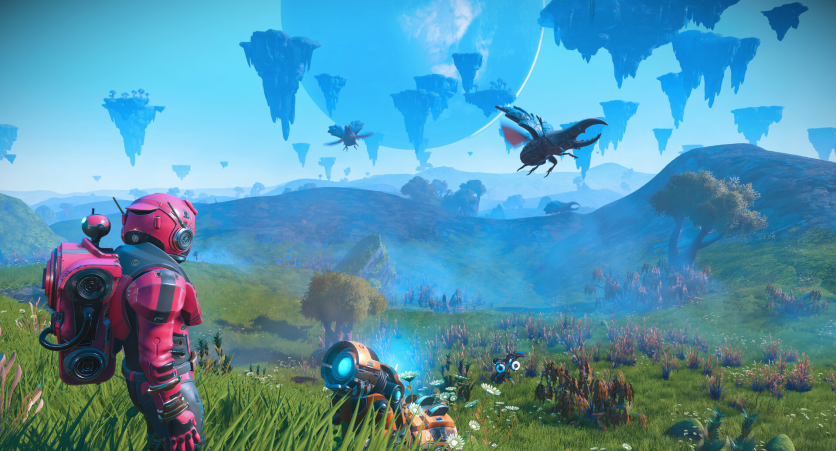
"No Man's Sky" in 2026 continues to stand out as a space exploration game built around freedom, scale, and player-driven discovery, offering one of the largest sandbox experiences available today.
The appeal of "No Man's Sky" gameplay comes from how it lets players choose their own path, whether that means exploring unknown planets, building bases, trading resources, or playing cooperatively with friends.
Instead of following a strict storyline, the game encourages experimentation, making it a flexible space sandbox where progress is defined by personal goals rather than fixed objectives.
For new players, "No Man's Sky" in 2026 represents more than just an updated survival title—it is an evolving universe shaped by years of improvements and expansions. The experience can shift from calm exploration to structured missions or large-scale fleet management depending on how the player engages with it.
This makes it especially appealing for those curious about open world exploration that doesn't force a single playstyle. Understanding how the game works today is key to deciding whether it fits a player's expectations.
What New Players Can Do In 'No Man's Sky'
"No Man's Sky" gives new players a massive universe to step into, where nearly every planet, system, and encounter can feel different. The game blends exploration, survival, and creativity in a way that lets players decide their own pace from the very beginning.
Instead of following a rigid storyline, "No Man's Sky" gameplay focuses on freedom, discovery, and long-term progression inside a living space sandbox.
- Explore planets at their own pace: Players can land on countless procedurally generated worlds, scan alien creatures, catalog plants, mine resources, and uncover rare materials, all while shaping their own path through open world exploration without fixed objectives or time pressure.
- Follow a guided introduction system: A structured early-game tutorial gradually introduces survival mechanics, crafting systems, space travel, and resource management, helping new players avoid confusion while still learning at a natural pace.
- Build bases and settlements: Base building allows players to construct everything from small survival shelters to large industrial hubs, farming stations, or fully developed colonies across different planets, each serving a practical or creative purpose in the sandbox game.
- Customize and pilot ships: Players can acquire, upgrade, and fully customize multiple ships, improving speed, storage, and combat ability, while also enjoying the freedom to travel seamlessly between planets and star systems in the space sandbox.
- Manage fleets and freighters: Large freighters act as mobile headquarters where players can store resources, manage frigate fleets, and send AI-controlled missions across the galaxy to earn rewards and expand interstellar influence.
- Engage in diverse activities: Beyond exploration and combat, players can trade goods, mine rare elements, hunt space pirates, cook alien recipes, dive into underwater environments, and even salvage crashed ships, making No Man's Sky in 2026 a constantly varied experience.
Why 'No Man's Sky' Still Feels Worth It In 2026
"No Man's Sky" in 2026 remains relevant because its space exploration game structure delivers unmatched scale and variety. Players can shift from scanning alien ecosystems to building bases or traveling between star systems without ever leaving the same universe. This seamless design keeps "No Man's Sky" gameplay engaging for those who enjoy long-term progression inside a living sandbox world.
Another reason it still holds value is its open-ended design philosophy. Instead of following a linear campaign, players shape their own experience inside a space sandbox where creativity and curiosity matter more than strict objectives. This makes the game feel more like a personal journey than a traditional RPG or action title.
The game also thrives on imagination and flexibility. Whether playing solo or in co-op exploration, players can set their own goals, from collecting rare ships to building massive bases or simply traveling through galaxies. That freedom is a major reason why "No Man's Sky" continues to attract new players even years after release.
Who Will Enjoy It Most
"No Man's Sky" gameplay is best suited for players who enjoy self-directed progression rather than structured missions. Those who appreciate open world exploration, creative building, or relaxed space travel will likely find the experience rewarding. The game works especially well for players who like setting personal goals instead of following strict objectives.
However, players who prefer fast-paced combat or tightly scripted storytelling may find "No Man's Sky" in 2026 slower than expected. While there are action elements, the focus remains on exploration and long-term progression rather than constant intensity. This makes it more of a relaxed space sandbox than a traditional action game.
Community support also plays a big role in the experience. The player base remains active, sharing discoveries, guides, and co-op exploration opportunities that help new players adjust more easily. This social layer enhances the game's longevity and keeps the universe feeling alive.
A Living Universe Built For Exploration
"No Man's Sky" in 2026 continues to prove its value as a space exploration game that prioritizes freedom, creativity, and long-term discovery over linear storytelling. Its mix of exploration, building, fleet management, and co-op exploration creates a flexible sandbox where every player can shape a different journey.
The strength of "No Man's Sky" gameplay lies in its ability to adapt to different playstyles, making it one of the most versatile open world exploration experiences available today. For new players, it remains a strong choice for anyone seeking a vast space sandbox where curiosity defines progress.
Frequently Asked Questions
1. Is "No Man's Sky" beginner-friendly in 2026?
Yes, the game includes a long guided introduction that helps new players understand survival, crafting, and exploration systems. It eases players into "No Man's Sky" gameplay without overwhelming them. The learning curve is manageable compared to many other space exploration games. Over time, players naturally adapt to its sandbox structure.
2. Does "No Man's Sky" have multiplayer or co-op exploration?
Yes, the game supports co-op exploration where players can meet, build together, and explore planets as a team. This adds a social layer to the space sandbox experience. Players can share discoveries or work on large base projects together. Multiplayer enhances long-term replay value significantly.
3. What makes "No Man's Sky" different from other space exploration games?
Its main difference is scale and freedom, allowing players to explore nearly infinite planets without strict progression limits. Unlike many RPG-style games, it focuses more on discovery than combat or story. The open world exploration structure gives players full control over their journey. This flexibility makes it stand out in the genre.
4. Can "No Man's Sky" be played casually?
Yes, it can be played in short or long sessions depending on the player's preference. Many players enjoy it as a relaxing sandbox game focused on exploration and building. There is no pressure to complete objectives quickly or competitively. This makes it ideal for casual gaming and long-term play.
Originally published on gamenguide.com
© 2026 Game & Guide All rights reserved. Do not reproduce without permission.


