The U.S. Department of Commerce announced on May 21, 2026, that it will distribute $2.013 billion in CHIPS Act incentives across nine quantum computing companies — and, as a condition of each award, take a minority equity stake in every recipient. The announcement, administered through the National Institute of Standards and Technology (NIST), is the largest single federal intervention in the quantum computing industry to date and extends an industrial-policy model first applied to Intel in August 2025 to an entirely new sector of the technology economy.
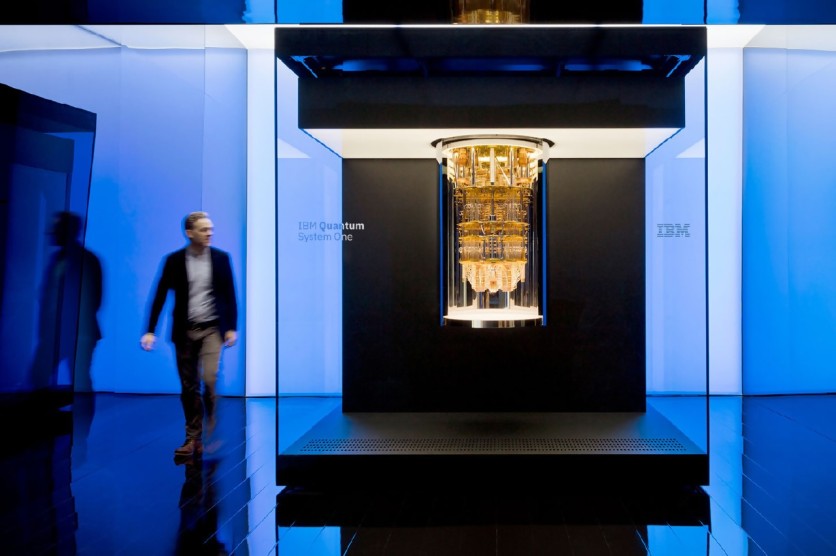
IBM is the anchor recipient: the company will receive $1 billion in proposed CHIPS incentives to launch Anderon, a new standalone subsidiary that IBM describes as America's first pure-play quantum wafer foundry. IBM is matching the federal commitment dollar-for-dollar — contributing $1 billion in cash alongside intellectual property, assets, and staff — and said it expects outside investors to join as Anderon scales.
Anderon: Albany Foundry Targets Superconducting Qubits First
Anderon will be headquartered in Albany, New York, and operate as a 300-millimeter quantum wafer foundry — the same wafer format used in leading classical semiconductor fabrication. IBM said the foundry will initially focus on superconducting qubit wafers before expanding to other quantum architectures, and framed its ambition explicitly: the company wants to position the United States to manufacture most of the world's quantum wafers. IBM cited an industry estimate projecting the quantum sector could generate up to $850 billion in economic value by 2040 — a figure drawn from IBM's own planning materials. The company reaffirmed its target of delivering a fault-tolerant, commercially viable quantum computer by 2029.
Bill Frauenhofer, the CHIPS Research and Development Office's executive director for semiconductor investment and innovation, said the office is taking a portfolio approach "to strengthen and accelerate U.S. leadership across multiple quantum modalities while focusing each award on discrete technological problems of genuine consequence."
Eight Other Companies, Eight Competing Approaches
The remaining $1.013 billion is distributed across eight companies spanning every major quantum hardware modality:
- GlobalFoundries — $375 million to build a secure multi-modality quantum foundry
- D-Wave Quantum, Rigetti Computing, Infleqtion, PsiQuantum, Quantinuum, and Atom Computing — $100 million each
- Diraq — up to $38 million for silicon-spin qubit development
The portfolio deliberately avoids betting on a single technical path. IBM and Rigetti pursue superconducting qubits; D-Wave operates quantum annealing systems used commercially today for optimization tasks; Infleqtion and Atom Computing work in neutral-atom architectures; PsiQuantum builds photonic quantum systems; Diraq develops silicon-spin processors using standard CMOS fabrication lines. Quantinuum works with trapped-ion technology.
Diraq and PsiQuantum are both Australian-founded companies — Diraq is a spinout of UNSW Sydney, and both have existing relationships with U.S. defense and research agencies including DARPA.
Washington as Venture Investor: Stakes Replace Grants
The structural detail that distinguishes this announcement from a conventional grant program is the equity condition. NIST confirmed that the Department of Commerce will receive a minority, non-controlling equity stake in each of the nine companies as a condition of receiving the funds, with the stated rationale of enhancing the return for U.S. taxpayers.
In D-Wave's case, the mechanics are specific: if the award is finalized, D-Wave would issue $100 million in shares of its common stock directly to the Department of Commerce.
The arrangement mirrors the structure used when the government took a 9.9% stake in Intel in August 2025 — an $8.9 billion investment funded by converting previously awarded but unpaid CHIPS grants into equity. The quantum portfolio extends that model across nine companies simultaneously.
Tad DeHaven, a policy analyst at the libertarian Cato Institute, argued that the deals are hard to justify on pure economic grounds. "Defenders will say quantum computing is strategically important and that cutting-edge technology is capital-intensive," DeHaven wrote. "That may be true, but neither point justifies the administration's venture capitalist cosplay." More substantively, DeHaven warned that government equity stakes distort competition, politicize investment decisions, and create incentives to protect favored firms if they encounter difficulties.
Commerce Secretary Howard Lutnick offered the administration's defense in the NIST announcement: "These strategic quantum technology investments will build on our domestic industry, creating thousands of high-paying American jobs while advancing American quantum capabilities."
Stocks Surge on Federal Backing
Investors in publicly traded quantum companies did not wait for the formal agreements to be completed. Infleqtion, which went public in February 2026 through a SPAC merger under the ticker INFQ, closed up 31.44% on May 21. Rigetti Computing finished the session up 30.57%. D-Wave Quantum rose 33%. Quantum companies not among the nine recipients also moved: IonQ gained 12.25% and shares of Quantum Computing Inc. added 19% on the same news.
The moves reflect both the direct financial benefit of the proposed grants and the market's read that federal backing confers competitive advantage in a capital-intensive sector where commercialization timelines remain long and private capital alone has struggled to sustain the pace of development.
Encryption, National Defense, and the US-China Race
NIST described the investments as targeting "utility scale, fault-tolerant quantum computers" and cited the technology's significant implications for national defense, advanced materials and biopharmaceutical discovery, financial modeling, and energy systems.
The announcement arrives amid sustained U.S.-China competition in advanced computing. Sufficiently powerful quantum computers could eventually break widely used encryption protocols — a concern that has driven both U.S. quantum investment and NIST's parallel post-quantum cryptography standardization program. The CHIPS Act, originally focused on classical semiconductor manufacturing, has been progressively extended to cover frontier technologies; quantum computing's inclusion makes this one of the largest single federal quantum investments in U.S. history.
The nine letters of intent are non-binding. Final grants require the negotiation and execution of definitive agreements, which have not yet been completed. For investors, researchers, and anyone whose data today will still be sensitive in a decade, that negotiation is now firmly underway.
ⓒ 2026 TECHTIMES.com All rights reserved. Do not reproduce without permission.


