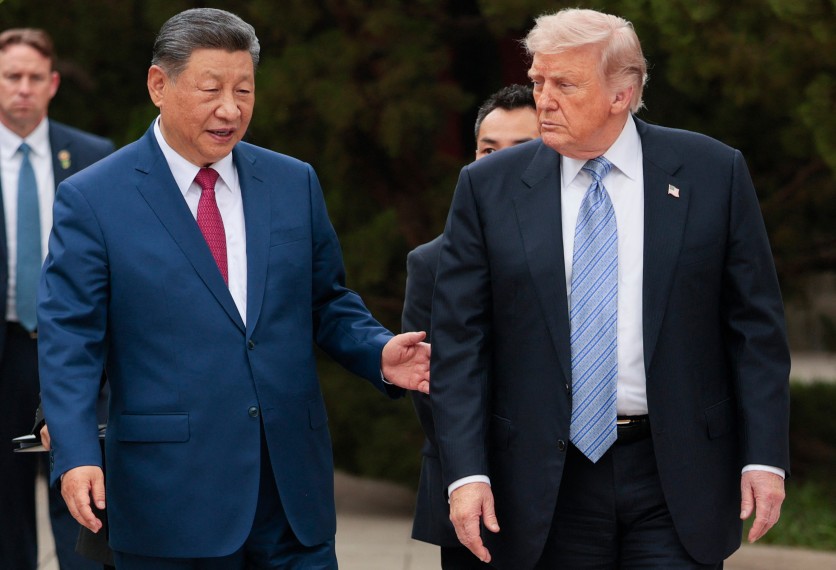
Beijing issued a formal diplomatic demand this week that Washington deliver on what China says was agreed at the May 14–15 Trump-Xi summit — and the single most consequential gap in the competing post-summit narratives concerns the fate of antitrust investigations targeting Nvidia and Qualcomm, two companies with hundreds of billions in combined market capitalization and enormous China revenue exposure.
China's Ministry of Commerce on May 20 urged the United States to "honor its commitments," warning that US tariffs must not exceed levels agreed at the Beijing summit regardless of how future duties are framed or labeled. The statement, reported by both Global Times and China Briefing, arrived one week after the summit closed with divergent official readouts from both governments — and the chip antitrust question sits at the center of that divergence.
Competing Claims on Probe Suspension
The US side publicly stated that China agreed to suspend antitrust investigations into Nvidia, Qualcomm, and Intel as part of the summit outcomes. China's MOFCOM, in its May 20 briefing elaborating on eight preliminary results from the consultations, confirmed that "various investigations into US companies in the semiconductor supply chain" would be terminated — but did not specify which companies or which cases.
China Briefing's analysis of the MOFCOM statement noted that Beijing confirmed terminating antitrust, anti-monopoly, and anti-dumping investigations, but qualified that description: "Although it wasn't specified, the investigations likely include" the September anti-discrimination probe and the Qualcomm Autotalks case. That language — "likely include" — is not the same as a named, bilateral confirmation. Until SAMR publishes a formal closure notice for each case, chipmakers and their investors have no authoritative answer that both governments agree on.
Gabriel Wildau, a China analyst at the Teneo advisory group, told NPR in an analysis published today that the readout differences constitute "minor inconsistencies" that are "not significant." That is the most charitable available interpretation. Even accepting it, the chip probe suspension remains operationally ambiguous: legal teams at affected companies cannot rely on a political characterization in lieu of a regulatory closure.
What the Probes Mean for Nvidia and Qualcomm
China's State Administration for Market Regulation opened its investigation into Nvidia in December 2024, alleging the company violated the Anti-Monopoly Law through commitments made when Beijing conditionally approved Nvidia's 2020 acquisition of Mellanox Technologies. Nvidia shares dropped roughly 2% on the day the probe became public. SAMR subsequently issued a preliminary finding in September 2025 that Nvidia had in fact violated those conditions, and announced it would continue the investigation.
A separate probe into Qualcomm was announced in October 2025, targeting the company's acquisition of Israeli automotive chip designer Autotalks. Qualcomm shares fell more than 5% on the announcement day. The financial exposure is direct: Qualcomm generated 46% of its fiscal 2024 global revenue — roughly $17.8 billion — from customers headquartered in China. A fine at the maximum statutory rate could reach $1.8 billion based on its Chinese sales alone.
Neither company's legal exposure changes until SAMR publishes a formal case closure. No such notice has appeared as of the date of this article.
$17 Billion Agricultural Commitment: US Claim, Chinese Silence
The chip probe gap is not the only point of divergence. The White House stated publicly that China committed to purchasing $17 billion in US agricultural products annually from 2026 to 2028. China's MOFCOM confirmed only that the two sides agreed to "expand agricultural trade" and restore market access, with no dollar figure attached.
China Briefing's review of MOFCOM's statement notes that Beijing "stopped short of confirming" the $17B figure, treating it instead as part of broader arrangements to reduce tariffs and non-tariff barriers under a planned Board of Trade. The Global Times reporting on the eight preliminary outcomes likewise confirms the agricultural expansion without any quantitative commitment.
CNN's analysis of what both sides actually agreed to notes that the $17 billion figure would represent a dramatic jump from the $8.4 billion in total US agricultural exports to China recorded last year, and that Chinese officials appear reluctant to commit to "an arbitrary volume or value of certain commodities" rather than market-based demand. Agricultural exporters planning forward contracts against the White House's $17B claim are doing so without a bilateral document confirming that figure.
Where Both Sides Agree
The two governments have confirmed one framework: a commitment in principle to negotiate tariff reductions covering $30 billion of products on each side, under the planned Board of Trade, with most-favored-nation or lower rates applying to mutually agreed goods. MOFCOM also confirmed a purchase of 200 Boeing aircraft, plus US commitments to supply engines and spare parts — though Boeing had not publicly confirmed the deal as of press time.
On tariffs, both sides have acknowledged that US duties on Chinese goods fell from approximately 145% to 30% following preparatory talks in Seoul in May, and Chinese duties on US goods dropped from 125% to 10%. US Treasury Secretary Scott Bessent said in a May 19 interview on the sidelines of a G7 finance meeting in Paris that the US would accept the restoration of prior tariff rates through the Section 301 investigations "as long as they don't go higher" — a description China's side has obliquely confirmed.
Chris McGuire, senior fellow for China and emerging technologies at the Council on Foreign Relations, argued in TechTimes' May 15 summit coverage that any arrangement easing US chip access to China carries national security costs that Washington has consistently underweighted. The unresolved probe status creates the same problem inverted: a claimed diplomatic win that chipmakers cannot translate into legal certainty.
Rare Earths, Tariff Clock, Mid-August Risk
On rare earths, Bessent said China has been "satisfactory, but not excellent" in its fulfillment, and that US officials would be "seeing them again." Gallium, germanium, and related materials used in semiconductor fabrication remain under active consultation. MOFCOM confirmed it is continuing to review compliant permit applications but has not committed to a resumption timeline.
The structural risk is the 90-day framework governing the current tariff reduction. Bloomberg's post-summit analysis noted that contentious issues — including semiconductor export restrictions and rare earth controls — "were left for later," with its reporters observing there "may not have been much more to come out of the two days of meetings than the vibes." If no durable deal is reached before mid-August, tariffs are set to revert to pre-summit levels, the Section 301 investigations conclude on their current trajectory, antitrust probes for which there is no formal closure notice resume without constraint, and rare earth export restrictions could tighten again.
MOFCOM's formal demand this week — that Washington must honor its commitments — indicates Beijing believes the US government has publicly claimed more than was bilaterally agreed, or intends to hold Washington to a maximalist interpretation before the window closes. Whether Washington responds with documentation of what was actually agreed, or with a competing characterization, will determine whether the Beijing summit is recalled as the foundation of a durable trade architecture or as a high-profile exchange of promises neither side can verify the other actually made.
ⓒ 2026 TECHTIMES.com All rights reserved. Do not reproduce without permission.


