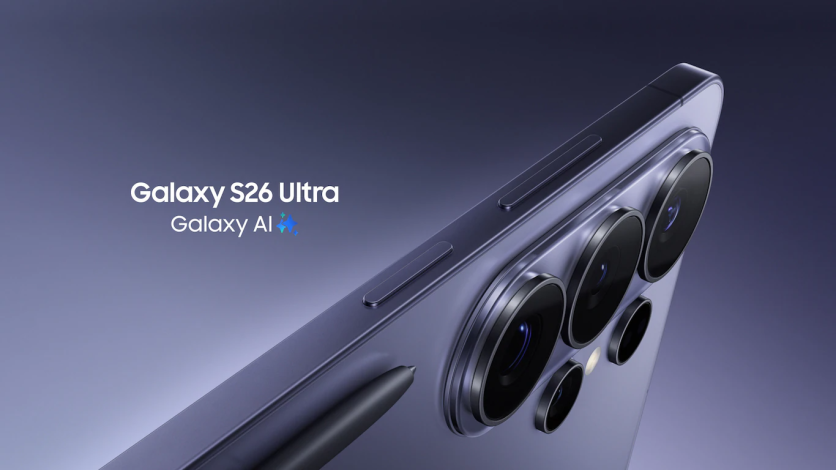
Samsung Electronics held the No. 1 smartphone position in Latin America, the Middle East, and Southeast Asia during the first quarter of 2026, according to fresh data from market research firm Omdia published Monday — capping a regional sweep that coincides with the South Korean manufacturer reclaiming the global smartphone throne it lost to Apple at the end of 2025.
The three-market result was driven by Samsung's ability to serve buyers at both ends of the price spectrum simultaneously. The Galaxy S26 series, released March 11, anchored premium demand, while the Galaxy A lineup — budget and mid-range models ranging from the entry-level A17 to the recently launched A57 — sustained volume in markets where affordability decides the sale.
The breadth of that approach matters because none of the three regions rewarded Samsung with an easy quarter. The Middle East and Southeast Asia markets both contracted year-over-year. Rising memory costs pushed average selling prices to record highs in parts of the region. Yet Samsung grew or held share in all three. Consumers in each market are making deliberate brand choices that Samsung's portfolio is structured to win.
Samsung's Latin America Share Hits 3-Year High
Latin America was the clearest bright spot. Samsung shipped 12.9 million smartphones in the region between January and March, capturing 37% of the 34.8 million-unit market — its highest quarterly share since Q1 2023 — on a 9% year-over-year increase in shipments that outpaced the region's overall 3% market growth.
Xiaomi held second place in Latin America with 6 million units and a 17% share, marking the Chinese brand's sixth consecutive quarter of growth in the region. Apple grew 31% year-over-year in Latin America but still failed to reach the regional podium, trailing both Xiaomi and Motorola in unit terms.
Omdia noted that Latin American buyers increasingly weigh battery life, camera quality, display, durability, and after-sales support when choosing a phone — a checklist that Samsung's mid-range Galaxy A models are specifically designed to address across a wide range of price points. The Galaxy A07 4G was the best-selling Android smartphone globally in Q1 2026, according to separate data from Counterpoint Research, with particularly strong performance across Latin America, the Middle East, and Africa.
Middle East Smartphone Market Shrinks, Samsung Widens Lead
The Middle East was a harder environment. The region's smartphone market fell 6% year-over-year to 11 million units in Q1 2026, weighed down by geopolitical uncertainty, softer consumer sentiment, and memory-cost inflation. Omdia noted that the average selling price in the Middle East hit a record $450 during the quarter — up 15% year-over-year — as vendors revised prices across both new and existing portfolios to protect margins.
Samsung held its No. 1 position regardless, shipping approximately 3.7 million devices for a 34% market share — up from 32% in Q1 2025 — and actually widening its gap over second-place rivals. The Galaxy S26 series and a refreshed A-series portfolio provided enough demand at both the high and middle of the price range to offset the regional volume contraction.
How Galaxy A Series Wins Southeast Asia
Read more: Best Samsung Phones in 2026: Top Galaxy S25, Z Fold 7, Z Flip 7 and Budget A-Series Picks
In Southeast Asia, the overall smartphone market contracted 9% year-over-year to 21.6 million units as rising memory prices squeezed demand from budget buyers. Samsung's shipments moved in the opposite direction, growing 4% year-over-year to 4.6 million units and lifting the company's regional share to 21% — up from 19% in Q1 2025.
Omdia attributed the outperformance to two complementary forces: "a combination of a strong Galaxy S26 launch and A-series volume drivers." The average selling price of smartphones in Southeast Asia rose 19% year-over-year to $349 during the quarter, a significant jump that reflects both industry-wide cost pressures and a structural shift toward higher-value devices. Samsung's sustained investment in regional branding and channel expansion supported that repositioning.
What Portfolio Strategy Signals for Q2 2026
The Q1 2026 regional performance arrived alongside Samsung's first-quarter earnings report, published April 30, in which the company's Mobile eXperience business signaled it expects to sustain year-over-year revenue growth in Q2 2026 through flagship sales and new A-series devices. The company recently expanded the Galaxy A lineup with the Galaxy A57 5G and Galaxy A37 5G, bringing a flagship-level Super AMOLED+ display and extended battery life to mid-range price points.
The Omdia data across Latin America, the Middle East, and Southeast Asia suggests that dual-engine approach — Galaxy S26 at the top, Galaxy A at the volume tier — is already producing consistent results in markets where Samsung's lead over competitors is measured in double-digit percentage points, not fractions. How durable that advantage proves as memory costs continue to rise through the second half of 2026 will be the key test of the strategy.
Frequently Asked Questions
What is Samsung's smartphone market share in Latin America in 2026?
Samsung held a 37% share of the Latin American smartphone market in Q1 2026, its highest quarterly share in the region since Q1 2023. The company shipped 12.9 million units in the January–March period, representing 9% year-over-year growth, supported primarily by Galaxy A-series models in the budget and mid-range segments.
How did the Galaxy A series help Samsung dominate emerging markets?
The Galaxy A series provides budget-to-mid-range devices with features — large batteries, capable cameras, durable builds, and now a flagship-grade Super AMOLED+ display on the A57 — that match what buyers in Latin America, the Middle East, and Southeast Asia prioritize. By pairing A-series volume with Galaxy S26 premium sales, Samsung was able to grow or hold share in all three regions even as two of those markets shrank year-over-year in Q1 2026.
Did Samsung grow in Southeast Asia despite the market shrinking?
Yes. While the total Southeast Asian smartphone market contracted 9% year-over-year to 21.6 million units in Q1 2026, Samsung's shipments grew 4% to 4.6 million units, lifting its share from 19% to 21%. Omdia credited the Galaxy S26 launch and steady A-series demand for the outperformance in a market where rising memory prices drove average selling prices up 19% during the quarter.
Why did the Middle East smartphone market decline in Q1 2026?
The Middle East market fell 6% year-over-year to 11 million units in Q1 2026, as geopolitical tensions, softer consumer confidence, and rising memory costs compressed demand. Average selling prices hit a record $450 — up 15% year-over-year — as vendors revised pricing to protect margins. Samsung still led the region with a 34% share, up from 32% in Q1 2025.
ⓒ 2026 TECHTIMES.com All rights reserved. Do not reproduce without permission.


