For decades, the Hubble Space Telescope has given scientists and the world in general jaw-dropping photos of what it sees in outer space.
From planets to nebulae, the Hubble's photographs have had countless subjects through the years. Believe it or not, it has even captured the remnants of a supernova explosion.
What to Know About Cassiopeia A
Also known as Cas A, Cassiopeia A is what remains of an exploding star. As a matter of fact, NASA says that it is actually the youngest known supernova remnant in the Milky Way Galaxy.
It is 10,000 light-years away in the constellation Cassiopeia and the light from the exploding star is believed to have reached planet Earth in the late 1600s.
2002 Image
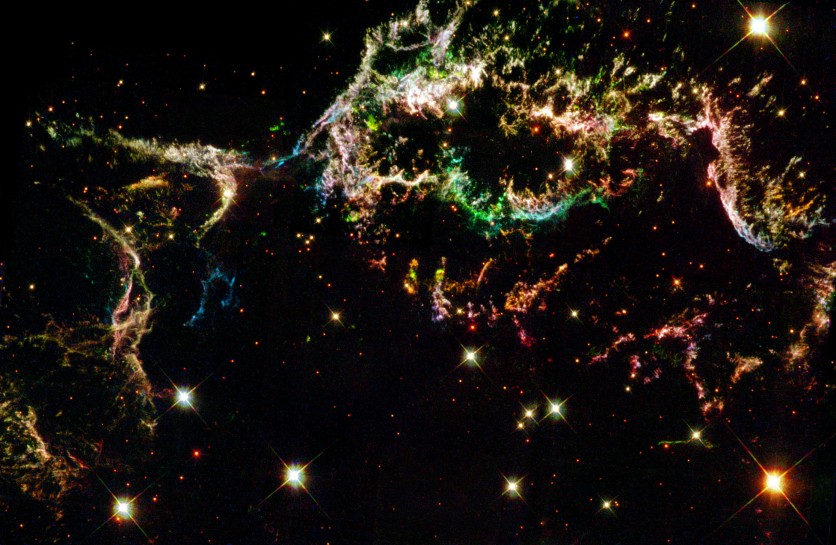
In July 2002, NASA released a photograph taken by the Hubble Space Telescope of Cassiopeia A. The image shows of colorful gaseous streams of red, white, blue, green, and pink.
"This stunning Hubble image of Cas A is allowing astronomers to study the supernova's remains with great clarity, showing for the first time that the debris is arranged into thousands of small, cooling knots of gas," NASA explains. "This material eventually will be recycled into building new generations of stars and planets."
2006 Image
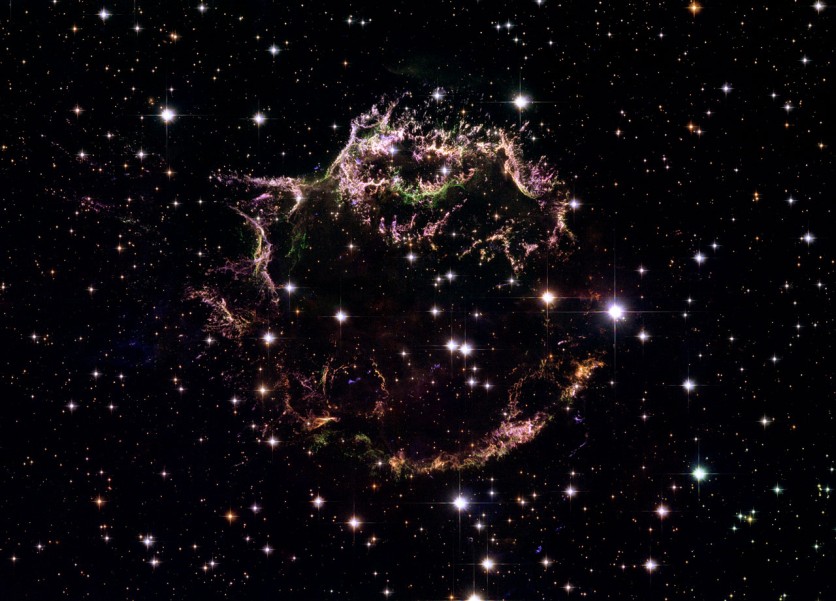
Four years later, on August 2006, NASA again released another photo of Cassiopeia A taken by the Hubble.
According to NASA, the image provides an even more detailed look of the supernova remains that comprise Cassiopeia A.
Hubble Space Telescope
Named after astronomer Edwin Hubble, the Hubble Space Telescope was first launched to low orbit in 1990. 36 years later, the space telescope remains to be completely operational, but it is expected to fall back to Earth sometime between 2030 and 2040.
Thus far, the Hubble has captured thousands of images that have helped scientists study outer space.
It has photographed the planets and satellites in the solar system, such as Jupiter and its moons. It has also taken stunning photos of galaxies and nebulae, such as the NGC 2660 and the M51.
ⓒ 2026 TECHTIMES.com All rights reserved. Do not reproduce without permission.


