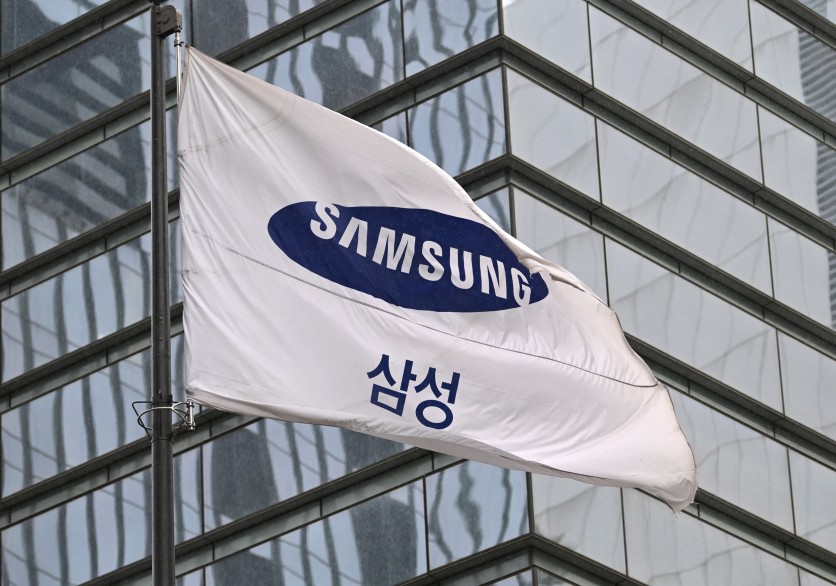
A figure that has shaped South Korea's most contentious chipmaker labor dispute in years — that Samsung Electronics loses employees at roughly 10 times the rate of rival SK hynix — is a product of mismatched measurement methods, not a genuine head-to-head comparison of retention, industry observers and the companies' own sustainability filings show.
The statistic originated in a study released May 26 by corporate research firm Leaders Index, which analyzed sustainability reports from 108 of Korea's top-500 companies covering 2022 through 2024. The firm found that by 2024, Samsung's all-in company-wide turnover rate had declined but remained above 10 percent, while SK hynix's stood at roughly 1.3 percent — a ratio that union leaders, journalists, and labor advocates quickly translated into the headline claim that Samsung was losing people at 10 times SK hynix's pace.
The problem is that the two figures measure different populations. Samsung's rate is calculated on a global basis, incorporating all overseas employees including large-scale production lines in Vietnam and India, where contract manufacturing workforces turn over at rates structurally higher than those of research-focused Korean operations. SK hynix's figure, by contrast, is derived from domestic Korean employees only. Industry observers cited by Seoul Economic Daily on May 29 noted that directly comparing these two figures does not accurately reflect the departure situation of core semiconductor personnel.
"This is an industrial characteristic seen across global companies and is unrelated to a company's employment stability or work environment," an industry official said. The daily noted that global manufacturers such as Intel and TSMC operate under similar dynamics when their figures are compared on a worldwide basis.
When the two firms' sustainability reports are compared on the same terms — five-year averages covering 2020 through 2024 — Samsung posted a 2.1 percent turnover rate to SK hynix's 2.3 percent, putting Samsung 0.2 percentage points lower. Narrowed further to Samsung's Device Solutions (DS) division, which houses its semiconductor business, the figure is understood to be in the 1 percent range — comparable to SK hynix's domestic rate.
Why Samsung Semiconductor Engineer Departure Still Signals Real Risk
The methodological correction does not, however, dissolve the talent-flight concern. A separate and independently confirmed data point tells a different story: Choi Seung-ho, chair of the Samsung Electronics Supra-Enterprise Union, stated publicly that more than 200 Samsung engineers moved to SK hynix in the four months through February 2026 alone — a migration he described as direct evidence of a compensation failure the turnover statistic, whether computed correctly or not, cannot fully capture. The Korea Herald's coverage of the Leaders Index study confirmed that Samsung declined Leaders Index's request for a DS-only figure, leaving no basis for a direct chip-to-chip comparison.
The departure pattern traces almost entirely to a widening bonus gap. In September 2025, SK hynix and its union agreed to remove the ceiling on profit-sharing and commit 10 percent of annual operating profit to an employee bonus pool for a decade. The timing was fortuitous: SK hynix had positioned itself early in the high-bandwidth memory (HBM) market that now powers the AI infrastructure buildout, posting a record 47.21 trillion won in operating profit for full-year 2025.
Under that formula, the company paid out profit-sharing bonuses averaging 2,964 percent of monthly base salary in February 2026 — meaning an employee earning 100 million won a year took home more than that again in a single payout.
Samsung's route through the same boom was rougher. Its DS division issued steeply reduced performance bonuses in the first half of 2025, with the foundry unit paying nothing at all. Workers in memory received only 25 percent of base salary; the System LSI unit and Semiconductor Research and Development Center received 12.5 percent.
That gulf — and not the statistical artifact in Leaders Index's comparison — is what Korea's chip talent market has been responding to.
How Does SK hynix Bonus Compare to Samsung Bonus?
The contrast in absolute terms is stark. Based on SK hynix's full-year 2025 operating profit of 47.21 trillion won and its 10 percent formula, the total bonus pool for its roughly 35,000 Korean workers reached approximately 4.7 trillion won, averaging around 140 million won — roughly $95,000 — per employee for that payout alone. By 2026, with analysts projecting full-year operating profit in excess of 200 trillion won, SK hynix employees are projected to receive bonuses approaching 600 million won per person.
Samsung's chip workers, by contrast, received zero performance bonuses in 2024, when the DS division posted operating losses through the memory downturn. The AI-driven recovery in early 2026 — DS division operating profit rose nearly eightfold year-over-year in the first quarter — arrived before any structural fix was in place.
The imbalance fueled a strike threat that at its peak mobilized more than 40,000 union members. A half-day rally at Samsung's Pyeongtaek campus on April 23 reduced daily memory output by 18.4 percent, while contract foundry output on the affected shift fell 58 percent. JPMorgan estimated a full 18-day walkout could have reduced Samsung's annual operating profit by more than 40 trillion won — a figure that concentrated management's attention.
Samsung Chip Division Talent Retention: The Deal That Just Signed
The dispute formally ended on May 27, when Samsung and its largest union signed a 2026 wage agreement that 73.7 percent of 62,616 participating members approved — at a 95.5 percent turnout. The deal allocates 10.5 percent of the DS division's operating profit to a Special Management Performance Bonus paid primarily in stock, with an additional 1.5 percent in cash and a 6.2 percent average wage increase. The arrangement runs for 10 years, conditional on the division clearing 200 trillion won in annual operating profit from 2026 onward.
Based on analysts' projections for Samsung's 2026 chip profits, the formula implies average DS bonuses of approximately 340 million won per worker — roughly $227,000 — with memory division employees in line for as much as 600 million won. The new structure exceeds SK hynix's rate and removes the payout ceiling for the memory business specifically.
The deal did not settle all disputes. The Korea Shareholder Action Headquarters filed a lawsuit on May 27, the same day the agreement was signed, arguing that allocating a fixed portion of pretax operating profit to employee bonuses amounts to a distribution of company funds that requires a shareholder meeting resolution under Korea's Commercial Act. The group named individual Samsung board directors in the suit and sought an injunction blocking implementation. Details of the shareholder challenge are covered in TechTimes' reporting on the bonus deal's legal exposure.
A separate rift opened between Samsung's chip workers and those in its smartphone, television, and home appliance businesses. Employees in the Device eXperience division — whose performance bonuses will total roughly 6 million won, or about $4,000, against the chip division's hundreds of thousands of dollars — staged protests outside Samsung's Digital City campus in Suwon, arguing the settlement was a chip-only deal that left them behind. The legal cascade reported by Seoul Economic Daily on May 31 may ultimately involve criminal complaints for breach of trust and obstruction of business.
Read more: Samsung Electronics Bonus Deal Faces Shareholder Lawsuit as Micron, TSMC Widen Capex Lead
Korea Chipmaker Workforce Comparison: What the Numbers Actually Mean
The Leaders Index study is not wrong on its own terms — Samsung's global turnover rate, including all overseas manufacturing sites, is genuinely higher than SK hynix's domestic rate. That tells an accurate story about Samsung's breadth as a global manufacturer. What it does not tell is whether Samsung's Korean semiconductor talent is leaving at an unusual pace relative to its nearest competitor.
For that question, the five-year sustainability report data and the DS division segment figure are the relevant denominator — and on those measures, the gap disappears or reverses. Leaders Index itself acknowledged the limitation: the firm requested the DS-specific turnover figure from Samsung for its analysis, and Samsung declined to provide it, leaving the firm with no choice but to use the company-wide number.
The more telling indicator is the one the statistics cannot cleanly capture: the directional flow of engineers between the two rivals. Over 200 departures in four months — all confirmed to have gone to a single competitor rather than into the labor market broadly — points to a structural compensation response, not routine attrition. Samsung co-CEO Jun Young-hyun had warned employees in earlier communications that he was concerned about the company losing market leadership; the union framed the departures as confirmation of that risk.
Whether the new wage deal fully closes the gap remains to be seen. SK hynix's formula is uncapped and already paying out at a scale Samsung's deal is only beginning to approach, and the shareholder challenge could constrain how the new structure is implemented. What the episode has demonstrated is that how a turnover figure is calculated can matter as much as the figure itself — and that in a talent market where a single HBM specialty commands a compensation premium across Samsung, SK hynix, Micron, Nvidia, and Apple simultaneously, a statistic built on mismatched scopes is not just misleading: it is the kind of claim that lands on labor negotiating tables and shapes the outcome of disputes worth tens of trillions of won.
Frequently Asked Questions
Why does Samsung's turnover rate look 10 times higher than SK hynix's?
The comparison uses incompatible figures: Samsung's rate is calculated across its entire global workforce, including large production operations in Vietnam and India where contract-based turnover runs structurally higher, while SK hynix's rate covers only its domestic Korean employees. On a five-year like-for-like basis drawn from both companies' sustainability reports, Samsung's 2020–2024 average was 2.1 percent against SK hynix's 2.3 percent, putting Samsung marginally lower.
How does the SK hynix bonus compare to Samsung's bonus for semiconductor workers?
SK hynix removed the ceiling on its profit-sharing in September 2025 and committed 10 percent of annual operating profit to employees, paying out bonuses averaging 140 million won per worker in February 2026 for 2025 results. Under Samsung's new May 2026 wage agreement, DS division workers are projected to receive bonuses averaging roughly 340 million won for 2026, based on analyst profit forecasts — potentially reaching 600 million won for memory-specific roles, which exceeds SK hynix's current rate.
Did Samsung engineers actually leave for SK hynix?
Yes. Samsung Electronics union chair Choi Seung-ho confirmed that more than 200 Samsung engineers moved to SK hynix in the four months through February 2026, citing the compensation gap as the direct cause. The departures were unusual in their concentration at a single rival and contributed to the strike pressure that eventually produced the May 2026 wage deal.
What is the Samsung turnover rate for its chip division?
Samsung has not publicly released a standalone turnover figure for its Device Solutions semiconductor division. Industry observers, citing sustainability report data, place the DS division's turnover rate in the 1 percent range — comparable to SK hynix's domestic figure — though Samsung declined to confirm a precise number when Leaders Index requested it for its May 2026 study.
ⓒ 2026 TECHTIMES.com All rights reserved. Do not reproduce without permission.


