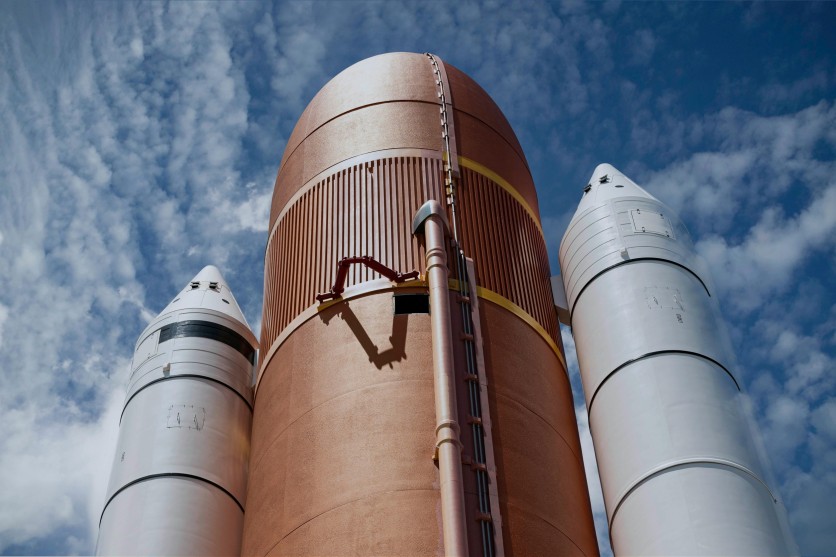
Space exploration is entering a new era driven by artificial intelligence and advanced computing. One of the latest developments attracting attention is NASA's work on a powerful NASA AI chip designed specifically for use in space. The new AI space processor aims to deliver significantly greater computing performance while maintaining reliability in one of the harshest environments imaginable.
As future missions travel farther from Earth, communication delays become a growing challenge. Spacecraft heading to the Moon, Mars, or deeper into the solar system cannot always rely on immediate instructions from mission control.
This is where advanced NASA space computing systems could play a critical role. By enabling spacecraft to process information and make decisions independently, the technology may help improve mission efficiency, scientific research, and operational safety.
What Is NASA's New AI Space Processor?
The new NASA AI chip is a specialized computer processor built to handle artificial intelligence workloads directly aboard spacecraft. Unlike conventional chips found in consumer electronics, this processor is engineered to operate in environments exposed to intense radiation.
The AI space processor combines two important characteristics:
- High-performance computing capabilities.
- Radiation resistance for long-term space missions.
These features could allow spacecraft to analyze scientific data, interpret images, detect anomalies, and support autonomous operations without requiring constant communication with Earth.
The development reflects a broader shift toward smarter spacecraft technology that can respond more effectively to changing mission conditions.
Why Modern Space Missions Need Advanced Computing
Today's spacecraft gather enormous amounts of information from onboard instruments. Cameras, environmental sensors, navigation systems, and scientific equipment continuously generate valuable data.
However, transmitting all of that information back to Earth presents several challenges:
- Limited communication bandwidth.
- Long communication delays.
- Restricted transmission windows.
- Growing data volumes from advanced instruments.
An AI space processor can help solve these issues by processing data directly onboard the spacecraft. Instead of sending every piece of raw information, the system can identify the most important findings and prioritize them for transmission.
This approach allows missions to operate more efficiently while reducing pressure on communication networks.
How the NASA AI Chip Supports Autonomous Missions
Autonomy has become one of the most important goals in modern spacecraft technology.
A spacecraft operating near Mars may experience communication delays of up to 20 minutes or more each way. During that time, critical decisions may need to be made quickly.
The new NASA AI chip could help spacecraft perform tasks such as:
- Autonomous navigation.
- Hazard identification.
- Scientific target selection.
- Equipment monitoring.
- Resource management.
- Real-time image analysis.
Instead of waiting for human operators to analyze information and issue commands, the spacecraft could perform many of these functions independently.
NASA and other space agencies have already incorporated limited autonomous capabilities into various missions. More powerful AI systems could expand those capabilities significantly.
The Importance of a Radiation-Hardened Processor
One of the biggest challenges facing NASA space computing is radiation exposure.
Space is filled with high-energy particles originating from the Sun and distant cosmic sources. These particles can interfere with electronic systems and potentially damage sensitive components.
A radiation-hardened processor is specifically designed to withstand these conditions.
Key advantages include:
- Greater reliability during long missions.
- Reduced risk of data corruption.
- Improved system stability.
- Better protection against hardware failures.
- Increased mission longevity.
Without radiation protection, even the most powerful computer systems would struggle to survive extended periods in deep space.
This makes radiation hardening one of the most important requirements for next-generation spacecraft technology.
How NASA Space Computing Has Evolved
The history of NASA space computing demonstrates remarkable progress over the decades.
Early spacecraft operated using computers with extremely limited processing power by today's standards. Despite those limitations, they successfully supported some of the most important missions in space exploration history.
Over time, advances in computing have enabled:
- Higher-resolution imaging.
- Improved navigation systems.
- More sophisticated scientific instruments.
- Enhanced communication capabilities.
- Greater automation.
The introduction of an advanced AI space processor represents the next major step in this evolution.
Rather than simply executing pre-programmed instructions, future spacecraft may be capable of interpreting information and adapting to changing situations in real time.
Potential Applications for the New AI Space Processor
The technology could support a wide range of future missions and projects.
Deep-Space Exploration
Autonomous spacecraft could analyze environments, identify unusual features, and prioritize scientific discoveries without waiting for instructions from Earth.
Lunar Missions
Future lunar exploration efforts may require intelligent systems capable of supporting scientific operations, communication infrastructure, and surface activities.
Mars Exploration
Mars missions face significant communication delays. Advanced AI capabilities could help spacecraft and robotic explorers operate more independently.
Space Habitats
Future space stations and planetary habitats may rely on intelligent systems to monitor life-support equipment, infrastructure, and operational resources.
Scientific Research
The processor could analyze vast amounts of scientific data onboard, allowing missions to respond more quickly to important discoveries.
What Experts and Organizations Are Saying
ScienceDaily recently highlighted the processor's ability to potentially deliver computing performance hundreds of times greater than many current spaceflight processors.
NASA has also emphasized the growing importance of onboard artificial intelligence as future missions become more ambitious and operate farther from Earth.
Meanwhile, research organizations and technology developers continue to investigate how AI can improve navigation, robotics, and scientific analysis in space environments.
Together, these developments suggest that artificial intelligence will play an increasingly important role in future exploration efforts.
Challenges That Still Remain
Although the new NASA AI chip shows significant promise, several challenges remain before widespread deployment.
These include:
- Extensive testing requirements.
- Validation of AI decision-making systems.
- Power consumption considerations.
- Integration with existing spacecraft systems.
- Long-term reliability verification.
Space missions demand extremely high levels of reliability, meaning new technologies must undergo rigorous evaluation before deployment.
As a result, adoption will likely occur gradually through testing and demonstration missions.
The Growing Role of AI in Future Spacecraft Technology
Artificial intelligence is becoming an increasingly valuable tool for space exploration. The development of a powerful NASA AI chip capable of surviving harsh space environments represents an important milestone for NASA space computing.
By combining advanced computing performance with the durability of a radiation-hardened processor, the new AI space processor could help future spacecraft operate with greater autonomy, efficiency, and scientific capability. As missions venture farther into the solar system, intelligent spacecraft technology may become one of the most important tools supporting exploration beyond Earth.
Frequently Asked Questions
1. What is NASA's new AI space processor?
NASA's new AI space processor is a high-performance computer chip designed to run artificial intelligence applications in space while resisting radiation damage.
2. Why do spacecraft need a radiation-hardened processor?
Spacecraft operate in environments exposed to cosmic radiation and solar particles. A radiation-hardened processor helps protect electronic systems from damage and data corruption.
3. How could the NASA AI chip improve future missions?
The processor could enable autonomous navigation, onboard scientific analysis, faster decision-making, and more efficient use of communication bandwidth.
ⓒ 2026 TECHTIMES.com All rights reserved. Do not reproduce without permission.


