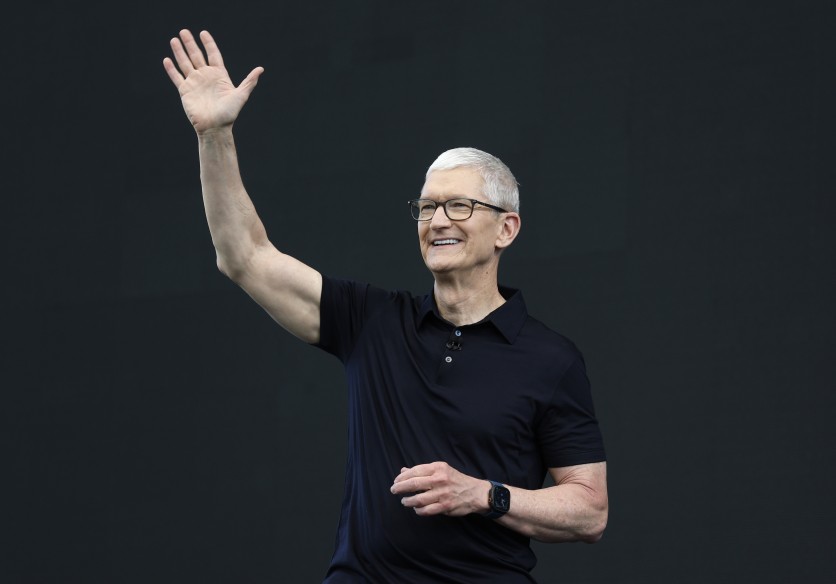
When Tim Cook walked onto the stage at Apple Park on June 8, 2026, for his final Worldwide Developers Conference keynote as chief executive, he closed a chapter that few in technology thought could be written. He took over a company in mourning for its founder and leaves it as the most valuable enterprise in history. On September 1, the job passes to John Ternus, Apple's senior vice president of hardware engineering, while Cook becomes executive chairman. The succession was announced on April 20, 2026; WWDC was its first public punctuation mark.
To understand what Apple is handing to Ternus, you have to understand what Cook built — and what he didn't.
The operations genius who was never going to be Steve Jobs
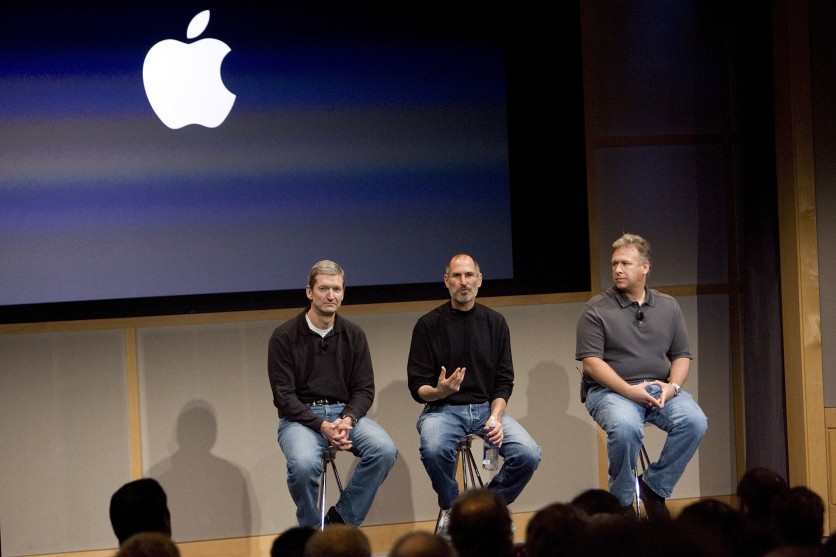
Cook joined Apple in 1998 as senior vice president of worldwide operations, recruited by Steve Jobs from a career that ran through IBM and Compaq. He was not a designer or a showman. He was a supply-chain savant who tore apart Apple's bloated manufacturing and inventory systems, closed factories, leaned on contract manufacturers, and built the just-in-time logistics machine that let Apple turn breathtaking demand into breathtaking margins. By the time Jobs's health failed, Cook was already running the company day to day, and on August 24, 2011, he formally became CEO. Jobs died weeks later.
The skeptics were loud and, for a while, plausible: Cook was the careful operator who would keep the trains running but never conjure the next iPhone. He leaned into that critique rather than fighting it. As CNBC put it in its retrospective, Cook turned Apple into a juggernaut precisely by not trying to be Jobs — by being a disciplined allocator of capital and attention rather than a mercurial visionary. The bet was that execution, scale, and ecosystem could compound into something no single product launch could.
By the numbers: the most valuable company in history
The financial record is staggering. When Cook took over, Apple was worth just under $350 billion. Under his watch it crossed $1 trillion in August 2018, $2 trillion in August 2020, neared $3 trillion in January 2022, and briefly touched $4 trillion in October 2025, settling around $4 trillion as he steps down. The stock rose roughly 1,800% across his tenure, trouncing the broader market and minting one of the great shareholder-return runs in corporate history.
Two engines drove that. The first was the iPhone, which Cook scaled into the most profitable consumer product ever made. The second — and the more revealing of Cook's instincts — was services. He methodically transformed Apple from a company that sold you a device into one that collected recurring revenue from everything you did on it: the App Store, iCloud, Apple Music, Apple TV+, Apple Arcade, Fitness+, Apple News+, and Apple Pay. By the fiscal year ending September 2025, services generated about $109 billion in annual revenue, a high-margin annuity that smoothed out the lumpiness of hardware cycles and gave Wall Street a growth story even when iPhone unit sales plateaued.
China was the third pillar — and the most double-edged. Over Cook's tenure, Apple's China revenue grew more than 600% and its mainland retail footprint expanded from four stores to dozens, while the country became the indispensable heart of Apple's manufacturing. That dependence delivered enormous profit and, later, enormous geopolitical risk, as US–China tensions, tariffs, and supply-chain fragility turned Apple's greatest operational triumph into its most-watched vulnerability.
The products: defining categories without reinventing the company
Cook is often denied credit for products because none of them was the iPhone. But the record is deeper than the caricature. Under him, Apple launched the Apple Watch and AirPods and engineered the Apple Silicon transition — each a category-definer in its own right.
The Apple Watch, introduced in 2015, grew into the best-selling watch in the world; by units, Apple's smartwatch shipments surpassed the entire Swiss watch industry. AirPods created the modern wireless-earbud category essentially from nothing and became a multibillion-dollar business and a cultural signifier. The 2020 move to Apple Silicon — designing Apple's own Mac processors and completing the migration off Intel by 2023 — was a generational engineering achievement that delivered dramatic gains in performance and battery life and gave Apple control over the most strategic component in its computers.
Then there was Vision Pro, the 2024 mixed-reality headset that was the closest thing to a Jobs-style "new category" swing of Cook's tenure — and the clearest illustration of its limits. Technologically audacious and critically admired, it sold modestly, hampered by a $3,499 price and a thin software story. It stands as the emblem of the Cook era's central tension: Apple could engineer almost anything, but a genuinely new mass-market platform proved elusive.
Privacy, values, and a CEO who spoke up
Cook also redefined what a tech CEO could say out loud. He made privacy a marketing and moral pillar, describing it as a "fundamental human right," and backed it with product decisions — most consequentially App Tracking Transparency, which let users block cross-app tracking and blew a multibillion-dollar hole in the ad businesses of rivals like Meta. He refused the FBI's 2016 demand to build a backdoor into the iPhone of the San Bernardino shooter, framing encryption as a matter of public safety rather than a marketing line.
In 2014 he became the first openly gay CEO of a major US corporation, writing that he considered being gay "among the greatest gifts God has given me," and he pushed Apple's environmental agenda toward carbon-neutrality commitments and renewable energy. Whatever one makes of the politics, Cook used the largest corporate megaphone on earth in a way his predecessor never did — and largely kept Apple's brand above the fray while doing it.
The fights — and the blemishes
Cook's later years were defined by a thickening web of regulatory and legal battles: the Epic Games antitrust fight over App Store rules, the European Union's Digital Markets Act forcing Apple to open up sideloading and alternative app stores, a US Department of Justice antitrust suit, and constant pressure on the App Store's commissions that fund so much of the services business he built. Managing that pressure without shattering the walled garden became a defining, unfinished project.
But the blemish that shadows the handover is artificial intelligence. As rivals shipped generative-AI assistants, Apple fell conspicuously behind. The promised "more personal Siri" slipped repeatedly, the company faced a roughly $250 million settlement tied to advertised-but-undelivered Siri capabilities, and Apple Intelligence launched to a muted reception. For a company whose brand is built on things that "just work," being late and unreliable on the defining technology of the moment was the sharpest critique of Cook's final act — and the problem he is, in effect, handing to his successor.
Enter John Ternus: the engineer in the corner office
If Cook was the operations executive who followed the visionary, Ternus is something different again: a hardware engineer who has spent his career making Apple's physical products work. He earned a mechanical-engineering degree from the University of Pennsylvania in 1997, where he swam on the men's team, and began his career designing virtual-reality headsets at Virtual Research Systems before joining Apple in 2001 on the product-design team, where his first project was the Apple Cinema Display.
His rise was steady and substantive. He became a vice president of hardware engineering in 2013 under Dan Riccio, overseeing AirPods, Mac, and iPad; took on iPhone hardware in 2020; was promoted to senior vice president of hardware engineering in 2021, succeeding Riccio; and added Apple Watch hardware in late 2022. Along the way he became one of the most familiar faces in Apple's keynote videos and, per Bloomberg, the youngest member of Apple's executive team — "charismatic and well-liked," and for years the most widely tipped successor to Cook. His fingerprints are on the iPad and AirPods launches and on many generations of iPhone, Mac, and Apple Watch.
Cook vs. Ternus: what changes when an engineer runs Apple
The contrast is instructive. Cook is an operations-and-diplomacy CEO: a supply-chain master, a deft manager of governments and investors, a public figure as comfortable testifying before Congress as unveiling a product. Ternus is a builder, formed in the engineering organization that physically creates Apple's devices. Choosing him is itself a statement of identity — at a moment when many rivals are led by software or AI executives, Apple is handing its top job to someone whose instincts are rooted in hardware.
That has implications. A hardware-led Apple is likely to keep doubling down on the thing it does best — tightly integrated devices and silicon — and to treat the AI layer as a capability that serves the hardware rather than the other way around. The optimistic reading is that Ternus brings product credibility and engineering discipline back to the center of the company precisely as Apple needs to ship convincing new devices, from a maturing Vision line to rumored smart-home hardware and, eventually, smart glasses. The risk is the mirror image: the defining battle of the next decade is arguably about AI models and software ecosystems, not industrial design, and an engineer's company will have to prove it can lead in a domain where it has been a follower. Ternus also inherits Cook's relationships with Beijing, Washington, and Wall Street without Cook's decades of accumulated standing in any of them.
Where Apple goes next: the AI bet that will define Ternus's tenure
The strategic question on the new CEO's desk is stark, and WWDC 2026 framed it. Apple's answer to its AI lag is not to build a frontier model of its own but to lease one: the rebuilt Siri unveiled on June 8 runs on a custom Google Gemini model under a licensing arrangement reported to be worth roughly $1 billion a year, while a new Extensions system lets users choose ChatGPT, Gemini, or Anthropic's Claude to power Apple Intelligence features. The internal logic, as reported, is that large language models are commoditizing and not worth the staggering cost of building one from scratch — so Apple should own the experience, the privacy layer, and the silicon, and rent the brain.
That bet runs through Apple's distinctive architecture: as much processing as possible on-device using Apple Silicon, with heavier work handled by Private Cloud Compute servers designed to process data without retaining it. It is a genuinely differentiated approach in an industry that mostly sends your data to someone else's cloud — and it is also a wager that customers will value privacy enough to forgive Apple for being a step behind on raw capability. The leadership around it has been reshuffled accordingly, with longtime AI chief John Giannandrea stepping back and executives including Craig Federighi and Vision Pro creator Mike Rockwell taking larger roles in Apple's AI future.
Beyond AI, Ternus inherits a familiar but unforgiving to-do list: revive Vision into a product people actually buy, find the next hardware category (smart-home devices and AI glasses are the leading candidates), defend the services engine against regulators chipping at the App Store, and de-risk a supply chain still anchored in China. The deepest question is whether a company optimized for polished, integrated hardware can win an era that increasingly rewards fast-moving software and AI — and whether leaning on Google's Gemini is a shrewd allocation of resources or a long-term dependency that hollows out Apple's control over its own destiny. The early signal Ternus sends — does Apple deepen the Gemini relationship, or quietly rebuild its own model ambitions behind it? — will tell us a great deal about the Apple of the 2030s.
Bottom line
Tim Cook took an Apple worth $350 billion and grieving its founder and turned it into a roughly $4 trillion colossus, defining the smartwatch and wireless-earbud categories, engineering the Apple Silicon transition, building a $100-billion-plus services business, and making privacy and values part of the brand — while leaving behind an unmet hunger for a true new platform and a costly stumble on AI. John Ternus, a hardware engineer's engineer and Apple lifer, takes over on September 1 with the company's product credibility on his shoulders and its biggest strategic question — whether renting Google's AI brain is genius or dependency — squarely in his lap. The Cook era was about scaling what Jobs built. The Ternus era will be judged on whether Apple can lead, rather than follow, in AI.
Frequently Asked Questions
When does Tim Cook step down, and what happens to him? Cook stops being CEO on September 1, 2026, and becomes Apple's executive chairman. John Ternus becomes chief executive. WWDC on June 8, 2026 was Cook's final keynote as CEO.
What are Tim Cook's biggest accomplishments as CEO? Growing Apple's value from about $350 billion to roughly $4 trillion; launching the Apple Watch and AirPods; the Apple Silicon transition; building services into a ~$109 billion annual business; and making privacy and corporate values central to Apple's brand.
What were the main criticisms of Cook's tenure? No new product reached iPhone-scale impact (Vision Pro sold modestly), Apple fell behind on generative AI with a delayed Siri and a roughly $250 million settlement over undelivered features, and the company remained heavily dependent on the iPhone and on China.
Who is John Ternus? Apple's senior vice president of hardware engineering since 2021 and at the company since 2001. A University of Pennsylvania mechanical engineer, he has led hardware on the iPad, AirPods, iPhone, Mac, and Apple Watch and is the youngest member of Apple's executive team.
How is Ternus different from Cook? Cook is an operations-and-diplomacy executive; Ternus is a hardware engineer. His appointment signals an Apple that doubles down on integrated devices and silicon, even as the industry's center of gravity shifts toward AI and software.
What is Apple's AI strategy going forward? Rather than build its own frontier model, Apple is licensing a custom Google Gemini model to power a rebuilt Siri (about $1 billion a year), letting users choose ChatGPT, Gemini, or Claude, and running tasks on-device or via privacy-focused Private Cloud Compute.
ⓒ 2026 TECHTIMES.com All rights reserved. Do not reproduce without permission.


