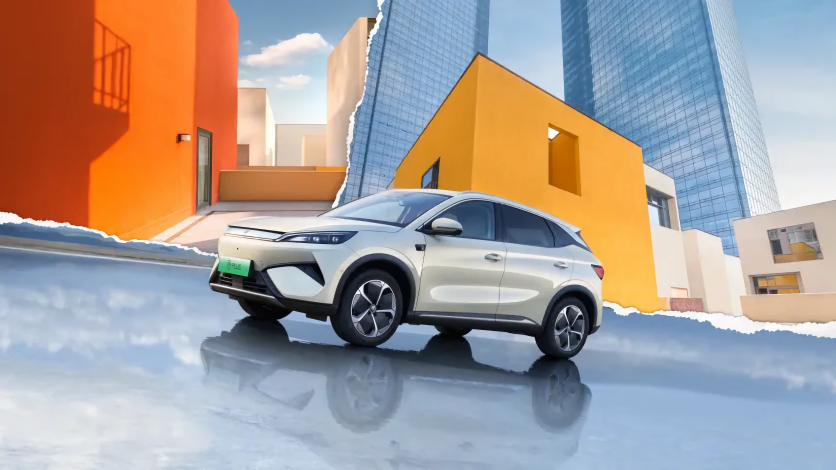
BYD opened a Marketing Manager position in Toronto on June 5 — the most direct signal yet that the world's largest electric vehicle maker is finalizing its Canadian retail entry. The hire follows months of confirmed groundwork: the company has engaged Markham, Ontario-based dealer consultancy Dealer Solutions Mergers & Acquisitions (DSMA) to secure approximately 20 dealership locations, registered four models with Transport Canada's Appendix G pre-clearance registry, and publicly rejected the federal government's joint-venture requirement. For Canadians considering a purchase, the sticker price — independent analysts estimate the entry-level Seagull hatchback at around C$25,000 — is only one part of the decision. Under China's National Intelligence Law, BYD is legally obligated to cooperate with Chinese government intelligence requests, regardless of where its vehicles operate, where their data is stored, or what privacy certifications the company holds.
The retail push is the direct result of a bilateral agreement struck by Prime Minister Mark Carney and Chinese President Xi Jinping in January 2026, which replaced a prohibitive 100% tariff on Chinese-built EVs with a 6.1% duty inside an annual quota of 49,000 vehicles — rising to approximately 70,000 by 2030 — in exchange for Beijing reducing tariffs on Canadian agricultural exports including canola, lobster, crab, and peas. BYD had originally targeted a Canadian passenger-vehicle launch in 2024 but shelved those plans after Ottawa imposed the 100% levy in August of that year.
BYD Canada: Four Models, 20 Dealerships, Four Cities
BYD has registered four vehicles with Transport Canada's Appendix G pre-clearance registry — the prerequisite for passenger-vehicle imports — from its Shenzhen and Xi'an manufacturing plants: the Atto 3 compact SUV, Seal sedan, Dolphin hatchback, and Seagull city car. BYD is the only Chinese automaker to have completed this registration step for consumer passenger vehicles. DSMA CEO Farid Ahmad confirmed that roughly 20 stores are planned for the first year, with the Greater Toronto Area as the starting point before expansion to Vancouver, Montreal, and Calgary.
Executive Vice-President Stella Li has been direct about ownership structure: BYD will not pursue a joint venture with a Canadian or global partner — a pointed rebuff to the Carney government's stated preference for shared-ownership structures from Chinese automakers. "I don't think a JV will work," Li told Bloomberg in March. BYD's deep vertical integration — it manufactures its own batteries, motors, and semiconductors — makes shared ownership structurally incompatible with how the company operates.
Why BYD Can Price at C$25,000 When Canadian Rivals Cannot
BYD's price advantage is structural, not coincidental. The company manufactures approximately 75% of its vehicle components in-house across more than 100 internal facilities. Batteries — which account for roughly 40% of an electric vehicle's cost — are produced by FinDreams Battery using BYD's proprietary Blade Battery technology. The Blade design arranges ultra-flat lithium iron phosphate (LFP) cells directly into a battery pack in a Cell-to-Pack (CTP) architecture that eliminates the intermediate module layer used by most rivals. This increases space utilization in the pack by more than 50% compared to conventional LFP block batteries, reduces assembly steps, and cuts per-kilowatt-hour manufacturing cost — without changing the underlying chemistry's safety profile.
The cost savings extend through the entire powertrain. BYD Semiconductor produces the power transistors (IGBTs) and silicon carbide chips used in the motor controller and inverter — components most automakers source from external suppliers like Infineon or STMicroelectronics. FinDreams Powertrain manufactures the permanent-magnet motors and e-drive units. BYD has upstream lithium mining investments in Chile and Africa, insulating it from spot-price volatility in battery supply chains. These stacked efficiencies — and the elimination of multiple supplier profit margins — are the engineering reason independent analysts project the Seagull entering the Canadian market near C$25,000. A competing automaker without this supply chain cannot match that price without losing money on every sale.
The Seal sedan is the lineup's performance anchor, offering up to 570 km (354 miles) of range in its rear-wheel-drive variant and shipping with BYD's DiPilot advanced driver-assistance suite, part of the company's broader God's Eye ADAS platform. All four models support over-the-air (OTA) software updates and connect to BYD's flash-charging network. In May 2026, BYD sold 376,990 passenger vehicles globally, including a record 160,644 units overseas — an 80% year-on-year increase in international sales driven by accelerating global expansion.
What Canadian Law Cannot Stop: State Data Access Under Chinese Law
Every BYD vehicle sold in Canada will operate as a connected-vehicle platform — collecting GPS location, driving behavior, infotainment activity, and smartphone data mirrored through the cabin system. The governing legal framework is not Canadian. China's National Intelligence Law of 2017, Article 7, requires: "Any organization or citizen shall support, assist, and cooperate with state intelligence work in accordance with the law." This obligation applies to BYD as a Chinese company regardless of where its vehicles operate, where their data is routed, or what privacy certifications they hold. The 2017 Cybersecurity Law — amended and still in force as of January 2026 — and the 2023 Counter Espionage Law extend the government's compelled-access reach further, with the espionage law broadening the scope to cover documents, data, and materials related to national security and interests. These are not speculative risks; they are confirmed legal mandates.
A Public Safety Canada internal memo published on June 1, 2026 — one week before BYD's marketing hire — explicitly warned that China's national security laws can compel manufacturers to share vehicle data with their home government, and that Canadian data transiting through or stored in foreign jurisdictions faces elevated risk. "Connected vehicles, similar to other smart or internet-connected devices, collect significant amounts of data on Canadians, which can have intelligence value," the federal document stated. Neil Bisson, director of the Global Intelligence Knowledge Network and a retired officer of the Canadian Security Intelligence Service (CSIS), has warned that connected vehicles could become gateways into critical infrastructure, including power grids and communications systems. CSIS Director Dan Rogers confirmed to Parliament that China, India, and Russia remain the principal foreign-interference actors in Canada.
Security researchers at PlaxidityX demonstrated in October 2025 that personal data — including GPS location history, contacts, healthcare information, and app preferences — could be extracted from the infotainment unit of a 2023 BYD Atto 3 without any active network intrusion, because the data was stored unencrypted and consent prompts had not been triggered even after a factory reset. BYD has publicly denied unauthorized government access to vehicle data and holds R155 (Cybersecurity Management System) and R156 (Software Update Management System) certification from international regulatory bodies. Those certifications address how BYD manages its own cybersecurity practices — they do not and cannot override the legal obligation imposed by Chinese national law.
Industry Minister Mélanie Joly confirmed in May 2026 that the federal government is actively developing a regulatory framework to protect personal data collected by electric vehicles, citing the arrival of Chinese-made EVs as the primary context. That framework has no current completion timeline. Canada's Conservative Party has pledged to scrap the trade deal and ban Chinese-connected vehicle software from vehicles sold in the country.
No Federal Incentives, Constrained Supply: The Real Purchase Conditions
The 49,000-unit annual quota applies to all Chinese automakers combined — BYD, Chery Automobile, and Geely are all preparing Canadian entries. With limited quota to work with, BYD is expected to prioritize higher-margin models in the near term, meaning supply of the most affordable options will be constrained early. Federal rebates will not apply to any BYD vehicle: Canada's Electric Vehicle Affordability Program restricts eligibility to EVs built domestically or in free-trade partner countries, which excludes China. Buyers in British Columbia and Quebec may qualify for provincial incentives depending on the model — both provinces maintain separate rebate programs.
BYD's arrival comes as the Canadian EV market contracts. Battery-electric vehicle sales fell roughly 25% in 2025 to approximately 85,000 units, driven by the suspension of federal incentive programs and broader economic uncertainty. Each shipment of BYD vehicles into Canada now requires a per-shipment permit from Global Affairs Canada under Customs Notice 26-05, which took effect March 1, 2026 — transforming ordinary trade flow into a controlled allocation system. When the annual quota is exhausted, permits stop.
Canada is BYD's only viable North American beachhead for now. Triple-digit US tariffs on Chinese-built EVs continue to block the continent's largest automotive market, and US Congress has introduced bipartisan legislation that would codify a ban on Chinese connected vehicles and their components from American roads — a measure that, if enacted, could affect BYD owners who cross the border. In a March 2026 Bloomberg interview in São Paulo, Li confirmed BYD is evaluating Canada as a site for a wholly-owned manufacturing facility and has not ruled out acquiring an established global automaker — moves that could eventually sidestep import quotas entirely.
How BYD Manages Its Data: What the Company Says
BYD's published privacy position states that it uses industry-standard encryption, provides clear consent notices on vehicle startup screens, and has obtained R155 and R156 compliance certifications from third-party auditors. The company accepts regulatory oversight of its privacy compliance work, according to its stated position. BYD has not publicly disclosed the specific architecture governing how data collected in Canadian vehicles is routed — whether through servers in China, a third-party jurisdiction, or Canadian-domestic infrastructure. That routing question is material: Canadian data that transits through or is stored in China falls under China's compelled-access legal provisions, regardless of BYD's own internal practices.
For Canadian buyers, the decision framework involves four variables that the sticker price does not capture: the absence of federal rebates that reduce effective cost for competing EVs; the quota-constrained supply that limits purchase timing and model availability; the structural legal obligation under Chinese law that no privacy policy can override; and a Canadian regulatory framework for vehicle data that is still under development with no confirmed completion date.
Frequently Asked Questions
Are BYD electric vehicles eligible for federal EV rebates in Canada?
No. Canada's Electric Vehicle Affordability Program restricts eligibility to vehicles built in Canada or in countries with which Ottawa holds a free-trade agreement. China is not a free-trade partner, so BYD vehicles sold in Canada do not qualify for federal rebates regardless of their price. Buyers in British Columbia and Quebec may qualify for provincial incentives depending on the specific model, as both provinces maintain separate rebate programs independent of the federal program.
What BYD models are coming to Canada?
BYD has registered four vehicles with Transport Canada's Appendix G pre-clearance registry: the Atto 3 compact SUV, Seal sedan, Dolphin hatchback, and Seagull city car. The Seagull is expected by independent analysts to anchor the entry price near C$25,000. The Seal is the performance and range flagship, rated up to 570 km in rear-wheel-drive form with BYD's DiPilot driver-assistance system. BYD has not issued a formal public announcement of its confirmed Canadian model lineup, but the Appendix G registration of these four vehicles is the operative step required for Canadian passenger-vehicle imports.
Is buying a BYD electric vehicle a connected vehicle data privacy risk?
Every BYD vehicle sold in Canada operates as a connected platform, collecting GPS location, driving data, and smartphone-mirrored information. China's National Intelligence Law of 2017 requires BYD to cooperate with government intelligence requests, regardless of where vehicle data is collected or stored. A Public Safety Canada memo from June 1, 2026 specifically flagged this legal obligation as a risk for Canadian owners. BYD holds international cybersecurity certifications (R155, R156) and denies unauthorized government data access — but those certifications do not and cannot override China's domestic legal requirements. Canada is developing a vehicle data protection framework, but it has no current completion timeline.
When will BYD vehicles be available to buy in Canada?
BYD is actively building toward a late 2026 retail launch, as evidenced by its Marketing Manager hire in Toronto (June 5, 2026), confirmed dealership consultancy engagement, and Transport Canada registrations. The timeline is subject to the per-shipment permit requirements under Customs Notice 26-05 and the 49,000-unit annual import quota shared across all Chinese automakers. Early supply is expected to be limited, with the company's dealer consultancy signaling a conservative first phase focused on the Greater Toronto Area before expanding to Vancouver, Montreal, and Calgary.
ⓒ 2026 TECHTIMES.com All rights reserved. Do not reproduce without permission.


