A pair of dates buried in public Federal Communications Commission filings is driving the most specific launch prediction yet for Valve's Steam Machine: June 18 and June 29. Both dates represent scheduled publication windows for product manuals, and the comparison with Valve's own Steam Controller regulatory timeline suggests the gaming PC could ship before either of those dates arrives.
Reddit user u/wayTooManyBugs examined the FCC documentation for multiple Valve hardware products and identified a telling pattern. The Steam Controller — already on sale since May 4, 2026 — had its FCC documents submitted on November 24, 2025, but its user manual and product photos remained confidential until May 20, 2026, a full 16 days after the device began shipping to buyers. The Notebookcheck analysis published June 9 that first amplified the Reddit finding makes the implication explicit: if Valve follows the same post-launch manual release approach with the Steam Machine, the console would need to ship before June 29 for that manual date to make sense.
The Steam Frame Controller's manual is scheduled to go public on June 18, giving readers a near-term signal to watch. If that manual appears on schedule, it validates the FCC-pattern theory and makes the Steam Machine's own June 29 date a more credible countdown than a mere coincidence. Valve confirmed on June 4 that both the Steam Machine and the Steam Frame VR headset are "shipping this summer," a statement that triggered the expansion of its Steam Verified program to cover both devices — the first time a concrete seasonal window had been attached to either product.
Corroborating evidence stacked up separately. On May 30, Valve embedded a Steam Machine "Welcome Tour" in the backend of the Steam platform, a move it had made roughly two weeks before the Steam Controller went on sale. Import records that Notebookcheck flagged earlier this year showed Valve shipped approximately 50 tonnes of hardware labeled "game consoles" across two separate shipments, suggesting manufacturing is well advanced. The Steam Frame also cleared regulatory approval from Canada's Innovation, Science and Economic Development (ISED) authority on June 5.
None of this is a confirmed launch date, and the caveats are real. Geeky Gadgets noted on June 11 that Valve's manual release pattern has not been consistent across all of its hardware history — some manuals have appeared weeks or months before products reached buyers — and FCC publication dates are set by the applicant and can be revised without notice. The theory is plausible, not proven.
FCC Filing Pattern Points to Sub-June-29 Launch
The mechanics of how FCC manual embargoes work are straightforward. When a manufacturer submits a device for FCC certification, it can request that certain documents — photographs of the internal design, the user manual — remain confidential for a set period. That confidentiality window is calibrated to protect pre-launch marketing secrecy. Once a product ships, the commercial reason to keep those documents confidential disappears, and they are released. In the Steam Controller's case, they were released 16 days post-launch.
The Steam Machine's FCC documents were submitted toward the end of 2025, around the same time as the Steam Controller's. The user manual's scheduled publication date is June 29. If the same post-launch logic applies, the console ships sometime before that date — possibly well before it. North American summer begins on June 21, 2026, which means a pre-June-29 launch would technically fulfill Valve's "summer" commitment on the very first day of the season.
What the FCC pattern does not answer is the single most pressing question for buyers: how much will it cost.
Proton Changed Everything — Why This Attempt Succeeds Where 2015 Failed
The Steam Machine name carries baggage. Valve's first attempt at a living-room Linux gaming PC launched in November 2015 and sold fewer than 500,000 units in its first seven months. Ars Technica called it "dead on arrival." The cause of the failure was not hardware — it was game compatibility. SteamOS ran on Linux, and virtually the entire Steam library was built for Windows. Developers were not porting their titles, and players had almost nothing to play.
The second-generation Steam Machine launches into an entirely different technical reality, and the reason is Proton, Valve's Windows-to-Linux compatibility layer developed in collaboration with CodeWeavers. Proton is not an emulator — it is a translation layer that intercepts Windows API calls and converts them to their Linux equivalents in real time. Technically, it works by running DXVK, which translates Direct3D 8 through 11 calls to Vulkan, and vkd3d-proton, which translates Direct3D 12 calls to Vulkan. Wine, the long-running open-source project that forms Proton's foundation, provides the broader Windows API compatibility underneath those graphics translation layers.
The result is that as of 2024, approximately 90 percent of the Steam library is playable on SteamOS through Proton, compared to the near-zero native Linux compatibility that killed the 2015 launch. A buyer in 2026 does not need developers to port their game; Proton handles the translation transparently in almost every case. Valve's Vulkan 1.4 certification, obtained through the Khronos Group on May 23, 2026, confirmed that the Steam Machine's AMD Navi 33 GPU and Mesa/RADV driver stack pass the mandatory graphics API compatibility tests — meaning the Proton pipeline runs on certified, stable hardware.
There is one significant compatibility gap that Proton cannot solve: kernel-level anti-cheat software. Valorant, all current Call of Duty titles, Battlefield 6, and EA Sports titles use anti-cheat systems — Riot Vanguard, Activision's RICOCHET, and EA Javelin — that are built for the Windows security model and are incompatible with the Linux kernel's fundamentally different permission architecture. Valve has worked with Epic's Easy Anti-Cheat and BattlEye to enable SteamOS support for titles using those systems, including Counter-Strike 2 and Rainbow Six Siege, but it requires explicit opt-in from developers, and the publishers behind the largest multiplayer titles have not committed. Prospective buyers whose libraries are heavy with competitive shooters should check their game list against SteamOS compatibility before assuming the Steam Machine runs everything they own.
Streaming services present a separate constraint. Netflix and Disney+ limit browsers on Linux to 1080p playback due to digital rights management restrictions, meaning the Steam Machine is not a full substitute for a dedicated media streamer for buyers who want 4K streaming from major services.
Valve Steam Machine Price: What Component Costs Mean for Buyers
Valve has confirmed no price. What exists is a range of estimates driven by the same component shortage that delayed the launch in the first place: a global RAM and SSD supply crisis caused by hyperscaler AI infrastructure spending that drove DDR5 prices up sharply after Valve announced the device in November 2025. Valve's own engineer Lawrence Yang acknowledged the problem in a PC Gamer interview, describing the situation as one where the company is "bummed" but "not the only one in this boat."
Hardware insider Moore's Law Is Dead estimated in May 2026 that the Steam Machine could land between $600 and $650. A Czech retailer's database, visible in January 2026, listed the 512GB model at approximately $950 and the 2TB model at around $1,070 — figures that should be treated as regional estimates rather than confirmed pricing, as they reflect local tax calculations and may not translate directly to US retail. PCGamesN's spec analysis places the comparable pre-built gaming PC range at $900 to $1,200 for hardware with equivalent specs — an RX 7600-class GPU paired with 16GB of RAM.
For context, Valve has stated the Steam Machine "will be priced like a PC rather than like a console," meaning it is not planning to subsidize hardware at a loss as Sony and Microsoft typically do. That framing sets expectations: buyers are purchasing a compact Linux gaming PC, not a console-priced entry into an ecosystem. A PlayStation 5 disc edition retails at $499; an Xbox Series X retails at $649.
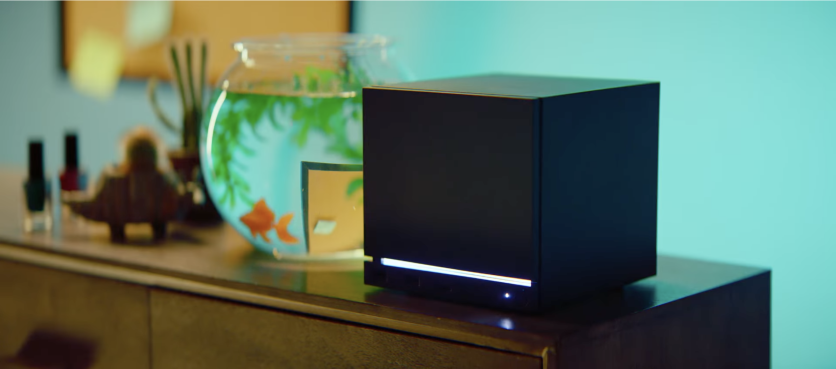
Valve's hardware specifications are confirmed through PCGamesN's reporting: a custom AMD Zen 4 six-core CPU running up to 4.8GHz, a custom AMD RDNA 3 GPU with 28 compute units at a sustained 2.45GHz clock and 8GB of GDDR6 VRAM, 16GB DDR5 RAM, and storage in either 512GB or 2TB NVMe SSD configurations. The machine measures 156 by 162 by 152mm — roughly cube-shaped and comparable in footprint to the Nintendo GameCube, a similarity that has earned it the nickname "GabeCube" in the gaming community. The GPU is architecturally equivalent to the Radeon RX 7600M laptop chip, making it capable of roughly 60 to 100 frames per second at 1080p in most current titles. Valve estimates 4K gaming at 60fps is achievable using AMD's FidelityFX Super Resolution 3 upscaling, though RDNA 3's architecture does not support FSR 4, which requires AMD's newer RDNA 4 GPU generation.
What to Watch on June 18
June 18 is the first checkpoint. If the Steam Frame Controller's user manual becomes publicly accessible on that date, it confirms that Valve is following the same post-launch publication pattern it used in May, and the Steam Machine's June 29 date gains significantly more weight as a launch proxy.
If either date passes without the corresponding manual appearing — or if Valve adjusts the embargo dates — the theory's foundation weakens. FCC publication dates are set by the applicant and can be changed. The Steam Machine's history since its November 2025 announcement includes a "first half of 2026" window that became "all three products this year" and then "summer 2026" as component costs rewrote the schedule. The pattern-based reading of the FCC filings is the sharpest prediction available, but it remains a prediction derived from public documents, not a confirmed date from Valve.
For now, the most actionable read on the evidence is this: if you are holding off a console or PC purchase pending the Steam Machine, the next two to three weeks carry more signal than any period since the device was announced.
Frequently Asked Questions
When is the Steam Machine release date?
Valve has confirmed the Steam Machine will ship in summer 2026 but has not announced a specific date or price. A Reddit user's analysis of FCC regulatory filings suggests the console could launch before June 29, 2026 — the scheduled publication date for its user manual — based on the pattern Valve followed with the Steam Controller, whose manual was released 16 days after that device began shipping.
How much will the Steam Machine cost?
Valve has not officially announced a price. Estimates range from $600–$650 per hardware insider Moore's Law Is Dead to $950 for the 512GB model and $1,070 for the 2TB model based on a Czech retailer's database from January 2026. Valve has stated the device will be priced like a PC rather than a subsidized console, meaning no hardware loss. The ongoing RAM and SSD shortage driven by AI data-center demand has pushed component costs above original projections.
What games will work on the Steam Machine?
Roughly 90 percent of the Steam library is playable on SteamOS through Proton, Valve's Windows-to-Linux compatibility layer. Exceptions include games with kernel-level anti-cheat software incompatible with Linux: Valorant, all current Call of Duty titles, Battlefield 6, and EA Sports titles. Netflix and Disney+ streaming also remain limited to 1080p in SteamOS browsers due to digital rights management restrictions.
How does the Steam Machine differ from the 2015 version?
The original Steam Machine failed primarily because SteamOS supported almost no Windows games in 2015. The 2026 version benefits from Proton, a translation layer Valve developed with CodeWeavers that converts Windows DirectX API calls to Vulkan in real time, making roughly 90 percent of the Steam library compatible without any action from developers. The hardware is also Valve-designed and internally specified rather than outsourced to multiple manufacturers with inconsistent configurations.
ⓒ 2026 TECHTIMES.com All rights reserved. Do not reproduce without permission.


