Carbon capture and storage, or CCS, has spent years proving that it can work. The science is established, the engineering is better understood, and companies across emissions-intensive sectors are under growing pressure to find practical decarbonization pathways. Yet many CCS projects still struggle to move beyond studies, pilot discussions, and early-stage development.
That gap has become one of the sector's central challenges. In many cases, the issue is not whether carbon can be captured or stored. It is whether a project can be structured in a way that gives investors, operators, and counterparties enough confidence to commit capital over the long term.
For CCS, that is a harder test than it may first appear. Large projects depend on multiple parties moving in step across technical, financial, regulatory, and operational lines that do not naturally align. A feasibility study can show that a project is possible, but it does not necessarily show that it is financeable, contractually workable, or durable over decades of operation.
That is where much of the industry's real work now sits. In Houston and across the Gulf Coast, attention is increasingly shifting toward what happens after technical validation: how projects are structured, how risks are allocated, how shared infrastructure is planned, and how stakeholders are brought into a workable commercial framework.
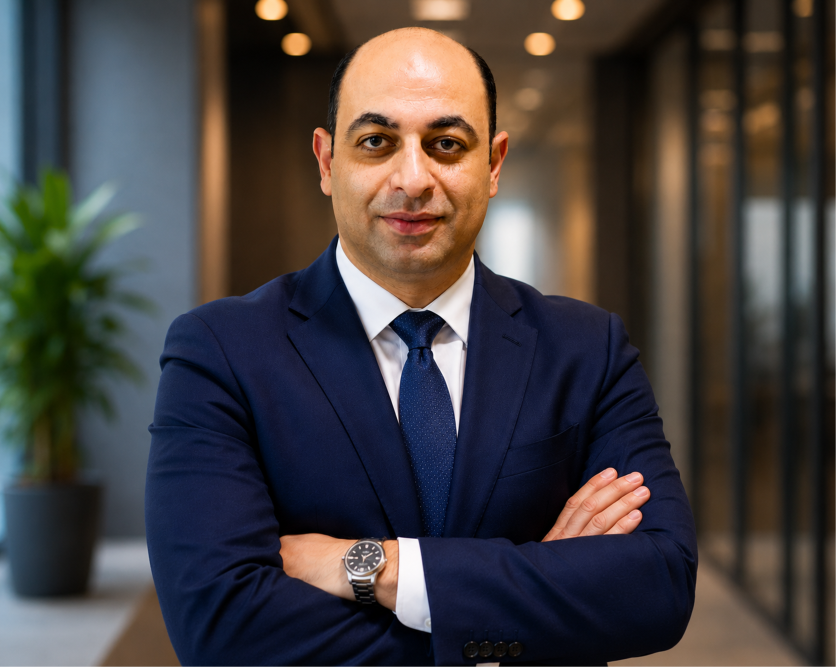
Among those working in that space is Business Opportunity Manager for CCUS Mohammad Bdair, whose career has spanned reservoir engineering, subsurface leadership, infrastructure planning, and CCS commercialization.
Why Feasibility Is Not Enough
The CCS sector has often treated commercialization as something to address after the engineering case is clear. In practice, that sequence can be misleading. A technically sound project may still fail if its ownership model is unclear, liabilities are not properly allocated, infrastructure dependencies remain unresolved, or the participating parties cannot align on timelines, economics, and long-term obligations.
This is especially true in large-scale CCS, where no single company controls the full chain. Industrial emitters, transport providers, storage operators, investors, regulators, communities, and public-sector stakeholders all shape whether a project can proceed. The technical case is necessary, but it is rarely enough on its own.
In an article published in the International Business Times, Mr. Bdair has described this challenge. He mentions, "Successful CCS implementation requires end-to-end integration between technical feasibility, infrastructure scalability, commercial structuring, stakeholder alignment, investment considerations, regulatory coordination, and long-term operational viability." His point is that the central barrier is often not proving that a project can work, but building a structure that allows multiple parties to support it at scale.
Mr. Bdair's career helps explain why he approaches CCS the way he does. Before focusing on carbon management, he built technical experience in reservoir engineering and subsurface leadership across Canada, Oman, and Qatar. Earlier in his career, he also served as the contract owner for a major new technology deployment across an entire national oil company's asset portfolio, overseeing strategy development, term negotiation, award, and ongoing management.
He later carried subsurface lead responsibilities on a multi-billion-dollar upstream transaction involving a major international energy company and a Chinese national oil company. That background gave him experience not only in the technical realities of subsurface systems, but also in the commercial and contractual structures that determine whether large-scale projects hold together over time.
The Work Behind Committed Capital
Once a project moves beyond feasibility, the questions quickly become commercial. Who owns the asset, how risks are shared, how obligations are structured, how revenues and liabilities are allocated, and what operating model can hold over the life of the project all become central. Those are often the issues that determine whether a project advances or remains technically credible but commercially stalled.
That is the part of the CCS process where Mr. Bdair's contribution has been especially visible. In the Gulf Coast, he has been directly involved in evaluating CCS opportunities, assessing potential targets, conducting deal valuations, defining legal entity structures, negotiating contract terms, and helping design operating models for joint ventures and wholly owned acquisitions. His current work also includes handling capital investment for CCS projects valued at approximately $1 billion, with those developments expected to create hundreds of jobs for local communities.
Those responsibilities are grounded in direct experience with deal valuation, joint venture structuring, regulatory navigation, and infrastructure economics. They also illustrate an important commercial reality in CCS: these are not secondary tasks that follow the engineering. They are among the decisions that determine whether a project secures backing and moves toward construction.
Mr. Bdair has also worked on one of the sector's most difficult commercial questions: cost. In one major CCS portfolio, he led efforts to reduce capital and operating costs across capture, transport, and storage.
Mr. Bdair explains the value of commercialization in CCS. He argues, "Our line of work matters because cost competitiveness remains one of the main conditions for wider adoption. A project may be technically sound, but if the economics remain fragile, capital will stay cautious."
Why Integration Matters in CCS
One reason CCS projects are difficult to commercialize is that the relevant expertise is often spread across silos. Mr. Bdair describes these silos. "Engineers focus on performance. Commercial teams focus on structure and returns. Regulators focus on compliance and liability. Infrastructure planners focus on long-term systems requirements. Each perspective is necessary, but projects weaken when those streams are treated separately," he explains.
Mr. Bdair's career has increasingly focused on addressing this integration challenge. His technical foundation was later matched by work in strategic planning, transaction support, stakeholder coordination, and commercialization. That combination enabled him to contribute not just to project-level decisions, but also to broader infrastructure planning and industry coordination.
A clear example is his role as principal reviewer and strategic planner for the jointly sponsored Infrastructure Impacts Study for the Greater Houston Area by the Houston Energy Transition Initiative and the Gulf Coast CCS Alliance.
In that work, Mr. Bdair oversaw the assessment and confirmation of technical inputs, modeling methodologies, and results across four key workstreams: water, electricity, pipeline, and storage. His approach included reviewing and improving datasets from industry and academic partners, using scenario-based infrastructure modeling, and ensuring that the outputs were rigorous, transparent, and aligned with current regulatory requirements.
The study's findings have helped inform policy and investment discussions, and his work has been referenced in Gulf Coast CCS Alliance presentations and public briefings for government agencies.
Mr. Bdair's contribution also extends into policy and advocacy. He has worked with a complex range of external stakeholders, including multiple levels of government, local communities, and offshore operators, to support CCS project development. That engagement has included participation in forums where the practical questions of how large-scale CCS gets built are debated and refined.
Mr. Bdair has engaged with the Bureau of Ocean Energy Management and the Bureau of Safety and Environmental Enforcement on offshore CCS regulations, the licensing process, and the integration of CCS with other developments, including oil and gas and renewables. He has also participated in the Offshore Technology Conference alongside energy companies, research organizations, academic institutions, and policy stakeholders.
Mr. Bdair shares how those discussions often center on scalable carbon transport and storage infrastructure, Gulf Coast deployment strategies, industrial decarbonization pathways, and the long-term implementation of the energy transition. With this, he learned that CCS commercialization cannot be reduced to project finance alone. The commercial side of CCS is shaped just as much by stakeholder coordination, regulatory clarity, and infrastructure planning as it is by the numbers in a model.
The Industry Question Ahead
The next phase of CCS will likely be defined less by whether the technology can be demonstrated and more by whether projects can be structured to support long-term investment. Mr. Bdair acknowledges that this may be a harder test as it requires developers and capital providers to look beyond technical feasibility and focus on governance, contracting, infrastructure integration, and cost discipline.
For industrial regions such as the Gulf Coast, that question carries broader economic significance. CCS is increasingly tied to the future of manufacturing competitiveness, industrial resilience, and the ability of large facilities to adapt to a lower-carbon economy. The projects that advance are likely to combine technical credibility with commercial clarity.
Mr. Bdair's work helps strengthen the commercialization aspect of CCS. His expertise could support defining what a bankable CCS project looks like in practice, from early evaluation through commercial structure and long-term execution planning. In a sector where many projects can demonstrate potential but few secure durable capital, that expertise has become increasingly relevant.
"The industry does not need more feasibility alone," Mr. Bdair mentions. "It needs projects that are structured well enough for capital to commit and for infrastructure to operate over the long term." That is the threshold CCS now faces. The technology may be necessary, but it is often the commercial structure that determines whether it becomes real infrastructure.
ⓒ 2026 TECHTIMES.com All rights reserved. Do not reproduce without permission.


