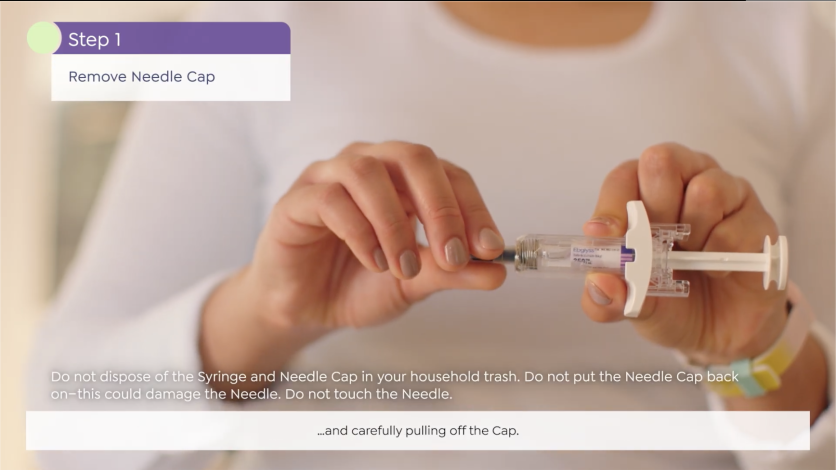
For adults and adolescents with moderate-to-severe atopic dermatitis, a disease that has no cure and demands indefinite treatment, the U.S. Food and Drug Administration approved a new dosing option for EBGLYSS (lebrikizumab-lbkz) on June 9, 2026 — cutting the minimum annual injection burden from 12 doses to 6. Eli Lilly announced the approval Monday, reducing a meaningful friction point for the roughly 6.6 million Americans living with moderate-to-severe atopic dermatitis who are candidates for biologic therapy.
The change gives patients who have already achieved adequate disease control on EBGLYSS the option to receive a single 250 mg subcutaneous injection every eight weeks rather than every four. That halves the maintenance injection schedule for qualifying patients, who previously needed 12 doses per year at minimum.
What Changed — and What Did Not
Monday's action was a label expansion, not a new drug approval. EBGLYSS received its original FDA approval in September 2024 for adults and children 12 and older weighing at least 40 kg (approximately 88 pounds) with moderate-to-severe atopic dermatitis not adequately controlled by topical therapies. Nothing about the drug's biology, its induction protocol, or its patient eligibility criteria changed on June 9.
What changed is the maintenance schedule available to patients who respond well to induction. Under the newly expanded label, eligible patients who complete the standard induction sequence — a 500 mg loading dose at weeks 0 and 2, followed by 250 mg every two weeks through week 16 or until adequate clinical response is achieved — can now choose between a once-monthly (every four weeks) or once-every-eight-weeks maintenance regimen. The choice is made in partnership with a prescribing dermatologist based on individual response and disease stability.
IL-13 Inhibitor EBGLYSS: How the Blocking Mechanism Works
EBGLYSS is a humanized IgG4κ monoclonal antibody that targets interleukin-13 (IL-13), a cytokine produced primarily by T-helper 2 cells, mast cells, and basophils that drives the type 2 inflammatory cascade underlying atopic dermatitis. IL-13 signals through a receptor complex requiring two subunits: IL-13Rα1 and IL-4Rα. When IL-13 binds that heterodimer, it triggers the downstream signaling that produces the skin barrier breakdown, chronic itch, and inflammation characteristic of the disease.
What distinguishes lebrikizumab mechanistically from the other approved biologics for atopic dermatitis is how precisely it disrupts that binding. Lebrikizumab binds to IL-13 at the specific epitope where IL-4Rα normally docks, blocking formation of the IL-4Rα/IL-13Rα1 signaling complex — but leaving intact IL-13's ability to bind a second receptor, IL-13Rα2. That second receptor acts as a decoy receptor, internalizing and clearing excess IL-13 from tissue through a natural feedback loop. Because lebrikizumab does not block IL-13Rα2 binding, that endogenous clearance pathway remains functional — a property its manufacturer and researchers have distinguished from tralokinumab, which blocks both receptor interactions.
Dupilumab (Dupixent, Sanofi/Regeneron), the market-leading biologic in this category, operates at a different architectural level entirely — binding IL-4Rα directly and inhibiting signaling from both IL-4 and IL-13. This means dupilumab blocks a broader portion of the type 2 inflammatory response. Whether that translates into superior clinical outcomes depends on the individual patient; no head-to-head comparative efficacy trial between lebrikizumab and dupilumab has been completed. What the mechanistic difference has produced is a safety-signal divergence: dupilumab carries a higher observed rate of conjunctivitis (reported in up to 25% of patients in some real-world studies, due in part to IL-4 pathway effects on goblet cells in the eye), while lebrikizumab's conjunctivitis rate in clinical trials ran between 1.4% and 3.8%.
Lebrikizumab also demonstrates a slower dissociation rate from IL-13 compared with the other selective IL-13 inhibitor on the US market — tralokinumab (Adbry, LEO Pharma) — resulting in stronger binding affinity in cell-based neutralization assays.
How Did the FDA Approve This Without a New Trial?
The regulatory basis for the every-eight-week schedule is worth understanding on its own terms, because it illustrates how biologic dosing optimization increasingly reaches patients today.
Rather than requiring Lilly to conduct a new traditional parallel-arm randomized controlled trial comparing Q4W versus Q8W dosing from the start of treatment, the FDA accepted longitudinal exposure-response modeling — a pharmacokinetic/pharmacodynamic (PK/PD) approach in which mathematical models describe the relationship between drug plasma concentration (the drug's exposure) and clinical response (the desired therapeutic outcome). This framework, known formally as Model-Informed Drug Development (MIDD), was established as a recognized regulatory pathway under the FDA's Prescription Drug User Fee Act in 2017.
The PK/PD models were supported by clinical data from the Q8W extension of the ADjoin long-term Phase 3 trial — an open-label, 32-week study evaluating patients who had already completed up to 100 weeks of EBGLYSS treatment across prior trials. Patients received either 250 mg Q4W or 250 mg Q8W maintenance, and outcomes were tracked against the established exposure-response curve. In the ADjoin Q8W extension, 86.2% of patients in the Q4W arm maintained EASI-75 (a 75% improvement in the Eczema Area and Severity Index) at week 32 of the extension. In the Q8W arm, 79.1% maintained that benchmark. No new safety signals emerged, and no patients stopped treatment because of adverse events during the 32-week window.
The approval signals that when a biologic's PK/PD relationship is well-characterized and an established model can accurately predict how a less-frequent dose performs, the FDA will consider that evidence sufficient to extend a label — without mandating the patient population and timeline cost of a new full-scale randomized trial. For EBGLYSS patients and their dermatologists, this means a dosing option backed by rigorous modeling, even if the underlying clinical data come from a relatively small open-label extension rather than a large double-blinded pivotal study.
Dr. Christopher Bunick, an associate professor of dermatology at Yale School of Medicine and editor in chief of Dermatology Times, said the approval "is welcome news, giving dermatologists and patients more flexibility in how they manage AD," adding that "every 8 weeks maintenance dosing for lebrikizumab is a significant differentiator among IL-13 and IL-4R targeted biologics and must be considered in shared clinical decision making."
Why Dosing Frequency Shapes Long-Term Atopic Dermatitis Treatment Outcomes
The significance of halving the maintenance injection schedule is clinically more important than it first appears. Atopic dermatitis is, by definition, a lifelong condition — patients who achieve control with a biologic do not complete a course and stop. They remain on treatment indefinitely, which means the injection schedule extends for years or decades.
In chronic inflammatory diseases, adherence erodes gradually in ways that clinical trials rarely capture. Research on biologic therapy adherence in atopic dermatitis has documented that treatment burden — the combined weight of injection frequency, required clinic visits, and self-administration complexity — is among the most common drivers of non-adherence, alongside cost and safety concerns. More than 55% of adults with AD have reported inadequate disease control on treatment in some surveys, and treatment adherence challenges are a recognized contributor to that gap.
Reducing the maintenance burden to six injections per year directly addresses this risk. A patient who has achieved near-complete skin clearance has the least motivation to continue any injectable therapy and the highest exposure to adherence drift. The eight-week schedule moves maintenance further into the background of daily life, which is precisely where a treatment for a lifelong condition needs to be.
Dr. Peter Lio, a clinical assistant professor of dermatology and pediatrics at Northwestern University and the lead investigator on the ADjoin extension, noted that the approval gives patients "a new option to manage their condition based on individual needs," particularly without the requirement to continue topical corticosteroids from the outset of treatment.
Where EBGLYSS Stands Against Dupixent and Adbry for Eczema Treatment
Moderate-to-severe atopic dermatitis is the most commercially active segment in dermatology biologics, and EBGLYSS enters its expanded-label era alongside two established competitors.
Dupixent (dupilumab), developed by Sanofi and Regeneron, targets the IL-4Rα receptor subunit, blocking downstream signaling from both IL-4 and IL-13, and remains the category's dominant biologic by prescription volume. Its approved maintenance schedule for adults is every two weeks — 26 injections per year at minimum. For adolescents, dosing varies by weight.
Adbry (tralokinumab-ldrm, LEO Pharma) selectively targets IL-13, as lebrikizumab does, but binds to a different epitope and blocks IL-13 from interacting with both IL-13Rα1 and IL-13Rα2 — including the decoy receptor. It is approved for every-two-week maintenance dosing after induction, with the option to extend to every-four-week dosing for patients who achieve and maintain adequate disease control.
With Monday's FDA decision, EBGLYSS becomes the only approved biologic for this indication that offers a maintenance schedule as infrequent as every eight weeks — and without a requirement to use topical corticosteroids concurrently from the start of treatment. Whether that differentiation is clinically meaningful for a given patient depends on disease severity, prior treatment history, and individual adherence profile. Patients well-controlled on dupilumab and tolerating it have no clinical reason to switch. For patients newly starting a biologic, or for those who have tried dupilumab without sufficient response, the reduced injection burden is a genuine decision variable.
A separate analysis investigating a once-every-12-weeks EBGLYSS dosing regimen is currently underway.
Frequently Asked Questions
What did the FDA approve for EBGLYSS on June 9, 2026?
The FDA approved a once-every-eight-weeks maintenance dosing schedule for EBGLYSS (lebrikizumab-lbkz) in adults and adolescents aged 12 and older weighing at least 40 kg with moderate-to-severe atopic dermatitis. This label expansion means eligible patients who achieve adequate disease control on induction therapy can maintain that control with as few as six injections per year, down from the previously approved monthly schedule of 12 injections per year.
How does EBGLYSS work differently from Dupixent for eczema biologic treatment?
Both are biologics approved for moderate-to-severe atopic dermatitis, but they target different parts of the type 2 inflammatory pathway. EBGLYSS (lebrikizumab) binds IL-13 directly and blocks only the IL-4Rα/IL-13Rα1 signaling complex, preserving the natural IL-13 clearance function of the IL-13Rα2 decoy receptor. Dupixent (dupilumab) binds the IL-4Rα receptor subunit, blocking signaling from both IL-4 and IL-13. In clinical trials, EBGLYSS showed conjunctivitis rates of 1.4%–3.8%, compared with rates as high as 25% in some real-world dupilumab studies, though no head-to-head efficacy trial exists between the two.
Is the every-8-weeks dosing right for every patient currently on EBGLYSS?
Not automatically. The every-eight-week schedule is available to patients who have already completed induction and achieved adequate disease control, as determined by their prescribing dermatologist. Patients who have not yet achieved stable control on the four-week maintenance schedule would typically remain on monthly dosing. The decision is made through shared clinical decision-making based on individual response — it is not a blanket protocol change.
How did the FDA approve the new eczema biologic injection schedule without a new clinical trial?
The FDA accepted the approval using exposure-response modeling, a pharmacokinetic and pharmacodynamic approach in which mathematical models predict how a drug performs at a given dose frequency based on established plasma concentration and response data. This Model-Informed Drug Development approach — recognized formally by the FDA under the Prescription Drug User Fee Act in 2017 — allowed the agency to evaluate clinical data from the open-label ADjoin extension trial alongside the drug's existing PK/PD profile, rather than requiring a new large-scale randomized controlled trial.
ⓒ 2026 TECHTIMES.com All rights reserved. Do not reproduce without permission.


