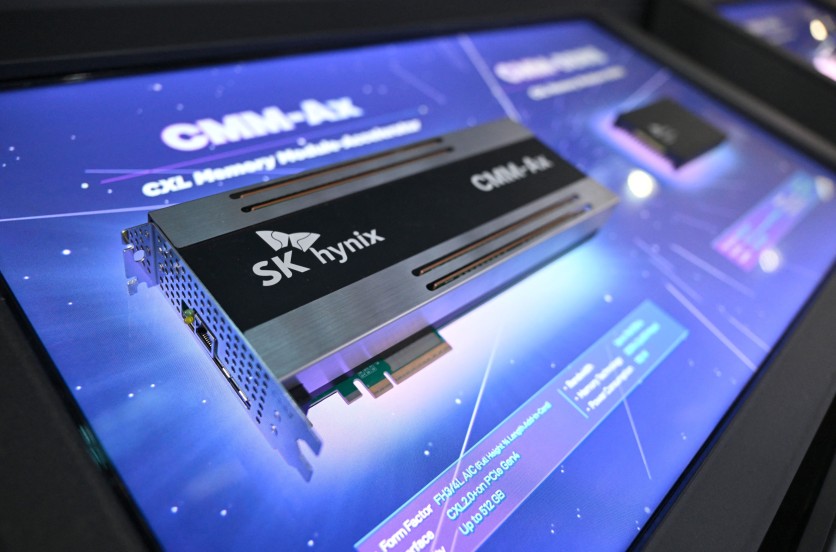
SK Hynix, the world's largest maker of the high-bandwidth memory at the heart of the AI boom, is preparing to list its shares in the United States — a move that would give American investors direct access to the dominant force in AI memory for the first time, and one that could reshape how the entire memory-chip trade is priced. The South Korean company is planning to issue American Depositary Receipts as early as August 2026, and the ripple effects reach well beyond Seoul, landing most directly on US-listed memory names like Micron and SanDisk.
For an investor in the memory trade, the listing is double-edged in a specific way: it is strong validation that the AI-memory boom is real, and at the same time a new, formidable rival for the dollars currently funding it.
What Is SK Hynix Planning?
SK Hynix filed confidentially for a US listing in March 2026 and is targeting a debut through American Depositary Receipts — certificates that let a foreign company's shares trade on US exchanges — potentially as soon as August, pending SEC clearance that could arrive around the week of June 22. A source told Reuters the offering could raise as much as $14 billion. The company has been careful in its language, saying it "plans to issue ADRs within 2026, but the details, including the size and timing, have not yet been decided," while telling investors the early feedback has been "tremendously positive."
This is a secondary US listing, not an abandonment of SK Hynix's primary listing in Korea. The point is access: by issuing ADRs, SK Hynix opens itself to the deep pool of US capital chasing AI exposure at a moment when it has never been more in demand. In late May, SK Hynix's market capitalization crossed $1 trillion for the first time, peaking near $1.12 trillion — only the third Asian company to reach that mark, after TSMC and Samsung Electronics.
Why Does SK Hynix Matter So Much?
To grasp the impact, it helps to see how dominant SK Hynix has become in the one memory product that matters most for AI. High-bandwidth memory, or HBM, is the specialized stacked DRAM that sits beside AI accelerators and feeds them data fast enough to keep up. SK Hynix held roughly 58% of the global HBM market in the first quarter of 2026, according to Counterpoint Research, with Samsung and Micron each near 21%. On Nvidia's next-generation Vera Rubin platform, SK Hynix is supplying an even larger share — reportedly 60% to 70% of the HBM4 volume. Its entire 2026 HBM output is sold out, and it has announced plans to double total wafer capacity over the next five years.
In short, the company about to become directly investable in the US is not a memory also-ran — it is the leader in the scarcest, highest-margin product of the AI build-out.
Read more: Samsung Leads DRAM Market Share at 38.6%: SK hynix Trails on Revenue but Tops Profit Margins
How Does It Affect Micron Stock?
For Micron, the implications cut both ways, and reasonable investors will weigh them differently.
The competitive read is that SK Hynix's arrival erodes one of Micron's advantages. Until now, Micron has been the most accessible US-listed way to own the AI-memory supercycle — effectively the default "HBM stock" on US exchanges. A US-listed SK Hynix changes that, offering the same investors a direct stake in the larger, higher-share HBM leader. That could split the pool of capital that has flowed almost reflexively into Micron and chip away at the scarcity premium Micron has enjoyed as the lone easy proxy. When the bigger, better-positioned competitor becomes a click away, the smaller pure-play can lose some of its shine.
The bullish read is the opposite: a marquee SK Hynix listing, possibly raising $14 billion, would be a powerful validation of the whole AI-memory thesis. It would draw fresh capital, analyst attention, and index flows toward the memory sector, and it would give the market a clean, US-traded benchmark for what HBM leadership is worth. If SK Hynix commands a premium valuation, that read-through could lift Micron's multiple by comparison rather than depress it.
The wildcard is supply. A $14 billion war chest, layered on SK Hynix's plan to double capacity, points to a wave of new production in the years ahead — the oldest worry in the memory business, where today's shortage-driven pricing power is exactly what funds the capacity that eventually ends the upcycle. For Micron and every memory maker, more SK Hynix capacity is a long-term consideration sitting uneasily beneath the near-term boom.
What About SanDisk and Samsung?
SanDisk, the flash-storage company spun out of Western Digital, is affected more indirectly. Its business is NAND flash — the storage layer — rather than the DRAM and HBM where SK Hynix dominates, so it is not a direct substitute for the same investment dollars the way Micron is. The main channel for SanDisk is sentiment: an SK Hynix listing that reinforces the message that AI memory demand is structural tends to lift the entire memory complex, NAND included, and SanDisk has been a notable beneficiary of the storage side of the same boom.
Samsung Electronics is less affected on listing mechanics — it is already a megacap with global access — but it faces the same competitive dynamic: a more prominent, US-investable SK Hynix sharpens the contrast in HBM leadership, where Samsung has been working to catch up, recently shipping early HBM4E samples to close the gap.
Read more: Roundhill Memory ETF Sets Price Record as Vera Rubin Confirms AI Memory Demand Is Structural
What Should Investors Watch?
A few signals will clarify the impact. The first is the SEC timeline: a clearance around late June would keep the August target on track and turn an abstract plan into a concrete, datable event. The second is the pricing of the ADR itself — the valuation SK Hynix fetches will set a real, public benchmark against which Micron and Samsung get measured. The third is how Micron's stock behaves around both the SK Hynix news and its own late-June earnings, which will reveal whether US investors treat SK Hynix as a competitor for their capital or as confirmation of a thesis they already own.
The honest summary is that SK Hynix's US listing is at once a validation of the AI-memory boom and a new source of competition for the investors funding it. It makes the sector bigger and more investable while handing Micron a formidable, directly comparable rival on the same exchanges. Which effect dominates will depend on the ADR's valuation, the path of HBM pricing, and whether the AI memory shortage that has powered the trade holds as long as the bulls expect. This article is not investment advice.
Frequently Asked Questions
Is SK Hynix listing on the US stock market?
SK Hynix is preparing a secondary US listing through American Depositary Receipts, potentially debuting as early as August 2026. It filed confidentially in March, awaits SEC clearance expected around late June, and a source told Reuters the offering could raise up to $14 billion. Its primary listing remains in Korea.
How could SK Hynix's listing affect Micron stock?
It cuts both ways. SK Hynix is the HBM market leader, so a US-listed version gives investors a direct alternative to Micron, potentially diluting Micron's premium as the default US "AI memory" stock. But it also validates the memory boom and sets a valuation benchmark that could lift the whole sector. The net effect is uncertain.
Does it affect SanDisk?
Only indirectly. SanDisk focuses on NAND flash storage rather than the DRAM and HBM that SK Hynix leads, so it is not a direct substitute for the same capital. The main impact is sentiment — a high-profile listing that confirms AI memory demand is structural tends to support the broader memory complex, including NAND.
Why is SK Hynix so important in AI memory?
SK Hynix held about 58% of the global high-bandwidth memory market in early 2026 and supplies an even larger share of HBM4 for Nvidia's Vera Rubin platform. HBM is the specialized memory that feeds AI accelerators, and SK Hynix's 2026 output is sold out, making it the leader in the AI build-out's scarcest component.
ⓒ 2026 TECHTIMES.com All rights reserved. Do not reproduce without permission.


