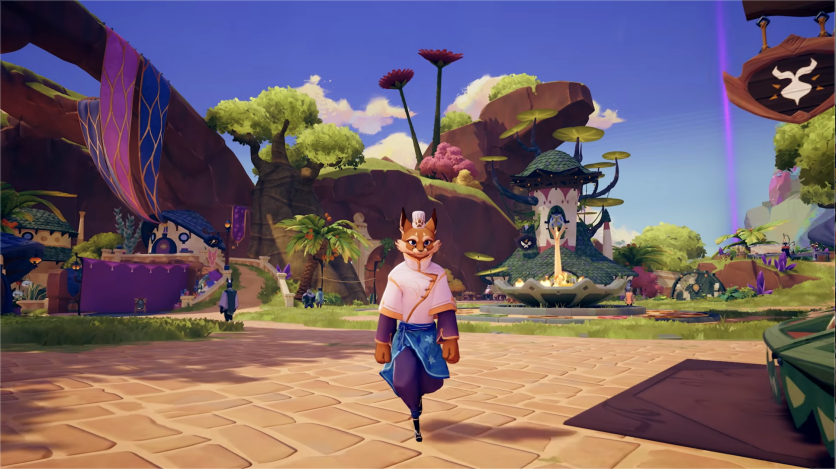
Beastro, the cozy fantasy cooking deckbuilder from Los Angeles-based Timberline Studio, launched today, June 11, 2026, on Steam, PlayStation 5, and Xbox Series X|S — and became available simultaneously as a day-one title on Xbox Game Pass Ultimate and PC Game Pass. The release marks the commercial debut of a game that circulated in demo form for months, drawing unusual crossover attention from both cozy-simulation players and veteran deckbuilder fans.
What makes Beastro worth attention is not merely its genre mix but its structural inversion of how deckbuilders work. In Slay the Spire — the game that effectively defined digital deckbuilders — combat produces rewards that build your deck. In Beastro, the causality runs the other direction: cooking produces the cards, and combat is what happens downstream of a good meal. Players spend their days farming, foraging, fishing, and running a restaurant in the walled village of Palo Pori; the dishes they prepare for visiting adventurers called Caretakers determine what cards those heroes carry into battle against the monsters threatening the village walls.
Panko, Palo Pori, and a Disappearing Mentor
Players control Panko, a young caracal-cat chef whose mentor has gone missing, leaving him in charge of the local eatery. A mysterious visitor soon arrives with warnings about the darkness gathering beyond Palo Pori's protective wall — monsters from outside have claimed the surrounding lands and threaten everything the village has built. Panko's response to this crisis is not to pick up a weapon. His job is to cook.
The game's narrative runs across four chapters, each set in a distinct flavor biome — bitter, salty, sour, sweet, and umami — with its own creatures, culture, and color palette. Timberline's game director Lindsey Rostal detailed the system for PlayStation: each Caretaker who visits the restaurant hails from one of these flavor regions and brings a corresponding palate; cooking a meal that satisfies their tastes unlocks specific card abilities they will use when they venture beyond the walls. An adventurer fed a meal rich in umami unlocks different combat cards than one served a sour-dominant dish.
Meals Build the Deck, Not Battles: How Beastro Inverts the Deckbuilder Loop
The cooking process plays out through minigames — chopping, sautéing, assembling ingredients in what the game calls "mise en place" — where placement and combination choices create a flavor profile that translates into card properties. Ingredients carry both flavor values and power levels, and combining them in different arrangements unlocks new effects. Monster parts brought back from a Caretaker's expedition become available as rare cooking ingredients with unusual card-generating properties.
This separates Beastro architecturally from its deckbuilder predecessors. Most roguelike deckbuilders give players cards as rewards for winning combat encounters. Beastro gives players cards as the output of domestic, support activity — the kitchen work that happens before anyone fights anything. The combat then plays back through a puppet theater sequence in which players experience the Caretaker's adventure not by playing it directly, but by watching an illustrated puppet performance and participating in turn-based card play.
The combat itself draws from traditional trick-taking card games — Spades, Hearts, Euchre — rather than from the collectible card game and energy-management lineage that defines most digital deckbuilders. Players match, neutralize, or enhance "flavor magic" cards rather than managing a resource pool. Rostal told Xbox Wire that the studio specifically pulled toward traditional card games to avoid intimidating cozy-game players who might recoil from Slay the Spire's mechanical complexity, citing an explicit debt to Balatro's demonstration that traditional card structures could anchor a successful modern deckbuilder.
How Unreal Engine 5 Powers Puppet Theater in a 13-Person Studio
The game's signature visual set piece — the puppet theater combat — posed a specific engineering challenge for a studio of 13 people. Timberline's tech director Bryan Pawlowski and art director Kate Rado documented the solution in developer interviews published ahead of launch.
All puppet animations run through UE5's Sequencer tool — a non-linear timeline editor that allowed the team to animate characters directly in the game's scene and preview results in real time, without the export-import pipeline that typically adds hours to animation iteration cycles. Control Rigs handle the puppet and card movements directly. Rado told Creative Bloq that working in-engine directly "saved a ton of time versus having a pipeline where you're importing and exporting and then pulling into Unreal."
For game logic, Timberline built a custom narrative system called Flume using UE5's Slate framework — Unreal's low-level C++ UI library — to create a data-driven design pipeline. Rather than requiring engineering work each time a designer needed a new card behavior or narrative trigger, Flume allowed designers to assemble behaviors from pre-built building blocks through a custom editor interface. The card combat system was built on this foundation, enabling the team to iterate rapidly on flavor-matching rules without touching underlying code.
The main world's visuals use UE5's Nanite and Lumen systems for detailed environments and dynamic lighting, but the puppet theater deliberately departs from that visual register into a handmade, physically textured world — 2D illustrated puppet elements rendered in 3D space, designed by concept artist Nidhi Naroth in a style Rado described as "light-hearted and physical, and sometimes even a little bit silly."
From King's Quest to Cozy Deckbuilder: Timberline's Sophomore Release
Timberline Studio was founded in 2018 by Rostal and Fulton, both veterans of The Odd Gentlemen, the studio that produced the 2015 King's Quest episodic series. Their 2020 debut, The Red Lantern — a narrative dog-sledding rogue-lite published by Kepler Interactive — established the studio's commitment to what Rostal calls "cozy/crunchy" design: games that are inviting enough to draw players who want to relax but mechanically deep enough to hold those who want to think. Beastro is the studio's first self-published release.
The title arrives at a moment when the cozy game genre is expanding rapidly on Steam, with an increasing number of publishers and indie studios betting that the next frontier in the space is not more pastoral simplicity — it is cozy aesthetics wrapped around mechanics that genuinely challenge players who want to be challenged. Game Informer's preview, published by Marcus Stewart after playing a demo, called the game "a creative confluence of gameplay ideas," praising the restaurant loop while noting the combat system would require time to click for newcomers to the genre.
That is the same wager Balatro made with poker hands, and Beastro's sustained pre-launch coverage suggests it may have found an equally persuasive pitch. Beastro is available now on Steam, PlayStation 5, and Xbox Series X|S. Xbox Game Pass Ultimate and PC Game Pass subscribers can download it today at no additional cost.
Frequently Asked Questions
What kind of game is Beastro?
Beastro is a "crunchy cozy" game that blends farming and cooking simulation with trick-taking deckbuilder combat. Players run a restaurant in the village of Palo Pori, preparing meals for adventurers called Caretakers; the dishes they cook determine what cards those adventurers carry into combat against the monsters threatening the village walls.
Is Beastro available on Xbox Game Pass?
Yes. Beastro launched on June 11, 2026, as a day-one title on both Xbox Game Pass Ultimate and PC Game Pass, meaning subscribers can download it at no additional cost. It is also available for standalone purchase on Steam and PlayStation 5.
How is Beastro different from Slay the Spire?
In most deckbuilders, including Slay the Spire, combat rewards build the deck. In Beastro, the deck is built through cooking — ingredients gathered and prepared during the day generate card powers for the Caretakers who eat at your restaurant. The combat uses trick-taking rules inspired by games like Spades and Hearts rather than the energy-management system common to digital deckbuilders, making it more accessible to players new to the genre.
Who made Beastro?
Beastro was developed by Timberline Studio, a 13-person independent studio based in Los Angeles, California. The studio was founded in 2018 by Lindsey Rostal and Nathan Fulton, both previously of The Odd Gentlemen, which created the 2015 King's Quest episodic series. Beastro is Timberline's second game and its first self-published release.
ⓒ 2026 TECHTIMES.com All rights reserved. Do not reproduce without permission.


