Twenty years ago, a $600 million wager on a rocket company that nearly went bankrupt looked like one of venture capital's more eccentric long shots. This week it became one of the most lucrative bets the industry has ever recorded.
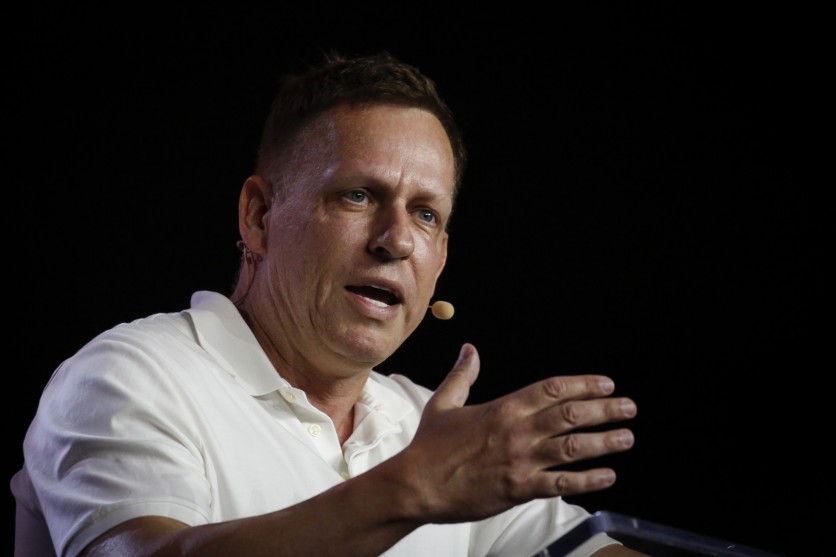
Peter Thiel's Founders Fund stands to reap a paper windfall exceeding $50 billion from its early stake in SpaceX, according to reporting by Bloomberg dated June 11, 2026. The firm owns roughly 3% of Elon Musk's space company after putting in about $600 million across multiple funding rounds dating back nearly two decades. At SpaceX's $135-per-share IPO price, that position is worth more than $50 billion, a person familiar with the matter told Bloomberg.
The math is staggering: a roughly 80-fold return that ranks among the largest single venture wins in history. And Founders Fund is not alone. SpaceX completed its public debut on June 12, listing on Nasdaq under the ticker SPCX, with the stock rising 19% on its first day to close at $160.95 and briefly pushing the company's market value above $2 trillion. That outcome turned a cluster of early backers into instant mega-winners and reshaped the league table of the most profitable venture investments ever made.
This story is not about the order book or the subscription frenzy that preceded the listing. It is about the return: how a venture firm parlays an early entry price into a multibillion-dollar position, what a public listing of this size actually requires, and what any of it means for the ordinary investor who has watched from the sidelines.
How does $600 million become $50 billion?
The arithmetic of venture capital rewards two things above all: getting in early and not getting diluted out. Founders Fund did both.
The firm was one of SpaceX's earliest outside backers, first investing around 2008, the year the company nearly ran out of cash before its Falcon 1 rocket finally reached orbit. Buying in at that moment meant an entry valuation a tiny fraction of today's figure. SpaceX priced its IPO at $135 per share for an offering of roughly 555.6 million shares, an implied valuation of nearly $1.77 trillion, according to techstartups citing Bloomberg. A 3% slice of that is worth north of $50 billion.
The leap from $600 million to that figure is not a single 80x ticket. It is the compounding of many rounds. Founders Fund kept writing checks through SpaceX's growth, deploying capital across the company's funding history rather than placing one bet and walking away. Continuing to invest as the valuation climbed protected the firm's ownership percentage against dilution, the silent tax that shrinks an early holder's slice every time a startup issues new shares. By following its money, Founders Fund held onto roughly 3% all the way to the listing.
That discipline is why the firm's outcome dwarfs even its impressive peers. Bloomberg reported that Andreessen Horowitz, which led a SpaceX round in early 2023, holds a stake worth more than $10 billion, the largest return in that firm's history. Sequoia Capital, which first backed SpaceX in late 2019, owns about 1.5% of the company, a position valued at more than $20 billion after investing roughly $2 billion. The earlier the entry and the larger the preserved stake, the bigger the payoff.
Why is this still a paper gain, not cash in the bank?
The $50 billion figure is a mark-to-IPO valuation, not money wired to investors' accounts. That distinction matters.
When a company goes public, large pre-IPO holders such as venture funds are typically bound by lock-up agreements, contractual restrictions that bar them from selling shares for a set window, often 90 to 180 days after the debut. The rules exist to stop a flood of insider selling from crushing the stock in its first months. So even though Founders Fund's stake is worth more than $50 billion on paper, the firm cannot simply liquidate at the open.
The value is also tied to a price that moves. SpaceX closed its first session up 19% at $160.95, lifting the implied worth of these stakes even higher, but a public stock can fall as easily as it rises. Until lock-ups expire and shares are actually sold, often in stages to avoid moving the market, the windfall remains a reported, potential gain rather than a realized one. Some of that exposure may have been trimmed earlier through secondary sales, in which insiders sell existing shares to other private buyers ahead of an IPO, but the bulk of the headline number is paper.
That is the honest texture of a number like $50 billion: real enough to rewrite the record books, contingent enough that it could shrink before any of it is banked.
Read more: SpaceX Surges in Its Record Debut tops $160: What the Market Is Really Buying Beyond $2 Trillion
What does an IPO this size actually require?
A debut of this magnitude is not a routine listing. SpaceX sought to raise up to $75 billion, an offering that NPR described as the largest in history, eclipsing every prior IPO on record.
Getting there demanded a confidential SEC filing, audited financials disclosed to regulators, an underwriting syndicate of major banks, and enough institutional demand to absorb hundreds of millions of shares. Reports indicated that institutional investors and sovereign wealth funds submitted orders far exceeding the available stock, a sign of confidence in SpaceX's sprawling business. The company is no longer a single-product launch provider: it dominates commercial launch through its Falcon program, runs the fast-growing Starlink satellite-internet network, and is pouring money into Starship, the vehicle Musk hopes will one day carry humans to Mars.
Investors increasingly treat SpaceX as a hybrid of aerospace contractor, telecom giant, defense supplier, and infrastructure platform. That breadth is what justified pricing the company near $1.8 trillion, a valuation once reserved for the largest technology firms on Earth.
What does this mean for ordinary investors?
For most of SpaceX's existence, retail investors had no way in. The company stayed private for more than two decades, and its shares traded only in private rounds and tightly controlled secondary markets open to institutions and the wealthy. The enormous gains now flowing to Founders Fund and its peers were generated entirely in that private window, before any public investor could buy a single share.
The IPO changes the access question, not necessarily the upside. Once SpaceX trades on Nasdaq under SPCX, any brokerage customer can buy the stock. But they are buying at a roughly $1.8 trillion starting valuation, not the early-stage price Founders Fund paid. The life-altering multiples came from the years of private risk; public-market buyers are entering after the steepest part of the climb.
That is the structural reality the windfall illustrates. Venture capital's biggest rewards accrue to those who back companies long before the broader market believes in them and who can stomach the chance of total loss for years. Retail access to a marquee listing is a milestone, but it is not the same as early-stage ownership. The lesson of the $50 billion number is less about SpaceX specifically than about who captures value in private markets, and when the public is finally invited in.
If SpaceX holds anywhere near its debut valuation, Thiel's $600 million bet will stand as one of the most remarkable returns venture capital has ever produced, a reminder of both the outsized payoffs and the long odds that define the earliest rounds of investing.
Frequently Asked Questions
How much did Founders Fund invest in SpaceX, and what is the stake worth now?
Founders Fund invested about $600 million across multiple rounds dating back nearly two decades, building a roughly 3% stake. At SpaceX's $135 IPO price, Bloomberg reports that position is worth more than $50 billion on paper, a return of roughly 80 times the original outlay.
Has Founders Fund actually cashed in the $50 billion?
No. The figure is a mark-to-IPO valuation, not realized cash. Large pre-IPO holders are typically bound by lock-up agreements that restrict selling for roughly 90 to 180 days after the debut, and the value can move with the share price, so the gain remains a reported paper figure until shares are sold.
Were other venture firms big winners from the SpaceX IPO?
Yes. Bloomberg reported Andreessen Horowitz holds a stake worth more than $10 billion, its largest-ever return, while Sequoia Capital's roughly 1.5% position has been valued at more than $20 billion after about $2 billion invested.
Can ordinary investors buy SpaceX shares now?
After the June 12 Nasdaq debut under the ticker SPCX, any brokerage customer can buy the stock. However, they enter at a starting valuation near $1.8 trillion rather than the early-stage prices that produced the venture firms' outsized gains.
ⓒ 2026 TECHTIMES.com All rights reserved. Do not reproduce without permission.


