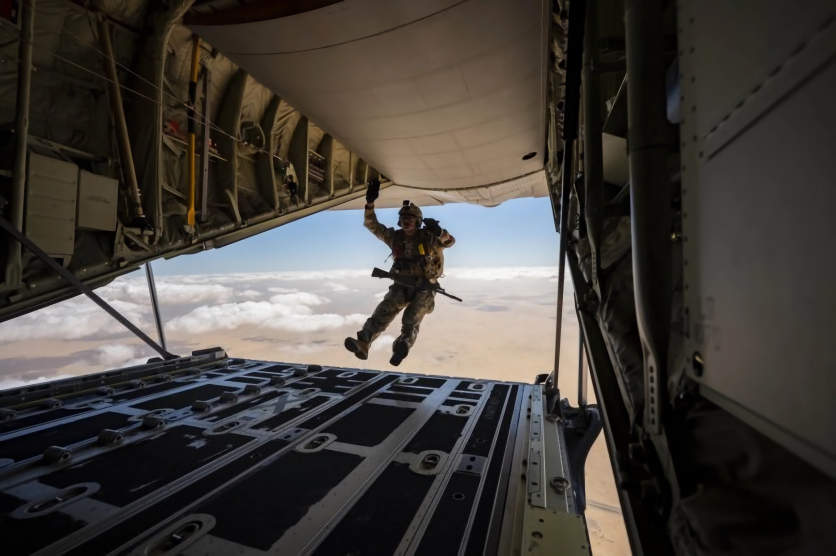
Defense tech venture capital hit a new all-time record in the first five months of 2026, with more than $14.6 billion flowing into military, national security, and law enforcement startups — surpassing the entire previous full-year record of $9.6 billion set in 2025, according to Crunchbase. The surge arrived the same week the Senate Armed Services Committee passed a sweeping defense authorization bill containing a provision to create a new four-star Robotic and Autonomous Systems Combatant Command — a proposal inspired in part by drone warfare in Ukraine and a Saronic autonomous surface vessel that helped rescue Army crew members from a downed Apache helicopter near the Strait of Hormuz.
The speed of capital and the speed of deployment have rarely aligned so directly.
The Case for a New Kind of Defense Contractor
For most of the last decade, venture capital and the defense industry occupied separate worlds. Ethical objections, procurement complexity, and long development timelines kept most institutional investors away. That calculus began changing with the Russia-Ukraine war, which provided the bluntest possible demonstration that autonomous drones and software-defined military systems could outperform legacy hardware at a fraction of the cost.
The result has been a structural shift in how private capital flows to national security. Defense tech funding totaled just $1.6 billion in 2020. It climbed to $3.9 billion in 2021, then held roughly flat between $2.8 billion and $3.8 billion annually through 2024. The jump to $9.6 billion in 2025 already felt like a generational break. The numbers from the first five months of 2026 have made 2025 look like an opening act.
How Anduril's Lattice OS Became the Pentagon's Drone Brain
The single largest contributor to 2026's funding surge is Anduril Industries, whose $5 billion Series H round — announced May 13, led by Thrive Capital and Andreessen Horowitz — valued the company at $61 billion. That valuation is more than double what it was less than a year earlier, when Anduril closed a $2.5 billion Series G at $30.5 billion. The pace of appreciation reflects not just investor enthusiasm but a deepening integration with the US military: in March, the Army awarded Anduril a 10-year, up to $20 billion enterprise contract to deploy its Lattice platform across the service's counter-drone operations.
Lattice is the technical architecture at the center of what makes Anduril different from a traditional defense contractor. Rather than building bespoke weapons systems sold under fixed-price contracts, Anduril built an open-architecture software platform — a decentralized mesh network of sensors, AI processing layers, and effectors — that can be updated, extended, and scaled the way consumer software is. Third-party developers can integrate their own sensors and weapons into Lattice through a published software development kit using standard REST and gRPC interfaces. When the Army ran its Flytrap 5.0 counter-drone exercise this spring, industry partners with no prior exposure to the platform integrated their systems in hours rather than the weeks or months traditional procurement cycles require.
The engineering tradeoff at the core of Lattice is deliberate and consequential: the platform is designed to compress the time between detection, targeting classification, and the decision to engage — operating, in Anduril's own framing, faster than human decision loops. That design philosophy is what made Lattice attractive to the Pentagon's Joint Interagency Task Force 401, the military's primary counter-drone unit. It is also what placed Anduril in the center of a live congressional and international policy debate about where human authorization ends and machine autonomy begins — a debate that accelerated sharply this week.
Anduril is also building Arsenal-1, a 5-million-square-foot autonomous weapons manufacturing facility near Columbus, Ohio, designed to produce drones and loitering munitions at a scale and pace that traditional defense primes have not attempted.
Read more: OpenAI to Develop Military AI for Palmer Luckey's Anduril and Help Defend Against Drone Attacks
Shield AI's Hivemind: Flying Without GPS
While Anduril built the platform connecting autonomous systems, Shield AI made the case that the core engineering gap in modern warfare is not lethality but survivability — specifically, the inability of most military systems to operate when GPS and communications are jammed.
Shield AI president Brandon Tseng put the problem plainly in a recent interview with Military Embedded Systems: the vast majority of autonomous military systems on the market — he put the figure as high as 99% — cannot function in the communications-jammed environments that define modern battlefields. AI pilots, he argued, solve that.
Hivemind is Shield AI's solution. The platform-agnostic autonomy stack runs onboard an aircraft and uses local perception, decision-making, and action capabilities to execute missions without continuous human input, without GPS, and without stable communications links. In February, the US Air Force selected Shield AI as one of only two mission autonomy providers for its Collaborative Combat Aircraft program — the Pentagon's largest aviation procurement in a generation. Within two weeks, Hivemind was flying combat air patrols aboard Anduril's YFQ-44A Fury drone prototype, engaging simulated targets with no human pilot on the controls.
Shield AI closed a $2 billion total raise in March — $1.5 billion in Series G equity co-led by Advent International and JPMorgan Chase's Strategic Investment Group, plus $500 million in preferred equity from Blackstone — at a $12.7 billion valuation. The raise came six weeks after the Air Force contract award and marked a 140% increase from the company's valuation just a year before.
Saronic Ships Drones, Then Deploys One in Combat
Saronic Technologies is pursuing the maritime equivalent of what Anduril and Shield AI are doing in air and land domains: replacing conventional crewed vessels with software-defined autonomous ships. Its $1.75 billion Series D, closed March 31 and led by Kleiner Perkins, valued the Austin-based company at $9.25 billion. The round came alongside a $392 million US Navy production contract and the opening of a new shipyard in Franklin, Louisiana.
Saronic's vessel portfolio runs from the 24-foot Corsair — a fully autonomous surface vessel designed for surveillance and logistics — up to the 180-foot Marauder, the first hull of which was completed in under six months. The Corsair is the same class of vessel that this week took part in a rescue operation after Army crew members were downed near the Strait of Hormuz. The incident was a rare public demonstration that autonomous maritime systems have crossed from prototype into operational deployment.
The company's pitch to investors rests on an architecture argument: autonomous ships designed from the outset to be software-defined can be iterated rapidly, built without legacy shipyard cost structures, and deployed at manufacturing volumes the traditional US shipbuilding industry has not matched since World War II.
Mach Industries and the Mid-Tier Opportunity
The megaround trend — fewer deals, larger check sizes — has not crowded out earlier-stage companies pursuing specific sub-categories of autonomous warfare. Mach Industries closed a $300 million Series C on June 2, co-led by Infinite Capital and Ribbit Capital, valuing the Huntington Beach, California-based autonomous drone systems manufacturer at $1.8 billion — nearly four times its valuation from just a year earlier. Mach, founded in 2023 by then-19-year-old MIT dropout Ethan Thornton, has grown to 350 employees running five simultaneous autonomous weapons programs out of a 115,000-square-foot manufacturing facility.
Space-related startups with defense applications also ranked among the sector's largest funding recipients in 2026, including True Anomaly, Sierra Space, and Vast — all companies whose technology has both commercial and national security applications, a dual-use profile that broadens their investor base beyond specialized defense funds.
What Investors Are Paying For
The profile of a fundable defense tech startup has clarified considerably. Investors in 2026 are not writing large checks to proof-of-concept companies. The criteria that define the category's leading recipients — active government contracts, demonstrated hardware delivery at scale, and a credible path to manufacturing volume — reflect a deeper shift in the sector's structure.
Capital concentration mirrors this dynamic. Crunchbase data shows 107 venture rounds in defense tech through early June 2026, putting the year on pace slightly ahead of the 206 total deals in 2025. The dollars per deal have expanded dramatically. Where earlier years saw funding distributed across a larger number of companies, 2026 has concentrated investment in a small group of platform companies large enough and integrated enough with the military to begin acquiring earlier-stage players.
Crossover investor activity signals how far the transformation has gone. Advent International and JPMorgan Chase's Security and Resiliency Initiative led Shield AI's Series G. Kleiner Perkins led Saronic's maritime round. Thrive Capital and Andreessen Horowitz anchored Anduril's Series H. The entry of institutional investors with pension-fund-quality LP bases represents capital with a dramatically larger pool and longer time horizon than the specialized defense venture funds that seeded the category from 2017 to 2024.
Exits Take Shape
The sector's first meaningful public-market test came when AI drone company Swarmer went public earlier in 2026, with shares rising more than 500% on its first day of trading. As of early June, the stock remained near the high end of its trading range, providing early evidence that public markets can absorb defense tech at venture-scale valuations.
Anduril is widely regarded as the most significant potential IPO in the sector, though no timeline has been announced. A public offering at its current scale would represent the largest defense-focused technology listing in years. Crunchbase's predictive intelligence tools identify nearly four dozen companies in the military, national security, and law enforcement categories as likely or probable IPO candidates, including True Anomaly, Shield AI, Sierra Space, and Chaos Industries.
What the Investment Surge Means for Human Control of Autonomous Weapons
The congressional response to the investment surge arrived in the same week as the latest funding milestones. The Senate Armed Services Committee's $1.14 trillion FY2027 National Defense Authorization Act, passed June 11 in an 18-9 committee vote, contains a provision permitting the Pentagon to establish the Robotic and Autonomous Systems Combatant Command — a four-star command that would be the first new combatant command since US Space Command was reestablished in 2019. Staffers said the idea was inspired in part by Ukraine's creation of a drone-focused military service and by the bottleneck the Army encountered in the Replicator initiative, where autonomous systems were procured but not efficiently delivered to warfighters.
The NDAA provision arrived three days after Sen. Adam Schiff introduced the Human Authority in Lethal Operations Act — legislation that would require a designated commander to exercise final authority over any decision to use force involving autonomous weapons, and mandate records of target-selection decision-making. The two proposals represent divergent congressional instincts about the same technology: one seeks to institutionalize autonomous warfare at the combatant command level; the other seeks to ensure a human remains in the chain of command for every lethal engagement. Both were triggered by the same investment surge.
The international backdrop is equally live. The UN Secretary-General's call for a legally binding instrument on autonomous weapons by the end of 2026 — endorsed by the International Committee of the Red Cross — remains unresolved. The companies now commanding the largest venture capital checks in the history of the defense tech sector build systems designed to operate at the speeds where human authorization becomes, in their own engineering documentation, a constraint on performance rather than a safeguard.
Frequently Asked Questions
How much has been invested in defense tech startups in 2026?
More than $14.6 billion flowed into military, national security, and law enforcement startups in the first five months of 2026, surpassing the previous full-year record of $9.6 billion set in 2025, according to Crunchbase. The surge was driven primarily by three megarounds: Anduril's $5 billion Series H in May, Shield AI's $2 billion total raise in March, and Saronic's $1.75 billion Series D in March — together accounting for roughly $8.75 billion of the total.
What is Anduril Industries valued at, and how does its Lattice platform work?
Anduril was valued at $61 billion following its May 2026 Series H financing round led by Thrive Capital and Andreessen Horowitz. Its Lattice platform is an open-architecture, AI-enabled command-and-control system built on a decentralized mesh network that connects sensors, autonomous vehicles, and weapons systems across land, sea, air, and space. Lattice is designed to compress the time between detection and targeting engagement to machine speed — faster than human decision loops — a capability central to counter-drone operations where engagement windows last only seconds.
What is the Human Authority in Lethal Operations Act and why does it matter for autonomous weapons investors?
The Human Authority in Lethal Operations Act, introduced by Sen. Adam Schiff on June 8, 2026, would require a designated commander to exercise final authority over any use of force involving autonomous or semi-autonomous weapon systems, and mandate documentation of how targets are selected. The bill addresses the same engineering tradeoff that defines the sector's most valuable companies: Anduril's Lattice and Shield AI's Hivemind are both designed to act faster than human authorization allows. Whether Congress imposes legally binding human-control requirements would directly affect how these systems are deployed — and potentially how regulators assess their government contracts.
Is defense tech venture capital a sustainable investment category?
The structural indicators point toward durability. Deal count in 2026 is running only slightly ahead of 2025, even as dollars invested have surged — reflecting concentration in platform companies with active government contracts rather than speculative new entrants. The entry of crossover investors with pension-quality LP bases, the Army's consolidation of more than 120 Anduril contracts into a single 10-year enterprise vehicle, and Swarmer's successful IPO debut all signal that the category has moved from venture experiment to institutional infrastructure. The pending IPOs of several leading companies will provide the first sustained public-market tests of whether valuations built on government contract pipelines translate to durable equity value.
ⓒ 2026 TECHTIMES.com All rights reserved. Do not reproduce without permission.


