On November 19, the final of the international Best Business Awards competition took place. This is a prestigious award for entrepreneurs and experts, covering various areas of business, from organizations to cutting-edge technologies.
The TechTimes editorial team followed the event closely, as among the winners in the "Best IT Architect" category was our author, IT architect at EPAM Systems, Yauheni Kanavalik.
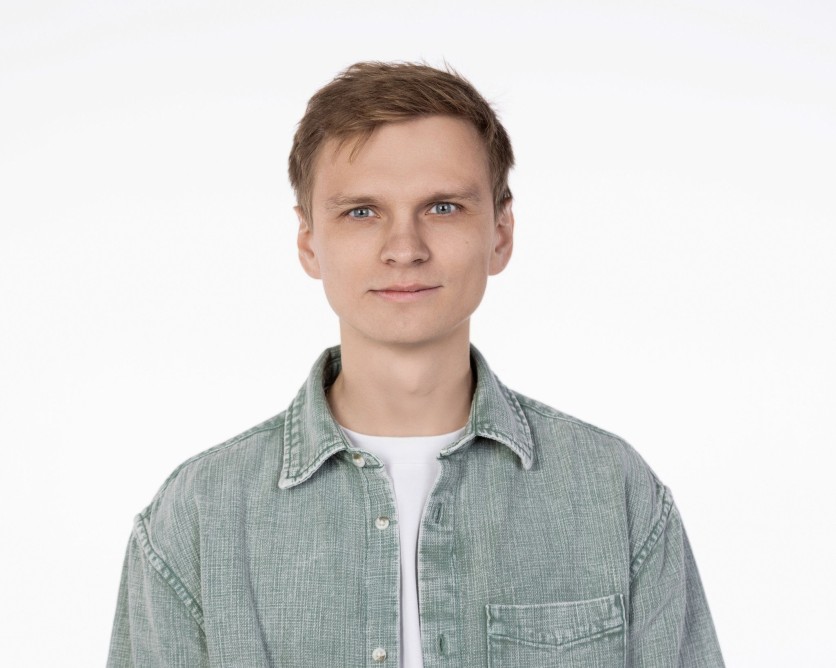
We reached out to him to learn about his impressions of the competition, his career path, and his outlook for the future. Yauheni, who has extensive experience working on high-load projects at Yandex and international corporations such as Disney and Avis, shared his thoughts on scalability, architecture, and future trends.
— Yauheni, congratulations on your nomination for the Best Business Awards as 'Best IT Architect.' This is a very prestigious award. Can you tell us what this recognition means to you?
— Thank you very much. For me, this is undoubtedly a very important recognition. It is recognition of the decisions that have been successfully implemented. The best IT architect is someone who can not only write code but also see the whole picture. This means being able to anticipate where a bottleneck will arise tomorrow, how the system will grow, and what challenges may lie ahead. This nomination confirms that my approach to scalability, stability, and innovation is in demand. I feel a great sense of responsibility and inspiration to continue offering the business the most advanced and effective IT strategies.
I like the idea that IT architects don't just build IT solutions, but create the foundation for business growth, helping companies move forward and stay competitive in an ever-changing world.
— Your career is impressive: from Yandex.Search to working with giants like Disney and Avis. Let's start with Yandex. You worked on improving Yandex.Search, including support for the Olympics. What did that mean in practice?
— Working at Yandex on such large-scale events is, as they say, a life lesson. That's where I realized how important system stability is. My first major project at Yandex was supporting the 2018 Olympics on Yandex.Search. At that time, I was a Frontend Engineer, and I was given a critical task—to provide all the necessary support. Imagine: screen-sized banners that displayed all the information about the Olympics right in the search results. It was a big change for such a large system. We managed to provide users with the data they needed and surpass Google in the popularity of such queries. This drew huge attention to Yandex.Search and increased our share. That was the moment when I truly tasted large-scale work and understood what it means to bear responsibility for a product used by millions—it's an incredible feeling.
I played an important role in implementing this functionality. We integrated push notifications directly into the search—this had never been done before. In addition, we managed to speed up information retrieval on tablets and mobile devices for many queries by as much as 40%. It was a real engineering victory—we optimized the performance of web applications to unprecedented levels, and it was gratifying to see how this directly impacted user speed and convenience.
At that time, I wasn't yet an architect and didn't fully coordinate people, but I already got a taste of large-scale work.
— In addition to the Olympics, you also participated in a project supporting the FIFA World Cup in Russia. How was this project different, and what risks did you see there?
— The World Cup is probably the most popular search query on Yandex. The risks here were enormous because we were dealing with an audience that expected instant access to the most up-to-date information.
We were essentially creating the digital heart of a global sporting event, and any hiccup could have had huge reputational consequences, so stability and speed were an absolute priority.
We put all the information on Yandex's homepage: schedules, tournament tables, current scores. There was also the option to subscribe to match notifications. It was like creating a living organism that constantly updates and reacts to events in real time. We wanted every fan to feel at the epicenter of what was happening, receiving all the necessary information instantly, almost like a snap of the fingers.
For this project, we also used React, NodeJS, and significantly updated our CI/CD, which allowed us to respond quickly to changes.
— What about 'Yandex.Tutor'? You led the frontend team there from scratch. What was the most challenging part of this project?
— "Yandex.Tutor" was an experience of leading a frontend team at Yandex. It was a challenge that made me rethink team management and the product development process. We were building the project from scratch and integrating it into Yandex's monorepo, which is not easy in itself. Imagine having to fit a new, complex mechanism into a huge, already existing system where every detail matters. One of the most difficult tasks was integrating a formula recognition system. This required deep frontend knowledge and an understanding of machine learning algorithms to ensure the system worked accurately and flawlessly, recognizing even the most intricate mathematical expressions.
We also provided functionality for conducting interactive video broadcasts, checking homework, and giving feedback via chats and voice messages. We aimed to create a platform that felt as close as possible to live classroom interaction, so that students and teachers would feel comfortable and collaborate effectively.
It was a full-fledged online school, accessible nationwide. The focus was on convenience for both teachers and students. We constantly asked ourselves: 'Is it convenient? Is it clear? Is it slow?' The main goal was to make the learning process as simple and enjoyable as possible, so that students could focus on knowledge, and teachers on their lessons.
— After Yandex, you moved to the USA and started working at EPAM Systems, where you collaborated with companies like Disney, Avis, and Mars. What is the difference in the approach to scalability when moving from a local giant to global corporations?
— The main difference is probably scale and diversity. At Yandex, we dealt with tasks involving a huge number of users within a single country, but at EPAM I encountered the need to scale systems for a global audience, taking into account factors like different regions, time zones, legal requirements, language barriers—it's a completely different level of complexity. While at Yandex, we often worked with an already established infrastructure, at EPAM, I had to participate in creating architecture from scratch for entirely new products or carry out deep modernization of existing systems for companies like Disney, where the stakes are incredibly high.
Here at EPAM, there is a noticeable shift in focus towards advanced areas. More attention is being given to solutions involving AI, video processing, and generative AI, which requires a deeper understanding of various technologies and their integration. It's like assembling a complex puzzle, where each piece—whether it's a machine learning algorithm or a new database—must fit perfectly to create a complete, efficient, and innovative picture. This transition from local tasks to global ones, from optimizing existing solutions to creating fundamentally new ones, has become one of the most interesting and developmental stages of my career.
— You have worked on complex projects such as the virtual try-on system for Estee Lauder and AR projects for Mars and Microsoft. Which architectural approaches have proven to be the most effective for such innovative solutions?
— In the project for Estee Lauder, we faced the challenge of creating the most natural virtual makeup try-on possible. Our goal was not just to show how a lipstick or eyeshadow would look, but to make it so that a person could see themselves in the mirror as if they had actually applied the makeup. This required using the most advanced machine learning algorithms, working with 3D graphics, and complex mathematical models. We literally immersed ourselves in research to achieve maximum realism.
For example, we applied affine transformations and filters, and also found an elegant solution to speed up rendering by passing GPU data from ThreeJS directly into TensorFlowJS. This allowed us to run two models for each render: one to determine facial features and the other to detect skin tone. Only after that would the makeup be applied to the virtual image, creating the most natural effect possible.
Imagine how this changes the user experience—no more disappointment from the lipstick color looking completely different in real life than on the screen.
For Mars, we developed a system that helps stores analyze product placement. It works on both mobile devices and the web. The idea is that store employees can quickly check if the products are correctly displayed on the shelves and immediately get recommendations. It's as if every merchandiser has a personal consultant who always advises on how to make the display as attractive and effective as possible.
We made a process that used to take hours of manual analysis almost instantaneous by using computer vision and evaluation algorithms. This increases accuracy, which directly impacts sales. The system also helps analysts make decisions about how effective a particular product placement is by providing them with data to optimize sales and marketing strategies.
— Tell us more about the Horizon 4 project for Liberty Global. It was a big project, as far as I understand?
— Yes, Horizon 4 is one of the largest projects where I served as the tech lead. We were developing a platform for Liberty Global, a leading European TV provider. It was a comprehensive system combining linear TV, video on demand, streaming, and apps like Netflix. We created a set-top box with 4K Ultra HD, a mobile app, and a voice-controlled remote. Our goal was to make it so that anyone, regardless of age or technical skills, could easily and enjoyably use all the platform's features.
To achieve this, we moved to a microservices architecture, implemented SAFe Agile, and created a data lake for analysis and decision-making. The outcome was increased customer satisfaction, reduced churn, and growing the number of Horizon GO app users to three million. We even implemented a custom solution for analyzing team performance and identifying "stuck" Merge Requests.
It's incredibly motivating to see how your work makes a real difference for so many people.
— You mentioned that you worked on a project for Ticketmaster, dealing with a complex synchronization system and offline functionality. What was the main challenge?
— Ticketmaster is a major ticket reseller, and accuracy and availability of information are extremely important for them. We faced a challenging task: ensuring the system could operate even without a stable internet connection so that users could freely purchase tickets and receive up-to-date information. This meant developing complex synchronization algorithms and conflict resolution mechanisms to ensure that no transaction would be lost.
This project was also interesting because I had to lead not only JavaScript teams but also teams working with GoLang, which required expanding my backend development skills. It demanded broadening my knowledge in backend development and learning to effectively manage diverse teams.
— What was your role in the Avis project, which is currently under development? What tasks does such a large team face?
— In the Avis project, I act as the architect and lead of a large team of over a hundred people. My task is to build the system in such a way that it is scalable, reliable, and meets all non-functional requirements in the long term. We work on both the frontend and backend using NextJS and JavaScript. This means we are responsible for the entire user journey—from how they see and interact with the interface to how the data is processed and stored on the server.
This is a huge team, consisting of 8 distributed teams, totaling more than 50 developers.
— You also founded a successful dog food business. How does your entrepreneurial experience influence your work as an IT architect?
— Being an entrepreneur is a completely different perspective on technology. You realize that IT is not an end in itself, but a tool for achieving business goals. You need to think about how to make a system technically perfect, and how it will generate profit, optimize processes, and reduce costs. My experience has taught me to look at IT solutions from the perspective of their economic efficiency and practical usefulness. This helps me better understand clients' needs and offer solutions that truly work.
— You consult startups in Silicon Valley. What are the main mistakes they make, and what advice would you give them?
— One of the main mistakes is trying to do everything at once without having a clear vision of the product and its value to the customer. Startups often get carried away with complex technologies, forgetting the fundamentals: understanding the customer, creating a minimum viable product (MVP), and gradually developing it. An MVP is a strategy that allows you to test hypotheses with minimal costs and risks. The faster you get feedback from real users, the faster you can adapt and create a product that the market truly needs.
I advise them to start with a simple but reliable solution that can be quickly brought to market and receive feedback. It is also important not to be afraid to use cloud services and ready-made solutions so as not to waste resources on developing something that already exists. Why reinvent the wheel when there are ready, reliable, and tested tools? It is better to focus efforts on the unique value of your product.
And, of course, never forget about security and scalability—it's better to lay the foundations for growth from the very beginning.
— In your opinion, which architectural approaches will be most in demand in the coming years? What can we expect in the field of AI and data processing?
— I am confident that artificial intelligence will play an increasingly important role. We are already seeing how generative models are changing development approaches, helping create content, automate processes, and analyze data. It's as if we have a super-assistant that can handle routine tasks, freeing up time for more creative and strategic work.
In the future, we will see even deeper integration of AI into system architecture. There will also be growing demand for high-performance applications capable of processing enormous amounts of data in real time.
Imagine systems that instantly analyze billions of gigabytes of data to provide us with valuable insights—this is no longer science fiction, but reality.
Issues of security, data privacy, and system resilience will remain important. I believe that architects will increasingly focus on creating flexible, adaptive, and 'smart' systems capable of self-learning and self-optimization. It's no longer just about writing code; it's about creating self-developing entities that can improve their performance every day, becoming increasingly efficient and valuable for business.
— What advice would you give to young specialists who are just starting their journey in IT architecture?
— Don't be afraid to learn new things and experiment. The IT field changes very quickly, so it's important to constantly develop yourself. If you stop, you'll fall behind. That's why I advise everyone—from beginners to experienced professionals—to continually broaden their horizons: study different technologies, try different projects, read articles on the topic.
Don't forget the fundamental principles: decomposition, scalability, fault tolerance. And most importantly, develop your soft skills: the ability to communicate, work in a team, and convey your ideas. An architect is both a technical specialist and a leader who can inspire and guide others. After all, the success of a project depends on how smoothly the team works together, how effectively we exchange ideas, and how convincingly we can present our vision.
ⓒ 2025 TECHTIMES.com All rights reserved. Do not reproduce without permission.


