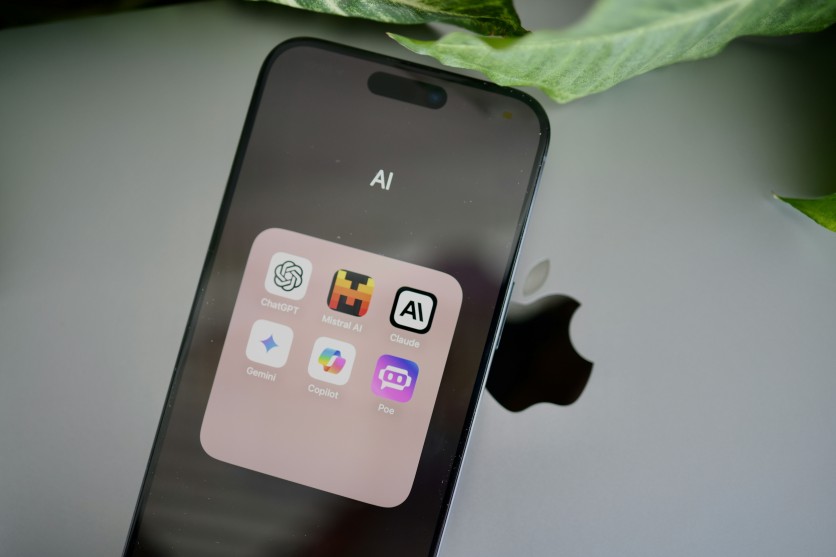
By 2026, AI assistants will evolve from optional apps to default OS features, seamlessly embedded across Windows, iOS, Android, and emerging platforms. This integration allows assistants to anticipate user needs, manage tasks autonomously, and enhance device interactions using voice, gesture, and predictive interfaces. AI assistants 2026 mark a shift toward intelligent, context-aware computing where devices act proactively rather than reactively.
As AI assistants become default OS features, they reshape workflows, daily routines, and productivity paradigms. Edge AI, federated learning, and privacy-first designs ensure real-time performance without compromising data security. The following sections explore the technical foundations, user benefits, ecosystem impact, and future directions of AI assistants, showing why they are becoming central to the 2026 digital experience.
Current State and Technical Foundations of AI Assistants 2026
AI assistants 2026 rely on advanced computational frameworks to deliver fast, intelligent, and context-aware responses. These systems combine multiple input modalities with on-device processing for low-latency performance, ensuring smooth interactions even under constrained hardware. Understanding these technical foundations helps explain why AI is now integral to default OS features and central to modern device ecosystems.
- Multimodal inputs: Voice, text, gesture, facial recognition, and visual context enable natural, human-like interactions. Assistants can interpret images, detect objects, and combine these inputs with verbal commands for richer understanding.
- Edge AI models: Local processing reduces latency to under 100ms, enabling real-time tasks such as app launching, file searches, and dynamic notifications without relying on cloud servers.
- Privacy-first frameworks: Federated learning and on-device storage ensure sensitive data remains private while still allowing assistants to improve through aggregated learning.
- Context-aware intelligence: AI analyzes usage patterns, location, environmental factors, and user preferences to anticipate actions, offer proactive suggestions, and adapt behavior over time.
- Resource-efficient computation: Advanced model compression and neural network optimization allow assistants to perform sophisticated inference on mobile processors without draining battery or overheating devices.
- Continuous learning: Assistants update dynamically with incremental learning, ensuring adaptation to evolving user behaviors without retraining the entire model.
Read more: Top 5 AI Jobs You Should Pursue in 2026
Integration of AI Assistants 2026 as Default OS Features
Embedding AI assistants as default OS features allows seamless management of daily tasks across applications and devices. Automation reduces cognitive load and streamlines routines while improving accessibility and consistency across platforms. Integration across ecosystems positions AI as a central orchestrator rather than a standalone utility, redefining how users interact with devices.
- Workflow automation: Automatically drafts emails, schedules meetings, prioritizes notifications, and optimizes battery and storage based on predicted usage patterns.
- Cross-app continuity: Maintains state across multiple apps, syncing calendars, reminders, documents, and smart home devices without repeated inputs.
- Enterprise adoption: Customizable AI agents support secure business workflows, automate reporting, and provide compliance tracking while maintaining corporate data privacy.
- Device ecosystem integration: Coordinates tasks across smartphones, tablets, PCs, smartwatches, and wearables, providing a unified experience across all user devices.
- Proactive system optimization: Monitors system health, manages background tasks, and adjusts performance dynamically to ensure smooth device operation.
- Contextual assistance: Provides real-time, situation-aware recommendations, such as suggesting routes before commutes, auto-setting "Do Not Disturb" during meetings, or preloading frequently used apps.
Key Capabilities of OS-Integrated AI Assistants
Intro: AI assistants 2026 deliver capabilities that go far beyond traditional apps, redefining productivity, multitasking, and device interaction. Their integration as default OS features enables predictive, adaptive, and intelligent behavior that is tightly coupled with both software and hardware. Understanding these capabilities clarifies why AI assistants are now indispensable in 2026 digital ecosystems.
- Natural language understanding: Handles complex, multi-step queries, context switching, clarifications, and follow-up questions seamlessly.
- Predictive task management: Suggests optimal routes, preloads documents, auto-completes repetitive actions, and anticipates user needs before manual input.
- Multimodal outputs: Combines speech, visuals, notifications, haptic feedback, and augmented reality overlays for richer, more intuitive interactions.
- Personalized adaptation: Learns habits and preferences over time, adjusting suggestions, notifications, and app priorities for individual users.
- Cross-platform memory: Remembers ongoing tasks and preferences across devices and apps, allowing users to pick up tasks seamlessly from one device to another.
- Dynamic resource allocation: Adjusts computational and network resources for optimal performance without disrupting other system functions.
Challenges, Ethics, and Future Directions for AI Assistants
Despite widespread adoption, AI assistants 2026 face technical, ethical, and regulatory challenges that impact reliability, user trust, and societal acceptance. Ensuring transparency, fairness, and safety is critical as assistants evolve into default OS features. Future developments will focus on autonomous decision-making, responsible AI, and energy-efficient computation for sustained scalability.
- Hallucination and accuracy risks: Verifiable response frameworks, redundancy checks, and cross-validation methods minimize errors in critical applications such as finance or healthcare.
- Energy and performance limits: Advanced 5G/6G connectivity, efficient neural network designs, and on-device caching optimize performance while conserving battery life.
- Privacy and data governance: Strong encryption, regulatory compliance, and user-controlled sharing ensure secure handling of sensitive personal and enterprise data.
- Next-generation autonomy: Assistants will orchestrate multiple apps and systems, managing workflows, IoT devices, and predictive actions with minimal user intervention.
- Ethical decision-making: AI frameworks are incorporating bias mitigation, transparency in recommendations, and explainable actions to align with user expectations and legal standards.
- Hardware-software co-design: OS-level integration and sensor innovation allow fully predictive and proactive capabilities, shaping the next generation of interactive devices.
Conclusion
By 2026, AI assistants are no longer optional but central default OS features, transforming how users interact with devices. Seamless integration across apps, predictive workflows, and multimodal intelligence enhance productivity while reducing cognitive load. These assistants exemplify how AI shifts from reactive tools to proactive companions within digital ecosystems.
AI assistants 2026 will continue shaping workflows, enterprise productivity, and daily device usage. Challenges like accuracy, privacy, and energy efficiency require ongoing innovation and governance. As they evolve, AI assistants promise a future where devices anticipate needs, coordinate tasks autonomously, and redefine the interface between humans and technology. Their role in default OS features ensures they remain integral to the next decade of digital experience.
Frequently Asked Questions
1. What are AI assistants in 2026?
AI assistants 2026 are deeply integrated software agents embedded as default OS features. They handle tasks proactively using predictive, context-aware intelligence. These assistants combine voice, text, and visual inputs for natural interactions. Their main role is to reduce manual operations and streamline workflows across devices.
2. How do AI assistants improve productivity?
They automate repetitive tasks such as scheduling, notifications, and document management. Assistants learn user habits to provide personalized shortcuts. They integrate multiple apps and IoT devices for seamless coordination. Users experience reduced cognitive load and faster task completion.
3. Will AI assistants replace traditional apps?
No, they augment traditional apps by orchestrating specialized tools efficiently. Mini-apps can operate within the assistant ecosystem for niche functions. Assistants serve as a central interface rather than replacing software entirely. They enhance cross-application workflows and unified device control.
4. What privacy measures exist for AI assistants?
AI assistants 2026 leverage on-device processing to minimize cloud dependence. Federated learning keeps personal data local while enabling model improvements. Users gain transparency and control over shared data. Regulatory standards enforce secure and accountable AI deployment.
ⓒ 2026 TECHTIMES.com All rights reserved. Do not reproduce without permission.


