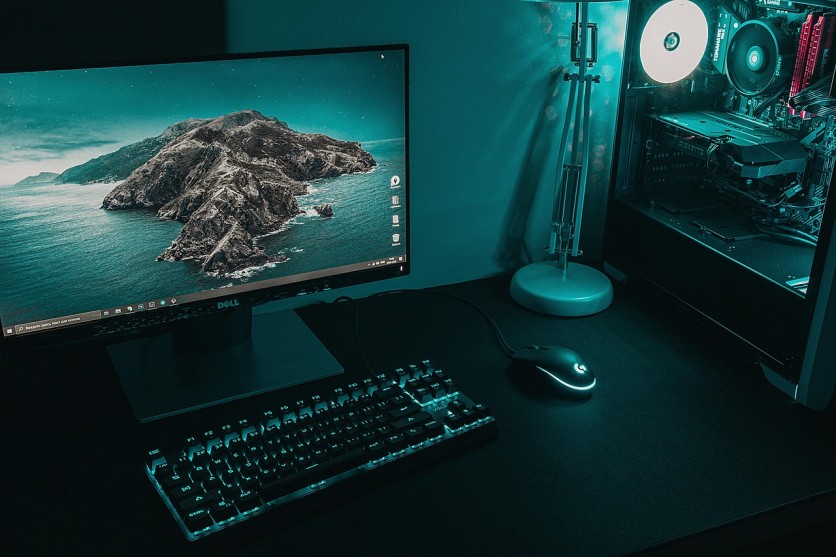
The world of display technology is evolving faster than ever. For gamers, movie enthusiasts, and tech fans, understanding the differences between today's leading panel types, OLED and Mini‑LED, can make a huge difference in picture quality, viewing comfort, and immersive experience.
Choosing the right display isn't just about resolution anymore. It's about how light, color, and motion come together to transform entertainment into something life‑like.
OLED vs Mini LED: What's the Difference?
OLED (Organic Light Emitting Diode) panels feature self‑lit pixels. Each pixel emits its own light, allowing for precise contrast and perfect blacks since pixels can turn off individually. This makes OLED displays ideal for watching dark, atmospheric scenes or playing visually rich games that rely on subtle lighting.
Mini‑LED technology, by contrast, builds on traditional LCD designs but uses thousands of tiny LEDs for backlighting. These smaller diodes allow for finer control of local dimming zones, resulting in improved brightness and better HDR (High Dynamic Range) performance compared to standard LED screens.
When comparing OLED vs Mini LED, OLED takes the lead in black levels and contrast, while Mini‑LED excels in sustained brightness and longevity. OLED's infinite contrast makes scenes appear more cinematic, but Mini‑LED offers stronger brightness in well‑lit rooms.
How Screen Technology Affects Gaming and Media Viewing
Display performance defines how immersive a gaming or media experience can feel. Several aspects of screen technology directly impact this experience:
- Color accuracy: OLED provides vivid colors and wide gamuts, closely matching cinematic standards. Mini‑LED displays have improved color consistency with better calibration for HDR content.
- Refresh rate: High-end OLED and Mini‑LED gaming displays now reach 120Hz to 240Hz, enabling smoother motion during competitive gameplay.
- Contrast and brightness: OLED wins in dark scenes with deeper blacks; Mini‑LED excels in daytime or bright‑room scenarios where strong peak brightness is needed.
- Input lag: OLED's near‑instant pixel response means less ghosting in gaming, making it a popular choice among e‑sports players.
Both display types now include features like NVIDIA G‑SYNC or AMD FreeSync to eliminate screen tearing, ensuring that the best gaming displays today provide seamless motion and excellent responsiveness for all play styles.
Best OLED Displays for Gaming and Movies
For those chasing cinematic visuals and pixel‑perfect shadows, OLED continues to set the standard. In 2026, several models stand out for both gaming and movie playback.
- LG C4 OLED TV: A successor to LG's highly acclaimed OLED line, offering a 4K 120Hz refresh rate, HDMI 2.1 compatibility, and exceptional HDR tone mapping. Perfect for both console and PC gaming.
- ASUS ROG Swift OLED PG34WCDM: A 34‑inch ultrawide OLED monitor that provides immersive curvature and 240Hz refresh rate ideal for first‑person shooters or open‑world games.
- Sony A95L QD‑OLED: Utilizing quantum dot enhancement, this hybrid OLED delivers even higher brightness while maintaining OLED's pure blacks, an excellent choice for HDR films.
What is the best OLED display for gaming? From an objective standpoint, ASUS's ROG and LG's OLED series rank among the most advanced options, balancing latency control, picture quality, and design versatility. Movie lovers benefit equally; OLED panels render dark scenes in films with true depth and fine detail, eliminating the gray haze that sometimes plagues LED panels.
Best Mini-LED Displays for Gaming and Media
Mini‑LED displays have rapidly become a powerful alternative to OLED, offering superior brightness and durability. The increased number of dimming zones reduces blooming and enhances HDR depth, making it a strong choice for bright environments.
- Samsung Odyssey Neo G9: Widely recognized as one of the best gaming displays, this 49‑inch curved Ultra‑Wide panel boasts 2,000 nits of peak brightness and quantum Mini‑LED backlighting. Ideal for multitasking, racing games, or immersive simulators.
- ASUS ROG Swift PG32UQX: A 32‑inch 4K Mini‑LED monitor with 1,152 dimming zones and a 144Hz refresh rate. It delivers stunning HDR performance with high color accuracy.
- Apple Pro Display XDR: Though not gaming‑focused, its Mini‑LED system remains one of the best for creative professionals who also enjoy immersive video content.
Mini LED displays are good for gaming, especially for players who value bright, detailed visuals or prefer long play sessions without worrying about burn‑in. Mini‑LED technology is also more cost‑efficient at larger screen sizes, giving buyers premium performance without OLED pricing.
OLED vs Mini LED for Gaming: Which Should You Choose?
Choosing between OLED and Mini‑LED largely depends on how and where the display will be used. Both are part of the next generation of screen technology, each excelling in specific areas:
- Black levels: OLED provides perfect, pure blacks, while Mini‑LED achieves deep blacks limited slightly by its dimming zones.
- Brightness: Mini‑LED reaches extremely high peak brightness levels compared to OLED's lower sustained brightness.
- Response time: OLED offers near‑instant pixel response (around 0.1ms), while Mini‑LED is slightly slower.
- Longevity: OLED can experience burn‑in with static images, whereas Mini‑LED is more durable for extended use.
- Cost: OLED tends to be more expensive at larger sizes; Mini‑LED scales more affordably.
- HDR performance: OLED excels at contrast and depth; Mini‑LED emphasizes strong highlight definition.
- Best for: OLED fits cinematic gaming and dark‑room setups; Mini‑LED works better for competitive play and bright spaces.
OLED suits players who favor visual fidelity and cinematic immersion. Mini‑LED appeals to those who want consistent brightness, no burn‑in worries, and high HDR punch. Competitive gamers might prefer Mini‑LED's resilience, while narrative and visual gamers gravitate toward OLED's contrast depth.
Ultimately, the best gaming display may differ by player type:
- Cinematic single‑player gamers: OLED for its richness in shadows and nuance.
- Competitive players: Mini‑LED for brightness and durability.
- Media enthusiasts: OLED for unmatched contrast in movie scenes.
The Future of Display Technology for Entertainment
Display innovation continues to evolve beyond OLED and Mini‑LED. Emerging technologies like MicroLED and QD‑OLED point toward even greater efficiency and performance.
- MicroLED panels aim to merge OLED's per‑pixel illumination with higher brightness and no burn‑in risk.
- QD‑OLED enhances color vibrancy by combining OLED with quantum dots, maximizing brightness without losing contrast.
- Dual‑cell LCD and miniaturized MicroLED monitors could redefine professional and portable displays for creators and gamers alike.
The competition between OLED vs Mini LED is pushing both sides to improve. Consumers are already seeing faster refresh rates, smarter upscaling technology, and adaptive cooling systems that preserve color consistency over time.
Smart Buying Tips for Choosing Your Next Display
When purchasing a high‑end gaming or media display, specs alone don't tell the full story. Consider these essential factors before deciding:
- Room brightness: OLED shines in controlled lighting, while Mini‑LED excels in daylight or bright setups.
- Content type: Movie lovers and solo gamers benefit most from OLED's cinematic range; multi‑genre players may prefer the durable brightness of Mini‑LED.
- Console or PC setup: HDMI 2.1 or DisplayPort 1.4 support ensures 120–240Hz refresh rates.
- Budget and screen size: OLED remains premium, but Mini‑LED now covers a wider range of affordable models.
- Longevity and maintenance: Modern OLED panels have burn‑in protection, but Mini‑LEDs still offer better long‑term reliability for heavy use.
Why Screen Technology Matters More Than Ever
Modern screen technology gives users unprecedented control over quality and design. As both OLED and Mini‑LED evolve, gamers can now enjoy displays that blend cinematic precision with competitive performance. What was once a trade‑off between beauty and functionality has become a choice of personal preference.
Whether it's an OLED that turns every pixel into a beam of perfection or a Mini‑LED that floods the screen with brilliance, 2026 marks a year where the best gaming displays balance artistry with engineering. Viewers and players no longer have to choose between light and dark, they can enjoy both, in perfect harmony.
Frequently Asked Questions
1. Can OLED or Mini‑LED monitors cause eye strain during long gaming sessions?
Both reduce eye strain compared to older displays. OLED emits less blue light, while Mini‑LED's brightness should be adjusted in dark rooms. Using eye‑comfort modes helps minimize fatigue.
2. Which panel type performs better for HDR streaming services like Netflix and Disney+?
OLED delivers deeper contrast and truer blacks, great for dark‑room viewing. Mini‑LED offers higher brightness, making it better for HDR streaming in well‑lit spaces.
3. How do display burn‑in protection technologies work on modern OLED screens?
Modern OLEDs use pixel shifting, brightness limiting, and logo detection to prevent image retention. These features make burn‑in uncommon under normal use.
4. Is there a noticeable difference in gaming latency between OLED and Mini‑LED displays?
OLED panels have slightly lower latency, often under 1 ms, while Mini‑LED averages around 2–4 ms. In most games, the difference is minimal.
ⓒ 2026 TECHTIMES.com All rights reserved. Do not reproduce without permission.


