Astronomers at the University of Warwick published a study this week in the Monthly Notices of the Royal Astronomical Society confirming that their machine learning pipeline, RAVEN (RAnking and Validation of ExoplaNets), validated 118 previously unconfirmed exoplanets and surfaced more than 2,000 additional candidates by scanning over 2.2 million stars in NASA's Transiting Exoplanet Survey Satellite (TESS) archive — a result the team says provides one of the most complete pictures yet of how common short-period planets are around Sun-like stars.
For astronomers, space-science journalists, and anyone tracking the use of artificial intelligence in fundamental research, the findings have immediate relevance: RAVEN's catalog is now publicly available for follow-up targeting, and the team is already in discussions about applying the pipeline to ESA's PLATO mission, scheduled to launch in late 2026. The results offer a concrete blueprint for how AI can close the widening gap between data generation rates and human review capacity at major space observatories.
TESS Has Generated Far More Data Than Human Teams Can Review
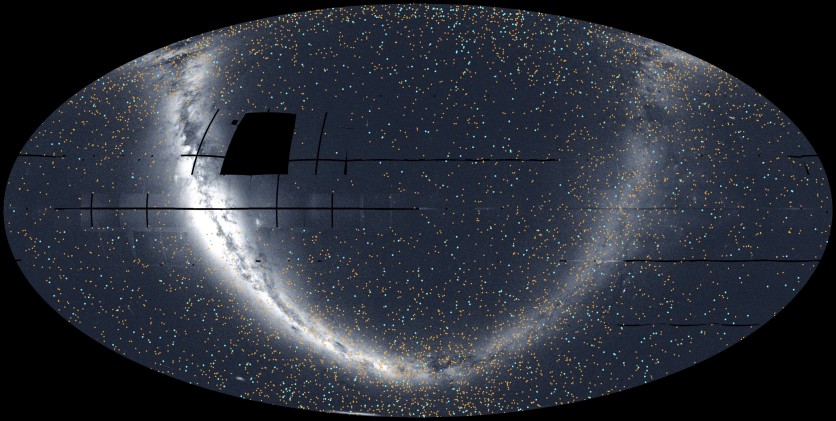
TESS has been scanning the sky for transiting exoplanets — planets that produce faint, periodic dips in a star's brightness as they pass in front of it — since its launch in April 2018 aboard a SpaceX Falcon 9. By the time RAVEN was applied, the satellite had accumulated light curves for over 2.2 million main-sequence stars observed across its first four years and 55 observing sectors. As of early May 2026, TESS had identified a total of roughly 7,931 candidate exoplanets — but had confirmed or validated fewer than 700 of them as true planets.
The bottleneck is not a shortage of signals. It is the sheer volume of data combined with the difficulty of distinguishing genuine planetary transits from a long list of false positives: eclipsing binary stars, stellar variability, and instrumental noise can all mimic the signature of a planet crossing a star.
RAVEN was built to automate that discrimination. Developed at the University of Warwick and led by Dr. Andreas Hadjigeorghiou, who oversaw the pipeline's architecture, the system uses a Gradient Boosted Decision Tree and a Gaussian Process classifier trained on hundreds of thousands of realistically simulated planetary transits and eight categories of astrophysical false positives injected into real TESS light curves. It handles detection, classification, and statistical validation in a single automated pass.
118 Validated Planets Include Ultra-Short-Period Worlds and Neptune-Desert Occupants
Applied to the full TESS Full Frame Image archive for sectors 1 through 55, RAVEN processed observations of 2.26 million stars. The result: 118 newly validated planets and more than 2,000 vetted candidates, nearly 1,000 of which had not previously appeared in any TESS catalog.
"Using our newly developed RAVEN pipeline, we were able to validate 118 new planets, and over 2,000 high-quality planet candidates, nearly 1,000 of them entirely new," said first author Dr. Marina Lafarga Magro, a postdoctoral researcher at Warwick. "This represents one of the best-characterized samples of close-in planets and will help us identify the most promising systems for future study."
Among the newly validated planets are populations of particular scientific interest:
Ultra-short-period planets — worlds that complete an orbit in under 24 hours, grazing their host stars at extreme temperatures — were confirmed within the sample. RAVEN also added new members to the so-called "Neptunian desert," a region of orbital period and planet size where Neptune-mass planets are statistically rare. A companion MNRAS study by Dr. Kaiming Cui, also a postdoctoral researcher at Warwick, used the validated catalog to measure that only 0.08% of Sun-like stars host a planet in this desert — the first direct observational measurement of the figure.
"For the first time, we can put a precise number on just how empty this 'desert' is," said Dr. Cui. "These measurements show that TESS can now match, and in some cases surpass, Kepler for studying planetary populations."
RAVEN's Precision-First Design Keeps False-Positive Rates Low
The pipeline achieved area-under-curve scores above 97% across all false-positive scenarios tested, and above 99% on all but one, according to the RAVEN methodology paper published on arXiv by Dr. Hadjigeorghiou and colleagues. On an independent test set of 1,361 pre-classified TESS candidates, the system reached 91% overall accuracy. Only candidates whose planetary posterior probability exceeded 99% against each false-positive scenario — and whose implied radius was below eight Earth radii — were considered validated.
"RAVEN allows us to analyse enormous datasets consistently and objectively," said Dr. David Armstrong, Associate Professor at Warwick and senior co-author on both studies. "Because the pipeline is well-tested and carefully validated, this is not just a list of potential planets — it is also reliable enough to use as a sample to map the prevalence of distinct types of planets around Sun-like stars."
The validated catalog and interactive tools are publicly available, allowing other researchers to identify follow-up targets using ground-based telescopes and future space missions.
9–10% of Sun-Like Stars Host a Close-In Planet, RAVEN Data Shows
Beyond individual planet discoveries, the RAVEN dataset enabled the most detailed demographic analysis yet of short-period planets around Sun-like stars. The companion study found that approximately 9–10% of FGK main-sequence stars host at least one planet with an orbital period under 16 days — broadly consistent with findings from NASA's Kepler mission but with uncertainties up to ten times smaller, owing to RAVEN's well-characterized detection efficiency.
That precision matters because demographic studies of planetary populations depend on knowing not just which planets exist, but which planets a given pipeline could plausibly have missed. RAVEN was designed to quantify its own detection biases, allowing the Warwick team to apply the necessary statistical corrections to their population estimates.
ESA's PLATO, Set to Launch in Late 2026, Is the Next Target for the Pipeline
The Warwick team has indicated interest in applying a retrained variant of RAVEN to data from the European Space Agency's PLATO mission. PLATO — PLAnetary Transits and Oscillations of stars — is an ESA medium-class mission currently scheduled for launch aboard an Ariane 6 rocket in late 2026, carrying 26 cameras designed to monitor more than 200,000 stars for Earth-like planets in habitable-zone orbits.
The mission is currently completing environmental testing at ESA's ESTEC facility in the Netherlands and passed vibration and acoustic tests in January 2026. If deployed on PLATO data, a pipeline like RAVEN would operate on a dataset with longer observing baselines and higher photometric precision — better suited to detecting planets with orbital periods of weeks or months rather than the 16-day maximum RAVEN currently targets in TESS.
For researchers watching how AI integration reshapes observatory workflows, the RAVEN results represent a practical milestone: not a speculative demonstration, but a peer-reviewed, publicly released catalog that other astronomers can use today.
ⓒ 2026 TECHTIMES.com All rights reserved. Do not reproduce without permission.


