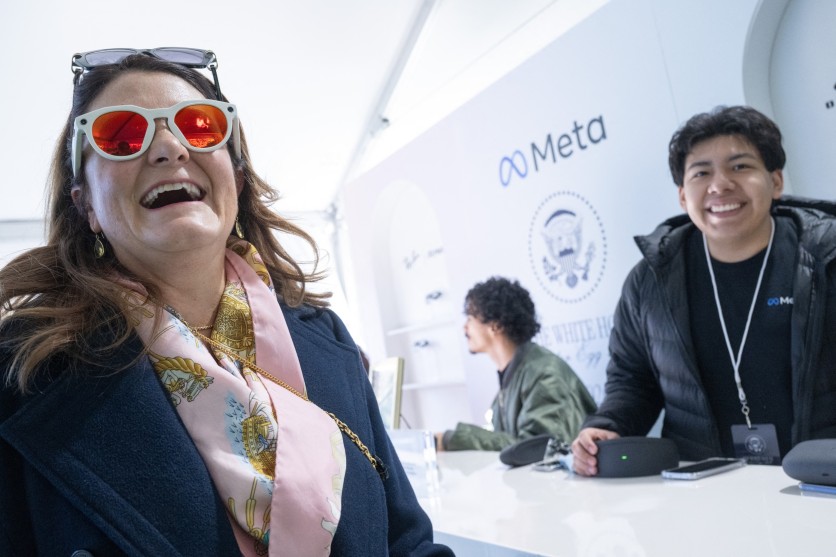
The wearable technology category spent a decade consolidating around the wrist. In 2026, it is fracturing back outward. Smartwatches remain the dominant form factor, but smart glasses, earbuds, and smart rings have each found separate footholds — and as of this week, Samsung and Google have signaled that they intend to compete in all of them simultaneously.
The clearest signal came at Google I/O 2026 on May 19, when Samsung and Google jointly unveiled their first AI-powered smart glasses — the most direct challenge yet to Meta's dominant Ray-Ban line, which captured an estimated 82 percent of the global smart glasses market in the second half of 2025 after selling more than seven million pairs that year alone. The Samsung and Google glasses run on Android XR, integrate Google's Gemini AI model as a hands-free assistant, and will ship in fall 2026 in select markets. Pricing has not been announced; analyst estimates put the range at $379 to $900 depending on the model.
For a prospective buyer, three facts about the product matter before a pre-registration on the Warby Parker or Gentle Monster sign-up pages is worth completing: what the glasses actually do, what they will cost, and what they do with the footage their camera captures. The first two questions will be answered by launch. The third has not been addressed at all.
What Samsung Google Smart Glasses Do
The initial product is display-free. Users activate Gemini with the phrase "Hey Google" or by tapping the frame. The assistant handles turn-by-turn navigation via Google Maps, message summaries, calendar additions, and contextual recommendations such as finding a nearby coffee shop. Real-time spoken language translation is a headlining feature — the audio output is designed to preserve the original speaker's voice tone rather than substituting a synthetic voice. The glasses also translate text in the wearer's field of view: a sign, a menu, a document.
A second variant that adds an in-lens microdisplay — projecting navigation directions and notifications privately — is also confirmed but will follow the audio-only version to market. Both models work with Android phones and iPhones, a deliberate cross-platform design decision that sets Android XR apart from Meta's ecosystem, which is more tightly bound to Meta's own services.
Samsung's Jay Kim, executive vice president and head of the Customer Experience Office for its Mobile eXperience business, described the glasses as "a new AI form factor" designed to expand the Galaxy device ecosystem while delivering "unique AI experiences that best fit each form." Google's vice president and general manager of Android XR, Shahram Izadi, said the collaboration is "helping users stay connected and fashionable in a more natural, hands-free way."
Frame designs come from two fashion eyewear partners: Gentle Monster, the Seoul-based luxury label known for avant-garde frames, and Warby Parker, the American direct-to-consumer brand that has built a mass-market optician retail presence across the United States, including prescription handling and insurance billing. The two collections are designed to cover opposite ends of the style market — and to solve the problem that ended Google Glass: glasses people are willing to wear in public.
What the Glasses Will Cost — and What Is Still Unknown
Samsung and Google have not released official specifications or pricing. Leaked hardware details, reported by Android Authority from a Samsung device codenamed "Jinju," describe a 12-megapixel Sony IMX681 camera sensor, a Qualcomm Snapdragon AR1 chip — the same silicon that powers Meta's Ray-Ban glasses — a 155mAh battery, and a frame weight of approximately 50 grams. The display variant, expected in 2027, carries analyst price estimates of $600 to $900; the audio-only launch model is estimated at $379 to $499. Battery life, water resistance, charging method, and prescription lens compatibility have not been addressed in official materials.
Apple is developing smart glasses under the internal codename N50, with Bloomberg's Mark Gurman reporting a late-2026 reveal and a potential early-2027 launch. If that timeline holds, the category will have Google, Samsung, Meta, and Apple all actively competing in the same form factor within 18 months.
What Data the Glasses Collect — the Question Neither Company Has Answered
Google has not disclosed what data retention policy will govern the visual input captured by the glasses' camera, whether footage will be used to train Gemini AI models, or what recourse users would have after a data breach. What is documented: Google's Gemini Apps Privacy Hub, updated May 5, 2026, lists "Gemini on Android XR" as a covered service. Under existing Gemini terms, activity is stored in users' Google accounts for 18 months by default; conversations reviewed by human auditors are retained separately for up to three years and are not deleted when a user clears their activity. Samsung has not published separate data handling terms for its Galaxy Glasses.
The gap matters because it is exactly what generated legal action against Meta. In March 2026, a class-action complaint was filed in the U.S. District Court for the Northern District of California, alleging that footage from Meta's Ray-Ban glasses had been reviewed by contractors in Kenya — including recordings of users in private situations — without adequate disclosure. The UK Information Commissioner's Office has opened a formal investigation, and Kenya's Office of the Data Protection Commissioner has done the same.
Kleanthi Sardeli, a data-protection lawyer at the privacy advocacy group NOYB, stated in December 2025 that AI smart glasses raise "significant privacy concerns," specifically citing bystander consent, training-data use, and enforcement gaps under GDPR. A March 2026 peer-reviewed study presented at the Association for Computing Machinery's CHI conference, by researchers at Tsinghua University and the University of Utah, found that notification mechanisms in camera glasses "prove inadequate" as bystander safeguards. Google told I/O 2025 audiences that prototype testing was specifically designed to ensure the product "respects privacy for you and those around you." No published data policy followed that commitment.
How Are Samsung Google Smart Glasses Different From Meta Ray-Ban?
The hardware overlap is substantial. The Android XR glasses share the same Qualcomm Snapdragon AR1 chip as Meta's Ray-Ban line. The meaningful differences are platform and ecosystem. Where Meta AI runs as the exclusive assistant on Ray-Ban frames, Google's glasses are designed to work with both Android and iPhone — a significant commercial decision given that roughly half the global smartphone market runs iOS. Android XR is also a platform play: Google is building an operating system that multiple hardware manufacturers can adopt, including Samsung, XREAL (whose Project Aura targets the premium optical see-through tier), Warby Parker, and Gentle Monster. Kering, the luxury group that owns Gucci, has confirmed Android XR glasses for a 2027 release.
Meta entered the category in October 2023 and has since expanded to three product lines — the Ray-Ban Meta collection, an Oakley collaboration, and a display-equipped variant — reaching a combined estimated market share of 82 percent by the second half of 2025, per Counterpoint Research. Google's attempt to replicate Android's platform strategy in the glasses category will be its most direct test of whether that model scales to a new form factor.
AI Wearables Beyond Smart Glasses: Smartwatches, Earbuds, and Smart Rings
Smart glasses are the fastest-growing segment, but the contest for the AI wrist is equally active. The smartwatch remains the wearable category with the broadest installed base, and Apple, Samsung, Huawei, and Xiaomi are all actively integrating generative AI at the hardware level. Samsung's Galaxy Watch lineup has added Gemini voice assistance and is expanding AI-driven health features including sleep analysis, workout intensity recommendations, and recovery coaching. Apple is widely expected to improve on-device AI and power efficiency in its next Apple Watch generation.
Earbuds have crossed from audio accessory to AI interface. Current high-end models handle real-time translation, ambient awareness, calendar prompts, and voice commands, creating what the industry describes as an always-on AI layer that keeps users connected without a screen. Samsung's Galaxy Buds already support Gemini voice activation, enabling hands-free AI queries through the ear.
Smart rings remain the most constrained form factor. Samsung's Galaxy Ring and Oura — widely regarded as the category pioneer for sleep and recovery analytics — both face the same challenge: a narrower feature set than a smartwatch, no display, and a relatively high price for the utility delivered. The category's appeal lies in passive biometric collection. Smart rings gather health data continuously without requiring any deliberate interaction from the user, fitting a broader industry trend toward ambient computing in which devices work silently rather than demanding attention.
What matters most in the long run is not any single device's success but the integration of data from all form factors into a unified AI layer. Samsung's presence in all four — watch, glasses, earbuds, ring — positions it to attempt that integration at scale. Whether Google's Android XR platform can build the developer ecosystem and the public trust to make it work before Apple arrives in 2027 is the defining question the fall launch will begin to answer.
Frequently Asked Questions
What do Samsung Google smart glasses do?
The Samsung Google smart glasses, running on Android XR with Gemini AI built in, provide hands-free navigation via Google Maps, real-time spoken language translation, message summaries, calendar additions, and contextual recommendations — all through voice commands and built-in speakers. A second model adds an in-lens microdisplay for private information overlays. Both models work with Android phones and iPhones.
How much will Samsung Google smart glasses cost?
Samsung and Google have not announced pricing. Analyst estimates based on leaked hardware specifications put the audio-only launch model at roughly $379 to $499, with the display-equipped variant — expected in 2027 — estimated at $600 to $900. These figures are not confirmed by either company and are subject to change before the fall 2026 launch.
Are Samsung Google smart glasses better than Meta Ray-Ban?
The two products share the same Qualcomm Snapdragon AR1 chip. The Samsung Google glasses' main advantages over Meta's Ray-Ban line are cross-platform iOS compatibility, Google Maps integration, and real-time translation powered by Gemini. Meta's advantage is a three-year head start with an established ecosystem and a proven retail distribution network through EssilorLuxottica. Neither product has published a complete, enforceable data retention policy — that is the most material open question for buyers of both.
What data do Samsung Google smart glasses collect?
Google has not disclosed a specific data policy for the glasses. The existing Gemini Apps Privacy Hub, updated May 2026, lists "Gemini on Android XR" as a covered service and stores activity in users' Google accounts for 18 months by default. Conversations reviewed by human auditors can be retained for up to three years. Samsung has not published separate terms. Buyers should expect that the glasses will capture and process visual and audio data; the exact retention, training, and access terms are not yet public.
ⓒ 2026 TECHTIMES.com All rights reserved. Do not reproduce without permission.


