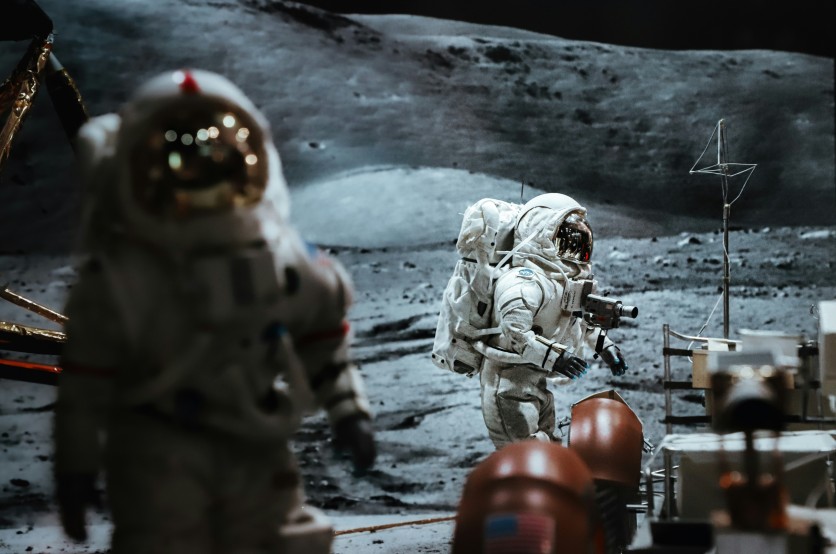
Moon base concepts are no longer limited to science fiction, as growing interest in moon colonization is pushing space agencies and researchers to study how humans could realistically live on the moon in the future.
Many of these plans focus on future moon base designs that combine lunar base technology, radiation shielding, and sustainable life-support systems to make long-term survival possible beyond Earth. As exploration advances, living on the moon is increasingly seen as a practical extension of human space activity rather than a distant fantasy.
At the center of these discussions are essential systems such as lunar habitats, space agriculture, and resource recycling, which are all required for stable operations in a harsh environment. Since the Moon has no atmosphere, extreme temperatures, and constant radiation exposure, any future moon base must be carefully engineered for protection and efficiency.
This makes moon colonization a complex but structured goal that depends on gradual technological progress rather than sudden breakthroughs.
Moon Base Concepts That Could Work
Inflatable and modular habitats are likely to be the first step in building a future moon base, as they can be transported in compact form and expanded once deployed on the lunar surface. These structures offer a practical and scalable foundation for early moon colonization efforts.
Lunar lava tube shelters also present a strong option under lunar base technology, since natural underground tunnels can provide protection from radiation and micrometeorites without heavy construction.
3D-printed lunar structures represent another major advancement in lunar surface construction, using local regolith to build shelters, landing pads, and protective barriers directly on the Moon. This reduces dependence on Earth-supplied materials and supports long-term expansion.
Underground or buried habitats further improve living on the moon by using lunar soil to regulate temperature and block radiation, making environments more stable and efficient for human survival.
Pressurized surface domes are also part of many lunar habitat concepts, offering enclosed living spaces with potential visibility of the lunar surface. However, they require advanced shielding systems to handle radiation exposure safely. Over time, connected habitat networks may become the standard future moon base design, linking multiple modules for living, working, storage, and research to create a more organized and expandable settlement.
Read more: SpaceX Successfully Launches Starship V3 Rocket for the First Time in Historic Flight 12 Test
What Humans Need To Survive On The Moon
Moon base concepts are shifting from science fiction toward real planning, with moon colonization focused on building safe and sustainable habitats. A future moon base may use modular structures, underground lava tubes, and 3D-printed lunar surface construction to protect astronauts from radiation and extreme temperatures.
These lunar habitats are designed to support living on the moon by creating controlled environments with recycled air, water, and energy systems. Radiation shielding and efficient lunar base technology remain key priorities for long-term survival and expansion.
Daily life in a future moon base will depend on space agriculture, power systems, and strict routines inside protected habitats. Astronauts will rely on solar energy, storage systems, and possible nuclear backups to maintain operations. Living on the moon will also require psychological support, communication with Earth, and structured work focused on research and maintenance.
How Daily Life Could Work
Daily life in a future moon base will be highly structured and carefully managed to ensure survival in a harsh environment. Most activities will take place inside protected lunar habitats designed for safety and efficiency. Living on the moon will require strict routines, with limited outdoor exposure and a strong focus on essential operations.
- Structured daily routines in lunar habitats: Life inside a future moon base will revolve around scheduled tasks such as maintenance, research, and system monitoring. Astronauts will spend most of their time indoors, leaving only in pressurized suits or vehicles for essential work.
- Outdoor activity in controlled conditions: Any external movement will be limited and carefully planned due to radiation and temperature extremes. This makes lunar surface activity focused more on necessity than exploration.
- Space agriculture for sustainability: Hydroponic and aeroponic systems will grow food using recycled water and nutrients inside controlled environments. These systems reduce dependence on Earth and support long-term self-sufficiency.
- Closed-loop resource systems: Air, water, and nutrients will be continuously recycled to maintain stable living conditions. This is essential for keeping a future moon base operational without constant resupply missions.
- Psychological and social support systems: Isolation and distance from Earth require recreation, communication tools, and private spaces for mental well-being. Maintaining emotional balance is as important as technical survival systems in long-term living on the moon.
The First Real Steps Toward Lunar Living
The most realistic moon base concepts focus on combining safety, sustainability, and efficiency, since moon colonization depends on solving survival challenges before expansion can begin.
For those following living on the moon and future moon base development, the key priority is building reliable systems for habitats, power, agriculture, and radiation shielding. As lunar base technology continues to advance, the Moon may gradually transform from a distant frontier into a functional location for research, industry, and long-term human presence.
Frequently Asked Questions
1. When could a real moon base be built?
A functional moon base could begin as early as the next few decades depending on technological progress. Early missions will likely focus on small research stations rather than large colonies. These initial steps will help test systems needed for long-term moon colonization. Full-scale expansion will take much longer and depend on sustained investment.
2. How will humans breathe on the Moon?
A future moon base will generate breathable air using oxygen extraction systems and recycling technology. Oxygen may be obtained from lunar regolith or transported from Earth in early stages. Closed-loop life support systems will continuously recycle air inside lunar habitats. This reduces the need for constant resupply missions.
3. What is the biggest challenge for living on the moon?
Radiation exposure is one of the most serious challenges because the Moon lacks an atmosphere and magnetic field. Extreme temperature changes and limited resources also make survival difficult. Engineers must design strong shielding and stable habitat systems. Without these protections, long-term moon colonization would not be possible.
4. Will people grow food on the Moon?
Yes, space agriculture is expected to be a key part of any future moon base. Crops will likely be grown using hydroponic and aeroponic systems inside controlled environments. These methods allow efficient use of water and nutrients in lunar habitats. Over time, this will reduce dependence on Earth supplies.
ⓒ 2026 TECHTIMES.com All rights reserved. Do not reproduce without permission.


