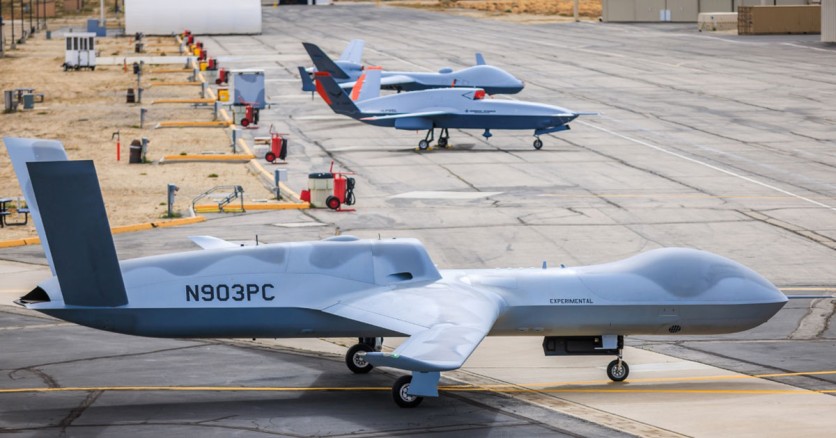
The drone the Air Force had been quietly trying to retire for years turned out to be the most indispensable aircraft in America's most intensive air campaign since Desert Storm. Air Force Chief of Staff Gen. Kenneth S. Wilsbach told the House Armed Services Committee on May 20 that the MQ-9 Reaper was "perhaps the most valuable player" of Operation Epic Fury — the six-week U.S.-Israeli air campaign against Iran that began February 28, 2026. The declaration came from a career fighter pilot who has spent decades championing crewed aircraft, and it came with a blunt comparative: "No other platform is even close to the MQ-9." The U.S. military struck more than 13,000 targets in Iran during the campaign, which ended with a ceasefire in early April.
The endorsement arrived alongside a sobering fleet reckoning. A Congressional Research Service report released the same week confirmed that 24 MQ-9 Reapers were destroyed in the campaign — part of a broader toll of at least 42 U.S. aircraft lost or damaged across all types. That attrition has left the Reaper fleet at roughly 135 aircraft, according to Lt. Gen. David Tabor's May 13 Senate Armed Services subcommittee testimony — 54 aircraft below the service's long-standing 189-aircraft operational floor.
What Made MQ-9 Reaper Indispensable Against Iran's Air Defenses
The Reaper's combat edge was not speed or stealth — it has neither. The aircraft's value in Operation Epic Fury was persistence, sensor fusion, and the ability to close a full kill chain from a single airframe.
Capable of remaining aloft for more than 24 hours, the MQ-9 flew roughly a dozen orbits over Iran at any given time during the campaign's peak, according to people familiar with the operations who spoke to Air & Space Forces Magazine. Those orbits focused on two tasks: striking mobile missile and drone launchers that appeared and disappeared within minutes, and feeding targeting intelligence to manned strike aircraft. The aircraft's suite of sensors — radar, electronic intelligence pods, and full-motion video cameras — transmitted real-time data to operators and commanders anywhere in the world.
"The MQ-9 carries a suite of sensors, including pods collecting electronic intelligence and a full motion video sensor, all facilitating closing the kill chain on one aircraft," said retired Brig. Gen. Houston Cantwell, a former F-16 and MQ-9 pilot and now a senior fellow at AFA's Mitchell Institute for Aerospace Studies. Cantwell added that newer drone platforms — including one-way attack drones and the first batch of Collaborative Combat Aircraft now entering procurement — do not yet have that integrated capability: they lack the "extensive sets of sensors able to find, fix, and run through the entire kill chain by themselves."
More than 4,000 of the campaign's 13,000-plus targets were what the military calls "dynamic targets" — mobile launchers, aircraft, and weapons systems that appear on a battlefield and must be engaged immediately. According to sources familiar with the operations, Reapers were central to that effort, providing the persistent overhead presence that manned fighters, with their limited loiter time, could not sustain.
The MQ-9's role extended to force protection. Reapers shielded the weapons system officer of a downed F-15E Strike Eagle — engaging Iranian military personnel who closed within three kilometers of the downed airman.
How MQ-9 Reaper Losses Exposed a Fleet Crisis
The performance came at a price that has forced a strategic reckoning.
Iran's air defenses — built around electro-optical and infrared surface-to-air missile systems whose passive sensors provide little radar warning — proved well-suited to targeting a large, slow-flying aircraft with a predictable flight profile. Many of the 24 confirmed losses were shot down in flight; others were destroyed on the ground as Iran systematically targeted U.S. regional bases throughout the campaign.
At the current unit cost of up to $50 million for a fully equipped MQ-9, per Maj. Gen. Christopher Niemi's May 12 Senate testimony, the 24 airframes destroyed represent a hardware bill of up to $1.2 billion. Even at the stripped base price of approximately $30 million per MQ-9B — the next-generation variant General Atomics is now pitching as a replacement — the loss tally exceeds $720 million. That figure is larger than the entire $996.5 million the Air Force is requesting to begin procurement of its new Collaborative Combat Aircraft in fiscal year 2027.
The losses exposed a secondary crisis: the Air Force has almost no ability to backfill quickly. General Atomics shut down the MQ-9A production line in 2025 after the service confirmed it would stop buying the platform, and a company spokesperson told Air & Space Forces Magazine the firm has fewer than 10 new or company-owned MQ-9As available to sell. The Air Force is now examining whether to pull aircraft from the Boneyard at Davis-Monthan Air Force Base, and is in conversations about procuring MQ-9Bs — the larger variant with a 79-foot wingspan and a range of 6,000 nautical miles, compared to the MQ-9A's 1,400-nautical-mile range.
"We are not divesting the MQ-9," Secretary of the Air Force Troy Meink told the committee on May 20. "We have had some losses in that aircraft, and we're working to fill those losses, but in parallel, we are looking at what is the follow-on to the MQ-9 aircraft. It's probably going to be not one platform, it'll probably be multiple platforms."
What Does the Air Force FY27 Budget Spend on Drones?
The combat record of the MQ-9 has exposed a disconnect that lawmakers pressed hard on May 20: the Air Force's rhetoric about unmanned systems does not yet match its budget.
Rep. John Garamendi (D-CA) challenged Gen. Wilsbach directly on the point. The fiscal year 2027 budget request allocates $7.4 billion for F-35s and $5 billion for the next-generation F-47 crewed fighter, Garamendi noted, against $1.4 billion for Collaborative Combat Aircraft. "Gen. Wilsbach, you spoke very passionately about UASs and their future," Garamendi said. "However, your budget doesn't follow that passion."
The CCA procurement line does represent the single largest new addition to the Air Force's $30.64 billion aircraft procurement account — the first time the service has sought funding to actually buy, rather than just develop, the platforms. The FY27 request includes $996.5 million for initial Increment 1 CCA production, plus roughly $1.37 billion in research and development, for a total program request of approximately $2.37 billion. The service aims to field more than 150 CCAs before the end of the Future Years Defense Program.
The gap between aspiration and investment nevertheless remains substantial, and Wilsbach gave no ground on the underlying argument: "It's an unmanned platform, so we get a lot of utility out of them, and don't put our folks at risk."
What Replaces MQ-9 Reaper After Operation Epic Fury?
The lessons of Operation Epic Fury have accelerated the Air Force's thinking about what should replace the Reaper — and the answer reflects a fundamental strategic shift.
Maj. Gen. Christopher Niemi signed off on a requirements document on May 11 for a new medium-altitude, long-endurance platform to succeed the MQ-9A. The new platform must be modular, built on open architecture, mass-producible, and — critically — "attritable." Rather than building a drone expensive enough to survive peer-adversary air defenses, the Air Force wants one cheap enough to absorb losses at scale. The requirements specify a range of up to 932 miles and at least 20 hours of endurance, with "a low-to-medium acquisition cost" sufficient for an aircraft expected to fly approximately 100 missions over its life.
General Atomics, whose MQ-9B is the most immediately available option, has pushed back on the narrative that the Reaper's losses represent a strategic failure. "All of these tired predictions about ineffectiveness in a highly contested environment were simply wrong," company spokesperson C. Mark Brinkley told Air & Space Forces Magazine. "While people were saying it couldn't be done, Reaper was out there doing it."
The post-Epic-Fury reality, however, is that the attrition rate in a sustained peer conflict has made the original platform economics untenable. The Air Force's broader trajectory — $996.5 million for new autonomous wingmen, a replacement program designed for affordable mass, and an explicit acknowledgment from its own chief of staff that unmanned platforms proved superior to every crewed aircraft in the theater — points toward a force that looks increasingly different from the one that entered the Iran campaign on February 28.
Frequently Asked Questions
Why was the MQ-9 Reaper called the MVP of the Iran war?
Air Force Chief of Staff Gen. Kenneth Wilsbach gave the Reaper that designation because no other aircraft matched its combination of persistent endurance, sensor fusion, and full kill-chain capability in a single platform. While fighters and bombers require tanker support and can loiter over targets for limited periods, the MQ-9 flew orbits lasting more than 24 hours, struck mobile launchers on short notice, and fed real-time targeting data to manned aircraft — all without putting a pilot in the air over hostile territory.
How many MQ-9 Reapers were lost in Operation Epic Fury?
A Congressional Research Service report confirmed that 24 MQ-9 Reapers were destroyed during the campaign, which ran from February 28 through early April 2026. Those losses, combined with a further 18 aircraft of other types damaged or destroyed, produced a total toll of at least 42 U.S. aircraft according to the same report. The Reaper fleet has since fallen to approximately 135 aircraft — 54 below the Air Force's long-standing 189-aircraft operational minimum.
What will replace the MQ-9 Reaper drone?
The Air Force signed a requirements document on May 11, 2026 for an "Attritable ISR Aircraft" successor — a platform designed to be modular, mass-producible, and inexpensive enough to accept losses in contested airspace. The specification calls for up to 932 miles of range and at least 20 hours of endurance at a "low-to-medium acquisition cost." In parallel, the service is purchasing Collaborative Combat Aircraft — jet-powered, semi-autonomous drones designed to fly alongside crewed fighters — with $996.5 million requested for initial production in fiscal year 2027.
What is a Collaborative Combat Aircraft?
A Collaborative Combat Aircraft, or CCA, is a jet-powered, semi-autonomous unmanned aircraft designed to operate as an unmanned wingman alongside crewed fighters such as the F-35 and F-22. Unlike the MQ-9, which is a propeller-driven drone optimized for long endurance and surveillance, CCA platforms are designed for speed and tactical agility in high-threat environments. The Air Force is requesting $996.5 million to begin procurement of Increment 1 CCAs in fiscal year 2027, marking the first time the program has reached formal production funding.
ⓒ 2026 TECHTIMES.com All rights reserved. Do not reproduce without permission.


