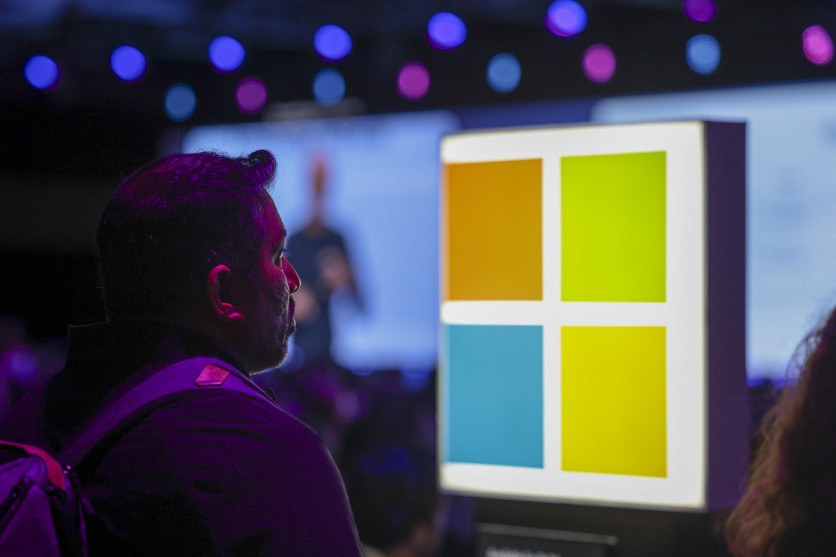
Microsoft kicked off Build 2026 at Fort Mason Center in San Francisco on Tuesday with announcements that fundamentally change the model, architecture, and governance stakes for every developer relying on GitHub Copilot. The centerpiece — Project Polaris, Microsoft's own in-house AI coding model — will replace GPT-4 Turbo as the default engine for all Copilot subscribers starting in August, ending the platform's dependence on OpenAI models and giving Microsoft end-to-end ownership of its most widely used developer product. Teams building on the Copilot SDK should evaluate the optional three-month fallback to GPT-4 now, before automatic migration takes effect.
The announcement lands months after Microsoft and OpenAI ended their seven-year exclusive partnership in April, and it signals that Microsoft intends to compete directly on model quality — not just distribution — in the developer tools market.
GitHub Copilot Multi-Agent Support Now in VS Code
The most immediately actionable announcement for working developers is the multi-agent extension for VS Code, which became available for adoption at Build. Rather than routing all tasks through a single Copilot instance, the new architecture lets an orchestrator agent spawn parallel subagents assigned to discrete workstreams — linting, test generation, documentation, and security review can now run simultaneously rather than sequentially. The pattern extends the /fleet command already available in Copilot CLI — which dispatches multiple subagents in parallel across files — into the editor itself.
This is a meaningful architectural step beyond the single-agent mode that reached general availability across VS Code and JetBrains in March 2026. The earlier agent mode determined which files to edit, ran terminal commands, and iterated on errors without manual intervention. Multi-agent VS Code introduces a planner-and-specialist structure: the orchestrator decomposes the objective, delegates to subagents, and surfaces results in a unified interface. Developers can monitor real-time progress and steer mid-run without abandoning their primary context.
Copilot CLI is also being extended further. The command-line interface, which reached general availability in March, now supports multi-agent terminal workflows that let developers chain background agent sessions without interrupting their primary terminal context.
Project Polaris: What Developers Should Do Before August
Project Polaris is a mixture-of-experts architecture with specialized sub-modules tuned for different programming languages and frameworks. According to Microsoft, it outperforms GPT-4 Turbo on the HumanEval and MBPP coding benchmarks, with the largest claimed gains in low-resource languages including Rust and Haskell. Pro tier subscribers will gain multi-file context up to 100,000 lines and autonomous test generation. The model runs on Microsoft's custom Maia AI accelerators inside Azure, which Microsoft says will reduce per-inference latency and lower operational cost compared with the current GPT-4 backend.
One caveat worth noting: the Polaris benchmark figures are Microsoft's own and have not been confirmed by independent auditors at publication time. Teams using Copilot for production tooling or building on the Copilot SDK should test their specific workflows against Polaris behavior during the fallback window rather than waiting for forced migration. The three-month fallback to GPT-4 is optional and must be configured before August; after that date, Polaris becomes the default.
Alongside Polaris, Microsoft announced the MAI model suite version 2 — covering image generation, multilingual voice synthesis, and transcription — as part of a broader push to replace OpenAI-supplied models across its product surface. Pricing for the version 2 models was not disclosed at the keynote.
Copilot Workspace General Availability: From Assistant to Delegate
GitHub Copilot Workspace exited beta and reached general availability at Build. Workspace is the agentic programming environment in which Copilot can reason across a full repository, propose multi-file edits, run tests, interpret results, and iterate autonomously on a scoped task. GitHub CEO Thomas Dohmke called the feature "the biggest change to Copilot since launch."
The GA release ships with three new capabilities. Fleet mode lets the Copilot CLI operate autonomously on narrowly defined codebase tasks without per-step confirmation. Autopilot mode schedules autonomous operation on background tasks — Copilot acts on a bounded issue without a developer present. Copilot Extensions adds ecosystem integrations for Jira, Datadog, and ServiceNow, making those tools callable from within an active Workspace session.
Starting in July 2026, GitHub Copilot Enterprise customers will be able to enable Autonomous Agent Mode, which lets the platform write, test, and commit entire feature branches. Every autonomous change still requires human approval before merging. A new Agent Sandbox spins up an ephemeral Linux container for each task, so the agent cannot affect the production repository until a reviewer merges the pull request. A GitHub Compliance Scanner checks generated code against security and licensing policies before any pull request is opened.
Read more: OpenAI, Microsoft End Exclusive Partnership After 7 Years—Azure Remains As Primary Cloud Partner
Azure AI Foundry and Agent Framework: Enterprise Orchestration at Scale
The Agent Framework for .NET and Python — which shipped a production-ready 1.0 release in April 2026 and was MIT-licensed at Build — is formally positioned as Microsoft's recommended standard for multi-agent systems on Azure. It supports hierarchical orchestration, event-driven workflows, sequential and concurrent agent composition, and stateful agents with persistent memory. The framework integrates directly with the GitHub Copilot SDK, allowing teams to compose Copilot agents alongside Azure OpenAI, Anthropic, and other provider agents in a single pipeline.
A new Azure Agent Mesh was announced as a control plane that federates agent execution across on-premises Windows servers, Windows 365 Cloud PCs, and Azure Arc-enabled edge devices. Developers target the Mesh using the same local framework APIs; it routes each task to the nearest available compute node based on latency and GPU availability. General availability for the Agent Mesh is targeted for the fourth quarter of 2026.
Tighter integration between GitHub repositories and Azure AI Foundry was also confirmed. A GitHub issue assignment can now directly trigger an Azure-hosted agent pipeline that writes code, runs tests, and opens a pull request — all without leaving the GitHub interface. This builds on the AI Credits billing model that went live on June 1, 2026, changing how Copilot usage is metered for enterprise Microsoft 365 customers.
What Multi-Agent Copilot Means for Enterprise Data Governance
For enterprise developers, the multi-agent VS Code extension is available today — but enabling it at scale warrants a review of data governance settings before deployment. Agent mode by default sends significantly more code context to Microsoft and third-party model backends than basic completions do.
The April 2026 training data policy change for personal-plan users — which defaults to using interaction data for AI model training unless users actively opt out — does not apply to Copilot Business or Enterprise, which are governed by separate contract terms. Organizations on personal plans should verify their opt-out status in GitHub's Copilot settings.
The expanded attack surface from multi-agent CLI use is worth noting separately. Researchers at PromptArmor demonstrated that a crafted command could bypass the Copilot CLI read-only allowlist after the CLI reached general availability in March, downloading and executing an external payload without a confirmation dialog. GitHub acknowledged the bypass as a known issue. Separately, Aonan Guan and researchers from Johns Hopkins University demonstrated that GitHub Actions-based AI agents — including Copilot Agent — are vulnerable to Comment-and-Control attacks, in which payloads hidden in pull request titles or issue comments cause agents to exfiltrate API keys and access tokens through GitHub's own infrastructure, bypassing all three of GitHub's runtime security layers. Organizations using Copilot with GitHub Actions workflows should audit agent permission scopes and enable secret scanning before expanding to multi-agent deployments.
Teams with strict data governance requirements should evaluate configuration against internal models via the Agent Framework rather than relying solely on cloud-hosted backends.
Frequently Asked Questions
What is GitHub Copilot multi-agent mode in VS Code?
Multi-agent mode in VS Code lets Copilot spawn parallel subagents assigned to separate workstreams — linting, testing, documentation, and security review run simultaneously rather than sequentially. An orchestrator agent decomposes the task and delegates to specialists, then surfaces results in a unified interface. The extension became available at Build 2026 on June 2, 2026.
What is Project Polaris and how does it affect Copilot subscribers?
Project Polaris is Microsoft's own in-house AI coding model, built on a mixture-of-experts architecture. It will replace GPT-4 Turbo as the default for all Copilot subscribers starting in August 2026, with automatic migration and an optional three-month fallback. Microsoft says it outperforms GPT-4 Turbo on standard coding benchmarks, though those figures have not been independently verified at publication time.
What does Copilot Workspace general availability mean for developers?
Copilot Workspace is now generally available and lets Copilot reason across an entire repository, propose multi-file edits, run tests, and iterate autonomously on a scoped task. Fleet and autopilot modes enable fully unattended operation on bounded tasks. Autonomous Agent Mode for Copilot Enterprise — allowing full feature-branch commits with human approval required before merge — is scheduled for July 2026.
Is GitHub Copilot agent mode safe for enterprise use?
GitHub requires human approval before any autonomous change merges, and the Agent Sandbox runs each task in an isolated ephemeral container. Security researchers have nonetheless demonstrated prompt injection and CLI allowlist bypass vulnerabilities in past Copilot releases. Enterprise teams should audit agent permission scopes, enable secret scanning, and review the AI Credits billing terms before enabling multi-agent mode at scale.
ⓒ 2026 TECHTIMES.com All rights reserved. Do not reproduce without permission.


