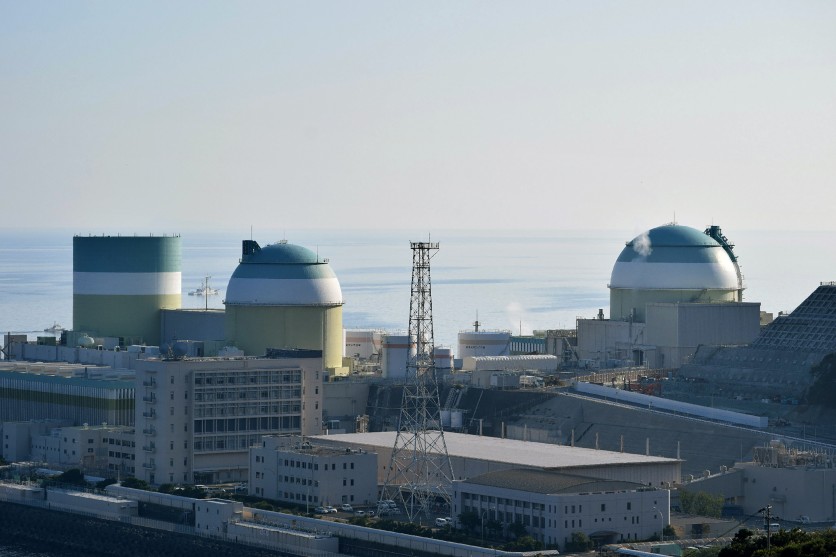
Japan's Ministry of Economy, Trade and Industry presented a draft plan on Friday, June 5, to replace up to 14 aging nuclear reactors with next-generation units by the 2050s — the first time Japan has attached specific numerical replacement targets to reactor construction in the 15 years since the Fukushima disaster forced the shutdown of the country's entire atomic fleet. The proposal, unveiled at a nuclear policy panel meeting, sets a phased timeline of two to five reactor replacements by the 2040s, scaling to a cumulative total of 11 to 14 by the 2050s, for a potential combined capacity of approximately 16 gigawatts. Cabinet approval is expected during summer 2026.
The plan lands at a moment of acute pressure on Japan's power grid. Data center electricity demand in the country is forecast to nearly triple by 2034, driven by investment from Oracle, Google, and Microsoft alongside domestic AI infrastructure buildout, according to a Wood Mackenzie analysis. Without action, industry estimates project a shortfall of roughly 5.5 million kilowatts by the 2040s — equivalent to the output of five reactors — as older plants age past the new 60-year maximum operating lifespan and fall off the grid. The proposal is the operational answer to a question Tokyo has been unable to answer with numbers since 2011: how, exactly, does Japan keep the lights on through mid-century?
AI, Data Centers, and Semiconductors Are Straining Japan's Grid
Japan imports more than 90 percent of its primary energy needs, and fossil fuels — liquefied natural gas, coal, and oil — account for between 60 and 70 percent of its electricity generation today. That structural dependence leaves the country acutely exposed to LNG price volatility and geopolitical supply disruptions; the January 2021 winter power crisis, when heavy snowfall and LNG supply disruption nearly caused rolling blackouts, made the vulnerability concrete.
The new pressure is digital. Wood Mackenzie projects that Japan's data centers will consume electricity equivalent to 15 to 18 million households by 2034, representing 60 percent of the country's total power demand growth over that period. Peak demand from data centers alone is expected to reach 6.6 to 7.7 gigawatts by 2034. Prime Minister Sanae Takaichi, who took office in October 2025, has made accelerating nuclear revival a centerpiece of her energy agenda, arguing that nuclear is the only baseload, low-carbon source capable of matching that load growth while also reducing costly fuel imports.
Nuclear currently provides approximately 8 to 10 percent of Japan's electricity, generated by 15 operating reactors with a combined capacity of approximately 33 gigawatts. Before the March 2011 earthquake and tsunami triggered triple meltdowns at Tokyo Electric Power Company's Fukushima Daiichi plant, 54 reactors provided roughly 30 percent of the country's electricity. Of the 33 units that remain operable following post-Fukushima regulatory assessments, 15 have been successfully restarted, most recently Kashiwazaki-Kariwa Unit 6, a 1,356-megawatt Advanced Boiling Water Reactor operated by TEPCO, which entered commercial operation on April 16, 2026 — the first TEPCO reactor to resume commercial operations since the Fukushima disaster.
What METI's Draft Proposes
World Nuclear News confirmed that METI's draft lays out the replacement program in two phases. The nearer-term wave, targeting the 2040s, calls for replacing two to five reactors, adding approximately 2 to 5.5 gigawatts of new capacity. The larger push, covering the 2050s, brings the cumulative replacement total to 11 to 14 reactors, with an additional 12.7 to 16 gigawatts. The rationale is straightforward: before 2040, more than 3 million kilowatts of existing reactor capacity will reach the 60-year operating limit and begin going offline. Replacements are not optional if Japan intends to keep nuclear's share at the 20 percent target set by the 7th Strategic Energy Plan adopted in February 2025.
Specific sites are already under discussion. Replacement reactors could be built at the Mihama nuclear power station in Fukui Prefecture and the Sendai complex in Kagoshima Prefecture, according to reporting citing ministry sources. The plan is framed explicitly as an investment and workforce signal: METI's stated goal includes encouraging private capital to commit to reactor construction and securing the highly specialized construction personnel that a program of this scale requires.
Advanced Reactor Designs: What Replaces the Aging Fleet
Rather than rebuilding like-for-like, Japan's framework envisions deploying advanced reactor designs across five categories defined under METI's Nuclear Energy Innovation Promotion initiative: innovative light-water reactors, small light-water reactors, fast reactors, high-temperature gas-cooled reactors, and nuclear fusion reactors.
The leading candidate for near-term replacements is Mitsubishi Heavy Industries' SRZ-1200, a 1,200-megawatt advanced pressurized water reactor designed specifically to meet post-Fukushima standards. The SRZ-1200 incorporates passive cooling systems that remove decay heat without requiring external power — the design flaw that made the Fukushima disaster catastrophic — alongside enhanced seismic resilience and a core melt probability target of approximately one in 100,000 reactor-years. That figure represents a roughly tenfold safety improvement over earlier-generation Japanese pressurized water reactors. The reactor's electrical output is deliberately scaled down from the 1,600-megawatt giants it notionally succeeds; MHI's design rationale holds that smaller output reduces the grid disruption caused by outages and cuts the peak alternative power requirement during scheduled maintenance.
Japan also holds world-class expertise in high-temperature gas-cooled reactor technology through the Japan Atomic Energy Agency's High Temperature Engineering Test Reactor, which demonstrated a reactor outlet temperature of 950 degrees Celsius — the highest achieved by any research reactor globally. That thermal capability enables hydrogen cogeneration alongside electricity generation, opening a potential pathway for decarbonizing steel and chemical manufacturing. A collaboration with the United Kingdom's advanced modular reactor program and a separate arrangement with Poland for high-temperature gas-cooled reactor research are both active.
Costs and Construction Skepticism
The proposal faces substantial financial and institutional headwinds. Reuters cited estimates that a large-scale replacement reactor in Japan could cost around $7 billion per unit, which would put the full 14-reactor program in the range of $98 billion before cost overruns. The global record on nuclear construction costs is grim: France's Flamanville 3 pressurized water reactor came in at roughly three times its initial budget after 17 years of construction delays; the United Kingdom's Hinkley Point C project is currently tracking at more than double its original estimate.
Florentine Koppenborg, a senior researcher at the Technical University of Munich who studies Japan's energy sector, wrote in April 2026 that the nuclear revival is "more wishful thinking than reality." In her analysis for the East Asia Forum, Koppenborg noted that Japan's nuclear share of electricity generation stood at 8.3 percent in 2024, against a target of 20 percent, and that realistic scenarios project nuclear's contribution falling to between 7 and 12 percent of the mix by 2040 as aging plants are decommissioned faster than replacements come online. Reactor restarts, she argued, have proceeded too slowly to support the government's targets, and the structural gap between political ambition and actual construction progress has persisted for more than a decade.
METI's draft acknowledges the uncertainty directly, noting that investment conditions and the availability of specialized nuclear construction workers are key variables. Japan's nuclear construction workforce has atrophied over 15 years of inactivity; rebuilding that human capital base in parallel with the physical infrastructure is a challenge that no government document fully quantifies.
Safety Record Complicates Expansion Case
The case for rapid expansion runs into a recent institutional failure that the industry cannot easily set aside. In January 2026, Japan's Nuclear Regulation Authority scrapped the safety screening for two reactors at Chubu Electric Power's Hamaoka nuclear plant in Shizuoka Prefecture after investigators found that Chubu Electric workers had fabricated seismic risk data in their safety screening application — apparently to underestimate earthquake hazards at the site. The NRA is now considering criminal penalties for false safety statements, a move that would require amending the nuclear reactor regulation law.
The Hamaoka incident is not isolated in the longer history of Japanese nuclear oversight. Utility falsification of safety and inspection records has been documented across multiple companies since the early 2000s, contributing to the collapse of public trust that followed Fukushima. Critics argue that the institutional conditions enabling data falsification — regulatory capture, opacity, and a culture of deference to operators — have not been structurally reformed, only made more formally demanding.
The Institute for Energy Economics and Financial Analysis warned in April 2026 that Japan's nuclear-first energy security response risks creating a "renewables blind spot." IEEFA found that every nuclear restart in Japan's Kyushu, Kansai, and Tokyo regions has coincided with increased curtailment of renewable output, suppressing investment returns for solar and wind and weakening future renewable capacity deployment. An energy strategy that crowds out domestic renewables in favor of nuclear, the report argues, recreates a form of baseload rigidity that leaves Japan exposed to the same supply concentration risks it is trying to escape.
Nuclear Waste Has No Permanent Home
Any assessment of Japan's nuclear expansion must account for an unresolved problem the government does not include in its capacity projections: the country still has no site for permanent geological disposal of high-level radioactive waste.
An interim storage facility in Aomori Prefecture held approximately 80 percent of its capacity in 2023. The National Waste Management Organization of Japan began a literature survey in May 2026 of Minamitorishima, a remote coral atoll in the Pacific roughly 2,000 kilometers from Tokyo, to assess its suitability as a permanent repository — only the fourth site in the country to agree to such a survey. By comparison, Finland began operating the world's first permanent high-level waste repository, the Onkalo facility in Olkiluoto, which stores spent fuel in copper canisters embedded up to 1,480 feet deep in stable granite bedrock. Japan has no equivalent and no confirmed site after decades of searching.
Each replacement reactor that comes online adds to the inventory of spent fuel requiring permanent containment. A construction program that adds 16 gigawatts of nuclear capacity while leaving waste disposal to future governments is a political strategy, not an engineering plan.
What the June 5 Draft Is, and What It Is Not
METI's draft is a proposed action guideline presented to an internal policy panel, not a Cabinet decision. Cabinet approval is expected during summer 2026 following review by relevant ministers. The numbers — 14 reactors, 16 gigawatts — are targets drawn from electric power industry estimates of the demand shortfall, not construction commitments. No reactor contract has been signed, no site approval has been issued, and no public comment process has been completed.
What the draft does represent is a political threshold: the first time since Fukushima that a Japanese government has put specific reactor-count figures on paper as official policy targets. Every previous nuclear revival document since 2022 described direction without numbers. The addition of numbers creates a measurable standard against which future governments and independent analysts will hold the program to account — and exposes the gap between political aspiration and engineering delivery more plainly than any previous policy statement has.
Japan's position in the global nuclear debate gives the plan significance beyond its borders. Nations weighing their own nuclear futures — including the United States, the United Kingdom, and South Korea — will watch closely whether the world's most traumatized major nuclear operator can translate its post-Fukushima recovery into actual new construction. The answer will not come from the draft unveiled on June 5. It will come from what happens on specific sites in Fukui and Kagoshima over the decades that follow.
Frequently Asked Questions
Why is Japan setting new nuclear reactor replacement targets now?
Japan's electricity demand is climbing sharply due to growth in AI infrastructure, data centers, and semiconductor manufacturing, with Wood Mackenzie projecting demand growth equivalent to 15 to 18 million households by 2034. At the same time, several existing reactors are approaching the 60-year operating limit and will be decommissioned without replacement, threatening a shortfall of approximately 5.5 million kilowatts in the 2040s. The June 5 proposal provides the first concrete numbers for reactor replacement since the 2011 Fukushima disaster.
How many nuclear reactors does Japan currently operate?
As of June 2026, Japan operates 15 nuclear reactors, the most recent of which — Kashiwazaki-Kariwa Unit 6, a 1,356-megawatt Advanced Boiling Water Reactor — entered commercial operation on April 16, 2026. Combined nuclear capacity stands at approximately 33 gigawatts, contributing roughly 8 to 10 percent of the country's electricity, compared with approximately 30 percent before the 2011 Fukushima disaster shut down all 54 reactors.
What advanced reactor designs is Japan considering for new construction?
The leading candidate for near-term replacements is Mitsubishi Heavy Industries' SRZ-1200, a 1,200-megawatt advanced pressurized water reactor with passive cooling systems and a core melt probability target of approximately one in 100,000 reactor-years. Japan's broader research program also covers high-temperature gas-cooled reactors, small modular light-water reactors, fast reactors, and nuclear fusion. High-temperature designs could additionally produce carbon-free hydrogen for industrial decarbonization.
When will Japan's nuclear replacement plan take effect?
Cabinet approval of the draft proposal is expected during summer 2026. The plan is structured in two phases: two to five reactor replacements in the 2040s and a cumulative total of 11 to 14 replacements by the 2050s. Those timelines are targets based on industry demand projections, not binding construction schedules. No reactor contracts have been signed and no site approvals have been granted as of publication.
ⓒ 2026 TECHTIMES.com All rights reserved. Do not reproduce without permission.


