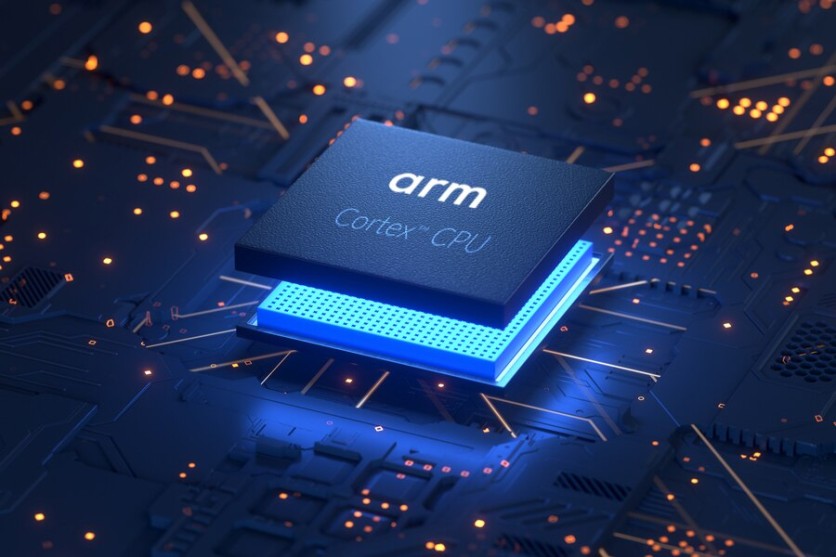
For three decades, Arm sold blueprints, not chips. The British company designed the CPU architectures that power nearly every smartphone on earth and licensed them to others — Apple, Qualcomm, Nvidia, and hundreds more — while never manufacturing a processor itself. That model just changed. Arm has launched the Arm AGI CPU, its first in-house chip designed for the data center, and it is using a record-breaking quarter to push directly into the server market long ruled by Intel's and AMD's x86 chips. In doing so, Arm takes on two opponents at once: the x86 incumbents, and — more delicately — its own customers.
For anyone tracking the AI build-out, the move matters because it changes who profits from the data-center CPU shift, and it puts the industry's most neutral player into direct competition with the ecosystem it built.
How Strong Is Arm's Position Going In?
Arm reached this moment from strength. It posted record quarterly revenue of $1.49 billion, capping a fiscal year in which total revenue grew 23% to a record $4.92 billion. The most telling figure was in the royalty line: Arm's data center royalty revenue more than doubled year over year, evidence that Arm-based processors are flooding the cloud at x86's expense.
That shift is no longer marginal. Arm now accounts for roughly 50% of the CPU compute deployed by the hyperscale cloud providers — the Amazons, Googles, and Microsofts that run the internet — up from a sliver a few years ago. Power efficiency is the reason: AI data centers are constrained more by electricity than by anything else, and Arm's designs deliver more performance per watt than traditional x86 chips, a decisive edge when a facility's power budget is the hard limit on how much compute it can hold.
Why Is Arm Becoming a Chipmaker Now?
Until now, Arm captured only a small slice of that boom. As a pure licensor, it earns a royalty — typically a low single-digit percentage — on every chip built with its architecture, while its customers keep the far larger value of selling the finished silicon. The Arm AGI CPU is the company's bid to claim that larger value for itself: instead of licensing a design, Arm is selling a complete, Arm-designed data center processor, reportedly a 136-core part built for AI-era workloads.
The demand signal has been strong. Arm says the AGI CPU has already drawn more than $2 billion in customer commitments across fiscal 2027 and 2028, and projects the business could reach $15 billion over the longer term. First production revenue is expected in the fourth quarter of fiscal 2027, with supply-chain capacity — Arm must get the chips manufactured, almost certainly at a foundry such as TSMC — cited as the main constraint. For a company whose entire history was built on not making chips, those are remarkable numbers for a first attempt.
Is Arm Now Competing With Its Own Customers?
Yes — and that is where the move gets fraught. Arm's biggest data center customers are precisely the companies building their own Arm-based server chips: Amazon with Graviton, Google with its Axion processors, Nvidia with Grace, Microsoft with Cobalt. These licensees pay Arm royalties to design custom silicon, and the AGI CPU now competes directly against the very products those royalties come from. The company that won the data center by being a neutral arms dealer is suddenly a combatant.
That tension has already drawn regulators. The US Federal Trade Commission opened an antitrust investigation into Arm in May 2026, examining whether the company — having launched a competing data center CPU of its own — might degrade or deny the architecture licenses that Apple, Qualcomm, Nvidia, and hundreds of others depend on. The concern is structural: if Arm both controls the licenses its rivals need and sells a competing chip, it has the means and the motive to tilt the field. Arm's task is to grow its own silicon business without convincing licensees that the foundation they built on has turned against them.
Why Does This Threaten Intel and AMD?
For the x86 establishment, Arm's vertical move escalates a threat that was already mounting. Intel's Xeon and AMD's EPYC lines have defined the server market for decades, but Arm's architecture has steadily eroded their grip, and a first-party Arm data center chip gives hyperscalers and enterprises one more reason to switch — a turnkey, power-efficient alternative backed by the architecture's owner rather than a third party.
The timing compounds the pressure. The AI build-out is driving the largest wave of data center construction in history, and the operators filling those buildings obsess over performance per watt because power, not silicon, is their scarcest resource. Every percentage point of CPU compute that moves from x86 to Arm in this cycle is enormous in absolute terms — and Arm can now capture not just the architecture royalty but the chip sale itself. Intel and AMD are racing to respond, leaning on their newest server parts and their entrenched x86 software ecosystems as a moat, but the momentum, for now, runs Arm's way.
Read more: Why Big Tech Is Pouring Billions Into AI Data Centers and Reinventing Tech Infrastructure
What Does It Mean?
Arm's leap from licensing to chipmaking is one of the most consequential strategic shifts in the chip industry in years. It is a bet that the data-center opportunity created by AI is too large to capture through royalties alone, and that the higher margins of selling finished silicon are worth the risk of competing with the customers who made Arm dominant. The early numbers — a record quarter, doubled data center royalties, $2 billion in committed demand — suggest the bet is working so far.
But the risks are real and unusual. Arm must out-execute Intel and AMD on their home turf while keeping its own ecosystem of licensees onside and an antitrust regulator at bay — a three-front campaign with no obvious precedent. The next year, as the first AGI CPUs reach production, will show whether Arm can be both the neutral platform the industry relies on and a direct competitor in the most lucrative corner of computing. Pulling that off would cement Arm as the defining company of the post-x86 data center; getting the balance wrong could fracture the ecosystem that made the move possible. This article is not investment advice.
Frequently Asked Questions
What is the Arm AGI CPU?
The Arm AGI CPU is the first data-center processor that Arm has designed and sells itself, rather than licensing the design to another chipmaker. Reported to be a 136-core chip built for AI-era workloads, it marks Arm's shift from a pure intellectual-property licensor to a direct chip vendor.
How did Arm perform financially?
Arm posted record quarterly revenue of $1.49 billion and full-year revenue of $4.92 billion, up 23%. Its data center royalty revenue more than doubled year over year, and the company says its AGI CPU has already drawn more than $2 billion in customer commitments for fiscal 2027 and 2028.
Why is Arm competing with its own customers a problem?
Arm's customers — Amazon, Google, Nvidia, Microsoft, and others — license its architecture to build their own Arm server chips. By selling a competing data-center CPU, Arm now rivals those products. The US FTC opened an antitrust probe in May 2026 over whether Arm might use its control of licenses to disadvantage these competitors.
How does this affect Intel and AMD?
Arm-based chips already account for about 50% of hyperscaler CPU compute, thanks to better performance per watt in power-constrained AI data centers. A first-party Arm data-center CPU gives buyers another reason to move off Intel's Xeon and AMD's EPYC x86 chips, intensifying a shift already underway. This article is not investment advice.
ⓒ 2026 TECHTIMES.com All rights reserved. Do not reproduce without permission.


