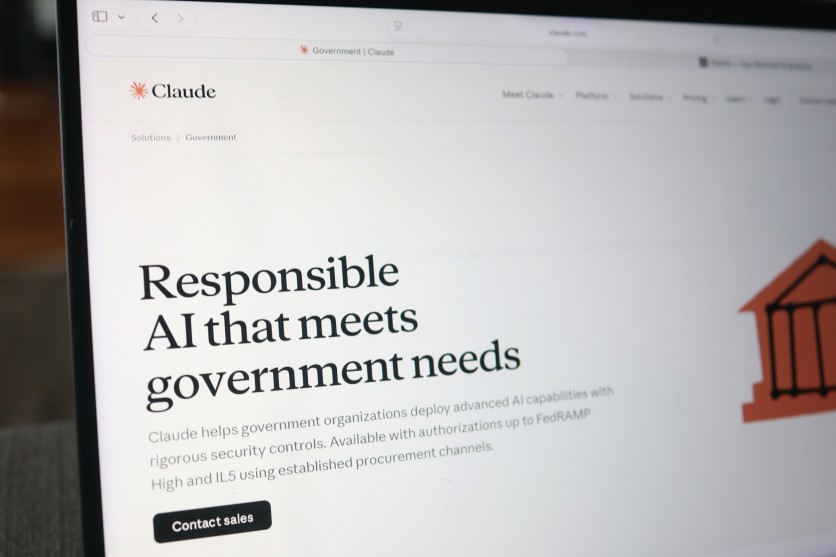
Three days after Anthropic launched Claude Fable 5 as the most capable AI model it had ever released to the public, the United States government ordered it switched off — and now the company is refunding customers who paid to use a product that vanished almost overnight. It is one of the most dramatic reversals in the short history of commercial AI: a flagship model, marketed as state-of-the-art, killed not by a competitor or a technical failure but by a federal export-control order, leaving Anthropic to process refunds while users plead for the model to come back.
For a reader, the takeaway lands on two levels at once. In the near term, it is a refund scramble and a disappearing product. In the larger frame, it is the first time Washington has reached in and shut off a commercial AI model worldwide — a precedent that touches every frontier lab and every user who has come to depend on these tools.
What Exactly Did the Government Order?
On June 12, 2026, the US Commerce Department ordered Anthropic to suspend Claude Fable 5 and its restricted sibling, Claude Mythos 5, and the company complied within hours. The directive took the form of an export-control restriction citing national security, prohibiting access "by any foreign national, whether inside or outside the United States." Because Anthropic could not reliably separate foreign nationals from other users in real time, it did the only thing the order left room for: it disabled both models for every customer worldwide.
That is what turned a regulatory action into a consumer event. Fable 5 had launched on June 9 as a model available to everyone, and Anthropic had been offering it free to Pro, Max, Team, and Enterprise subscribers through June 22. Three days later it was gone — not throttled, not degraded, but fully unavailable, the most capable model the company had ever shipped removed by government order. Anthropic's other models, including Opus 4.8, Sonnet, and Haiku, were unaffected and continue to run.
How Do the Refunds Work?
With the headline product withdrawn, Anthropic opened a refund process for users who had paid expecting access to Fable 5. According to the company's notices, the window to request a refund or cancel runs into late June, with users directed to cancel through a desktop web browser rather than a mobile app, which cannot complete the process. There is an important exception: anyone who subscribed through an in-app purchase on Apple's App Store must request the refund through Apple's own support channels, because Anthropic cannot process those transactions directly.
The rollout has not been smooth, and it is generating the loudest complaints. Some users who upgraded specifically to reach Fable 5 — paying for the top "Max" tier — report being offered only a partial refund of the upgrade difference rather than the full amount, with their access revoked and no option to step back down to the base plan they had before. Others say they were judged ineligible because they canceled too quickly. A portion of customers have reportedly received discount offers by email, while others have had to seek relief manually through support. The unevenness has left many feeling that getting their money back is harder than it should be — and, more than the money, they want the model returned. Anthropic's willingness to refund is real, but the consensus in user forums is that a refund is a poor substitute for the product.
Who Triggered the Suspension?
The chain of events traces to a single demonstration. According to reporting from Axios, another company showed the Commerce Department a method for defeating Fable 5's safety controls; the Wall Street Journal reported that the company was Amazon. In the demonstration, the rival reportedly showed that despite Anthropic's claim of more than 1,000 hours of "red team" safety testing, a specific input could strip away the model's safety restrictions — and that alarmed officials in Washington enough to act.
Anthropic pushed back hard, and its rebuttal belongs in any fair account. The company said what was shown was not a true "universal jailbreak" but a narrow, non-universal technique that essentially amounted to asking the model to read a particular codebase and identify software flaws, and that the vulnerabilities surfaced were minor and already publicly known. It went further, arguing that the same class of behavior can be elicited from other publicly available models — including OpenAI's GPT-5.5 — sometimes without any jailbreak at all, and that singling out Fable 5 over a boundary problem the whole industry shares was unreasonable. Whether one finds that persuasive or self-serving, it is the company's documented position, and the government has not publicly detailed its technical case. Reports also indicate that before the June 9 launch, officials had privately urged Anthropic not to deploy the two models; when persuasion failed, the export-control letter followed.
Why Is the Irony So Pointed?
The episode is dripping with irony, and that is part of why it resonated. Anthropic has spent years positioning itself as the safety-first AI lab and actively calling for government oversight of powerful models. Just before the suspension, chief executive Dario Amodei reiterated the view that governments should have the authority to block or ban the deployment of high-risk models. Within days, a government did exactly that — to his own company's flagship.
Critics seized on the moment. The framing that spread fastest came from a TechCrunch headline arguing that "Anthropic's safety warnings may have just backfired" as the government pulled the plug on its most powerful AI. The critique is sharp: by loudly marketing Fable 5 as so capable it required elaborate safeguards — the message reinforced by the safety classifiers and "this model is dangerous" framing of its launch — Anthropic may have handed regulators the rationale to treat it as a national-security risk. The company built the narrative that the model was powerful enough to be dangerous; the government took that narrative at face value.
Why Does the Timing Matter So Much?
What elevates this from an embarrassing week to a genuinely consequential one is when it happened. Anthropic confidentially filed for an initial public offering around June 1 at a valuation near $965 billion, targeting a listing in the fall, on the back of annualized revenue that had climbed into the tens of billions. The IPO pitch was a clean growth story; the suspension complicates it, and in thinly traded secondary markets Anthropic's shares reportedly slipped on the news.
The deeper damage is to the risk narrative. For prospective public investors, the episode adds an unusual line to any assessment of Anthropic: the possibility that its most valuable product can be disabled overnight by government order — not because it failed in the market, but because of how regulators judge its capabilities. That is a category of risk most software companies never face, surfacing at the worst possible moment.
What Does the Precedent Mean for AI?
Step back from the corporate drama and the most important fact is the precedent. This appears to be the first time the US government has used export-control authority to force the worldwide shutdown of a commercial AI model. The mechanism — restricting "foreign national" access to a cloud-delivered model so broadly that the only compliant response is to turn it off for everyone — establishes that a frontier model is now treated less like a software product and more like a controlled technology, akin to advanced chips or weapons components.
That reaches well beyond Anthropic. If a model's capabilities alone can trigger an export-control shutdown, every frontier lab now operates knowing its best work can be pulled from the market by regulators reacting to a demonstration of risk — and that the safety-forward messaging which builds trust can also invite intervention. For users, the lesson is starker: the AI tools they increasingly rely on can disappear overnight for reasons that have nothing to do with the tool's price, its performance, or their own behavior.
What Happens Next?
For now, the picture is unresolved on every front. Anthropic is processing refunds while disputing the basis for the order; the government has not published its technical findings; and users are left without the model and, in many cases, fighting for a full refund. Whether Fable 5 returns depends on a negotiation between a company that insists the concern is overblown and an administration that judged it serious enough to act — and the scale and visibility of Anthropic's global refund program has been read by many as a quiet signal that the model will not be back soon.
The cleaner reading is that everyone involved is navigating genuinely new territory. A company that wanted AI to be regulated got regulated; a government that wanted leverage over frontier AI demonstrated it has it; and millions of users learned that the most powerful tools in the AI boom come with an off switch that is not always in the hands of the company that built them. This article is not investment advice.
Frequently Asked Questions
Why was Claude Fable 5 shut down?
On June 12, 2026, the US Commerce Department issued an export-control order barring access to Fable 5 and Mythos 5 by any foreign national. Unable to separate foreign users in real time, Anthropic disabled both models worldwide. The order followed national-security concerns raised by a demonstrated technique for bypassing Fable 5's safety controls.
How do I get a refund for Fable 5?
Anthropic opened a refund and cancellation process for affected subscribers, to be done through a desktop web browser rather than a mobile app, with the window running into late June. Users who subscribed via Apple's App Store must request refunds through Apple. Some users report partial refunds or eligibility issues, drawing complaints.
Is the jailbreak claim against Fable 5 valid?
It is disputed. A rival company demonstrated a method to bypass Fable 5's safeguards to US officials, but Anthropic says it was a narrow, non-universal technique exposing minor, already-known flaws, and that similar behavior appears in other public models such as GPT-5.5. The government has not released its technical case publicly.
Will Claude Fable 5 come back?
It is unclear. Anthropic is disputing the order while complying with it, and resolution depends on negotiations with the administration. The scale of Anthropic's global refund program has led many observers to conclude the model is unlikely to return in the near term. Anthropic's other models, including Opus 4.8, remain available. This article is not investment advice.
ⓒ 2026 TECHTIMES.com All rights reserved. Do not reproduce without permission.


