Quantinuum, the trapped-ion quantum computing company majority-owned by Honeywell, officially set its IPO price range on Tuesday, targeting a valuation of up to $12.7 billion by offering roughly 21 million shares at $45 to $50 each — a price tag that implies investors are paying more than 400 times the company's 2025 annual revenue to own a piece of a technology that no company has yet deployed at commercial scale.
The Broomfield, Colorado-based company plans to raise up to $1.05 billion in the offering and will list on the Nasdaq under the ticker symbol QNT. J.P. Morgan and Morgan Stanley are serving as joint lead bookrunners. The pricing announcement arrived days after the Trump administration disclosed it would take $2 billion in equity stakes across nine quantum computing companies through the CHIPS Act — including a $100 million grant earmarked for Quantinuum itself — giving the offering an unusual degree of federal tailwind at launch.
Quantinuum was formed in 2021 following the separation of Honeywell's quantum computing division from its parent and its subsequent merger with Cambridge Quantum, a UK-based quantum software firm. Post-IPO, Honeywell will retain approximately 49.1% of the combined voting power and is expected to remain both a customer and a strategic partner — an arrangement that offers investors a degree of institutional credibility while also raising a structural question: the company's largest customer is the same conglomerate that controls nearly half its votes.
Valuation Math Investors Must Understand
The $12.7 billion figure represents a 27% premium over the $10 billion valuation Quantinuum achieved in its most recent private funding round in September 2025 — itself roughly double its prior valuation. The escalation is rapid. In the twelve months ended March 31, 2026, Quantinuum generated approximately $36 million in revenue. For the full calendar year 2025, revenue totaled $30.9 million against a net loss of $192.6 million — a loss-to-revenue ratio that underscores how capital-intensive the field remains.
The first quarter of 2026 offered little relief. Revenue fell to $5.2 million, a 73% decline year-over-year, while the quarterly net loss widened to $136.6 million — nearly quadruple the $30.5 million loss recorded in the same period a year earlier. Analysts at TradingKey noted that at the original $20 billion valuation target the company had publicly discussed, the implied price-to-sales ratio exceeded 640 times, far above the multiples typical even of loss-making software companies. At the confirmed $12.7 billion ceiling, that multiple sits at roughly 410 times trailing twelve-month revenue — still among the highest of any company seeking a public listing in 2026.
The revenue figures are also lumpy by nature. Because quantum computing work consists largely of research contracts, a single large agreement can swing quarterly results dramatically. Analysts at Constellation Research described the S-1 financials bluntly: the numbers are "similar to other pure plays in quantum computing" — which is to say, modest, uneven, and loss-heavy. No quantum computing company currently runs production workloads at a scale that affects corporate bottom lines. The partnerships that Quantinuum has announced with JPMorgan, BMW, and Airbus are research arrangements, not commercial deployments, and the word "eventually" carries all the risk.
Read more: U.S. Commerce Dept Buys Into Nine Quantum Companies: IBM, D-Wave, Rigetti Among $2B Recipients
What Quantinuum Actually Builds
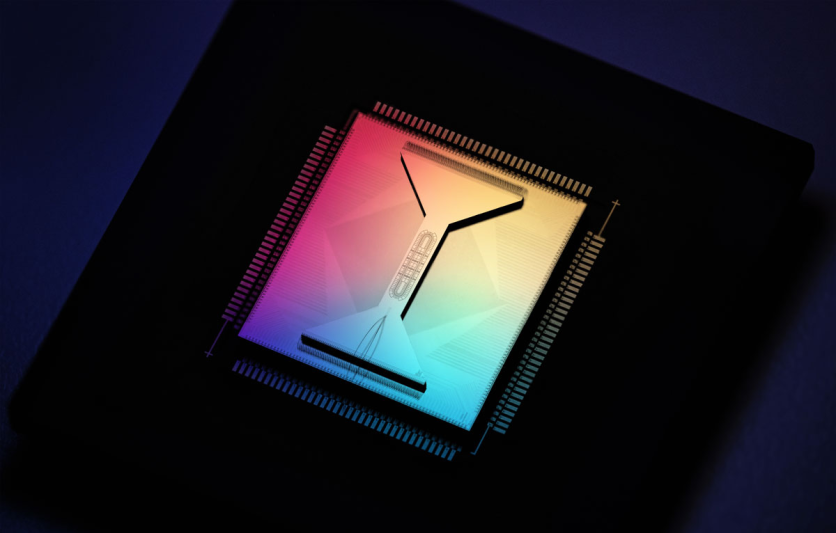
Quantinuum's hardware is built on trapped-ion technology, a competing architecture to the superconducting qubits used by Google and IBM. In trapped-ion systems, individual charged atoms suspended in electromagnetic fields serve as qubits. Because ions are naturally identical — unlike the microscopic variations that can occur in manufactured superconducting circuits — the approach delivers exceptionally high gate fidelity. Quantinuum's latest commercial system, Helios, features 98 physical qubits and 48 logical qubits, with a two-qubit gate fidelity of 99.921%, among the highest reported for any commercially available quantum system.
The company also inherited Cambridge Quantum's software stack, giving it a full-stack offering that includes developer tools, quantum-safe encryption products, and application packages for chemistry simulation and machine learning. Its closest direct competitor on hardware architecture is IonQ, which also uses trapped ions but has taken a different path on software integration. By revenue, IonQ is currently larger — the company reported $130 million in 2025 sales, more than four times Quantinuum's figure, and guided to $225–$245 million for 2026.
The distinction matters for investors evaluating the IPO. Quantinuum's technical credentials — including the world record quantum volume set by its H2-2 system in September 2025 — are genuine. What remains unresolved is the translation of those credentials into enterprise revenue at a rate that can support a $12.7 billion valuation. As Reuters observed in its coverage of the broader federal quantum initiative, current systems "generally do not yet outperform classical computers in practical commercial applications."
Roadmap and the Fault-Tolerant Horizon
Quantinuum's business case rests on a four-generation hardware roadmap that targets fault-tolerant quantum computing. Fault tolerance — the ability to run computations reliably at scale without errors overwhelming the output — is the field's central unsolved engineering problem. Quantinuum's Apollo system, a successor to Helios, is designed to address error correction at the system level. The company has not publicly confirmed a delivery date for Apollo, but the IPO narrative positions fault-tolerant commercial capability as achievable within the decade.
IBM, Quantinuum's most resource-rich competitor, has its own public roadmap: early quantum advantage demonstrations in 2026, a fault-tolerant Starling system by 2029, and a larger Blue Jay system in the years beyond. The parallel timelines mean that even if Quantinuum executes on its roadmap, it will reach commercial fault tolerance into a market where IBM — a company that does not need an IPO narrative to fund its ambitions — is also competing.
A customer concentration risk compounds the roadmap question. According to S-1 filing analysis, one client accounted for approximately 60% of Quantinuum's 2025 revenue. That client has not been named publicly, but the structural dependence is disclosed as a material risk. If that relationship changes, the revenue base underlying the valuation would shift significantly.
Federal Backing Provides Real but Conditional Support
The Trump administration's $2 billion quantum investment, announced May 21 through the Commerce Department's National Institute of Standards and Technology, is the largest single federal intervention in the quantum computing industry to date. IBM received the anchor award at $1 billion to build Anderon, described as America's first pure-play quantum wafer foundry in Albany, New York. Quantinuum, along with D-Wave, Rigetti, and Infleqtion, is expected to receive approximately $100 million each.
The federal grants are structured through the CHIPS Act and require final deal completion — they are not yet fully executed. Commerce Secretary Howard Lutnick framed the initiative as industrial policy: "These strategic quantum technology investments will build on our domestic industry, creating thousands of high-paying American jobs while advancing American quantum capabilities." The government is taking minority equity stakes in each recipient company as a condition of the awards, extending to quantum the model first applied to Intel in the semiconductor sector.
For Quantinuum's IPO, the $100 million grant functions as a meaningful cash injection relative to the company's current revenue base and serves as an implicit federal endorsement of the company's technology roadmap. It does not, however, accelerate the commercialization timeline or reduce the structural gap between current revenue and the implied valuation.
How Does Quantinuum Stack Up Against Quantum Computing Peers?
Quantinuum enters the public markets as the largest pure-play quantum computing IPO to date by targeted valuation. For comparison, IonQ — the existing public benchmark for trapped-ion technology — carries a market capitalization of approximately $19 billion as of early May 2026, supported by $130 million in annual revenue. Rigetti and D-Wave, both public, reported 2024 revenue of approximately $10.8 million and carry valuations that analysts at 24/7 Wall St. described as implying price-to-sales ratios exceeding 590 times. All three existing public quantum companies have faced significant short seller pressure in 2026, with short interest in IonQ at 22%, Rigetti at 15%, and D-Wave at 14%.
A successful Quantinuum IPO pricing would, in the assessment of multiple investment analysts, re-rate the entire sector. A weak debut would have the opposite effect. The Defiance Quantum ETF, which holds roughly 84 companies across the quantum and machine-learning supply chain, closed near $129 in late May — up 73% over the prior year — and Quantinuum's listing is widely tracked as the single most significant near-term catalyst for the basket.
Nvidia, Amgen, JPMorgan, and Fidelity all participated in Quantinuum's $600 million private round in September 2025. Their continued involvement post-IPO has not been disclosed.
Frequently Asked Questions
When is the Quantinuum IPO date?
Quantinuum officially set its price range — $45 to $50 per share — on May 26, 2026, targeting a $12.7 billion valuation and a raise of up to $1.05 billion. The actual trading date under the ticker QNT on the Nasdaq has not been confirmed but is anticipated in mid-June 2026 based on the S-1 timeline.
Who owns Quantinuum?
Quantinuum is majority-owned by Honeywell International, which will retain approximately 49.1% of the combined voting power after the IPO. The company was formed in 2021 through the merger of Honeywell Quantum Solutions and Cambridge Quantum, a UK-based quantum software firm. Additional investors from the September 2025 private round include Nvidia, Amgen, JPMorgan, and Fidelity.
What is Quantinuum's revenue and is it profitable?
Quantinuum reported $30.9 million in revenue and a $192.6 million net loss for 2025. In Q1 2026, revenue fell 73% year-over-year to $5.2 million while the quarterly loss widened to $136.6 million. At the IPO's $12.7 billion ceiling, the company's price-to-sales ratio stands at approximately 410 times trailing twelve-month revenue.
What does Quantinuum's quantum computer actually do?
Quantinuum builds trapped-ion quantum computers — systems that use charged atoms held in electromagnetic fields as qubits. Its Helios system, launched in November 2025, features 98 physical qubits and 48 logical qubits with a two-qubit gate fidelity of 99.921%. The company also develops quantum software, cryptographic tools, and application packages for chemistry simulation and machine learning. Practical commercial advantage over classical computers has not yet been demonstrated for general-purpose workloads.
ⓒ 2026 TECHTIMES.com All rights reserved. Do not reproduce without permission.


