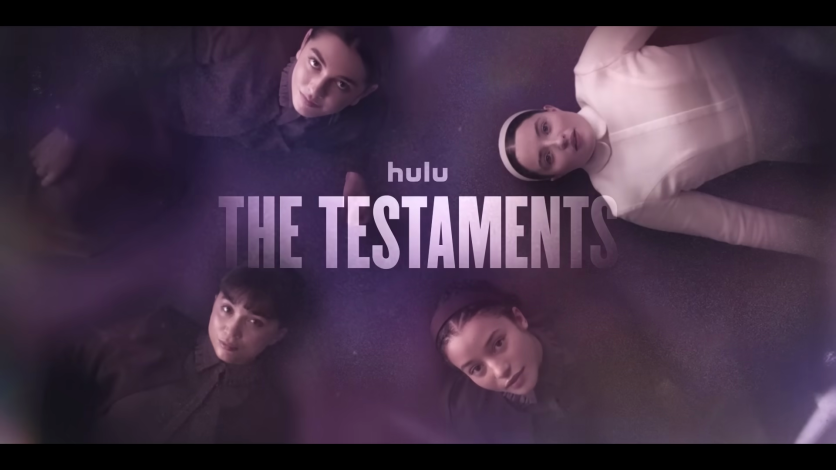
The first season of Hulu's The Testaments wrapped its finale on May 27, and Season 2 moved to the writers room within days. Showrunner Bruce Miller told Variety that scripts are actively being written and he is moving quickly toward production — a realistic if ambitious schedule for a show whose 45 million global streaming hours in Season 1 gave Hulu every incentive to return to Gilead fast. What distinguishes The Testaments from ordinary prestige drama is not its setting but the unusual precision with which Season 1 embedded real forensic pathology, reproductive endocrinology, and surveillance theory into its story — and the finale episode "Secateurs" delivered the clearest demonstration yet.
Season 2 Production Timeline and What's Confirmed
Hulu formally renewed The Testaments for a second season on May 20, 2026, one week before the Season 1 finale aired. Miller and executive producer Warren Littlefield both confirmed to outlets that writing is underway. Littlefield told Deadline that part of Season 2 has already been written, with production eyed for late summer or early fall 2026. If Season 2 follows the same April-to-August filming schedule as Season 1, a spring 2027 premiere is a reasonable projection — though no date has been confirmed. The show is produced by MGM Television and 20th Television and holds an 88% rating on Rotten Tomatoes after 10 episodes.
"Secateurs" Opens With Clinical Forensic Pathology
The Season 1 finale opens not with action but with evidence: Agnes narrates her way through Dr. Grove's autopsy report in clinical detail, cataloguing stab wounds to the lungs, liver, and subclavian artery alongside overkill patterning and symbolic genital trauma. For a prestige drama, the forensic precision here is unusual enough to warrant explaining.
Wound-pattern analysis is a genuine forensic subdiscipline. The classification of injuries as "overkill" — stab wounds that exceed what was needed to cause death — is a legally meaningful designation used in real homicide investigations. Published forensic research identifies clustered excess wounds as indicators of emotional proximity between attacker and victim, a finding routinely used in court to characterize the nature of a killing. The subclavian artery, which runs below the clavicle toward the shoulder, is among the highest-mortality targets in penetrating trauma; a retrospective study tracking 54 patients found an overall mortality rate of 39% for subclavian penetrating injuries, with exsanguination as the dominant mechanism.
The show's use of the autopsy as an institutional instrument is also accurate to how forensic medicine can be weaponized within an authoritarian system: the clinical findings serve sentencing purposes while the context that produced them — Becka's years of abuse by her father — is procedurally suppressed.
Gilead's Terror Apparatus Suppresses the Fertility It Claims to Harvest
The series' central biological claim — that a regime built on coerced reproduction might actively suppress the fertility it depends on — is not invented. It maps directly onto a well-documented mechanism in reproductive neuroendocrinology.
Human fertility is regulated through the hypothalamic-pituitary-gonadal (HPG) axis. Under chronic psychological stress, the hypothalamus reduces its output of gonadotropin-releasing hormone (GnRH), which in turn suppresses the pituitary's release of luteinizing hormone (LH) and follicle-stimulating hormone (FSH), impairing ovulation. The clinical term for this outcome is functional hypothalamic amenorrhea (FHA), defined in the peer-reviewed literature as a temporary infertility induced by the inhibition of pulsatile GnRH secretion in the presence of stressors including psychological distress. The biological mechanism has been confirmed across mammalian species and studied extensively in humans.
Margaret Atwood drew on real fertility-collapse research when writing the source novel. Reproductive epidemiologist Dr. Shanna Swan of the Icahn School of Medicine at Mount Sinai has documented a 59% decline in total sperm count among Western men between 1973 and 2011, across an analysis of 185 studies involving more than 42,000 men, with environmental endocrine disruptors identified as a primary driver. The worldbuilding of Gilead extrapolates from this documented epidemiological trajectory into the institutional response a state might construct — one that is, the science suggests, biologically self-defeating.
This is not a speculative framework. State-coerced pronatalism has a documented real-world precedent: Romania under Nicolae Ceaușescu enacted Decree 770 in 1966, banning abortion and contraception and requiring women to bear children as a patriotic duty. The decree produced a short-term baby boom followed by long-term demographic and economic deterioration, thousands of maternal deaths from illegal abortions, and an estimated 100,000 children left in state orphanages by 1990.
Gilead's Informant Network Maps Onto Distributed Sensor Architecture
The surveillance apparatus depicted in The Testaments — the Eyes, Garth's reporting of Becka, the rapid extraction response — functions as a human-run distributed intelligence network. Surveillance studies researchers have noted that informant-based mesh networks, in which each node has a small observation radius but the aggregate achieves near-total behavioral coverage, are structurally analogous to industrial IoT sensor networks: individually unreliable, collectively high-confidence. The specific design choice in Atwood's worldbuilding — the elimination of digital infrastructure — is not incidental. It removes the metadata that makes digital surveillance systems vulnerable to exposure. Physical dead drops, honey-jar steganography, and courier tradecraft leave no IP address, no SMS record, and no pattern-of-life data to intercept.
Aunt Lydia's long-running covert dossier on Gilead's Commanders is the narrative's most sophisticated depiction of what surveillance researchers call a counter-panopticon: a surveillance apparatus embedded inside a surveillance apparatus, using privileged institutional access to watch the watchers.
How Agnes's Identity Discovery Works Biologically and Philosophically
Agnes's discovery in the finale that she is biologically June Osborne's daughter Hannah raises a question the episode gestures toward but does not fully resolve: what does biological parentage mean to someone whose identity was entirely constructed by a different social system?
The biological dimension is straightforward. Agnes and June share mitochondrial DNA and nuclear genome — a material thread that Gilead's decade of cultural overwriting cannot sever. The philosophical dimension is more contested. Narrative identity theory, associated with philosopher Paul Ricoeur's distinction between idem identity (what remains the same over time) and ipse identity (what a person commits to and enacts), frames Agnes's choice as precisely that: an act of identity construction, not a revelation of a pre-existing self. Agnes has no experiential memory of being Hannah; the child's drawing signed with that name serves as a high-salience schema trigger — a single data point capable of reorganizing autobiographical memory around a different self-concept. This phenomenon has documented analogues in adoption research and identity reconstruction in individuals leaving high-control groups.
When Does The Testaments Season 2 Premiere?
No premiere date has been announced for Season 2. Bruce Miller confirmed to Variety after the Season 1 finale that scripts are currently being written. Warren Littlefield indicated to Deadline that production is expected to begin in late summer or early fall 2026. If that schedule holds, a spring 2027 premiere is the most plausible estimate, consistent with Season 1's April-to-August 2025 filming window and April 2026 premiere.
Frequently Asked Questions
When does The Testaments Season 2 come out?
No premiere date has been confirmed. Showrunner Bruce Miller told Variety after the Season 1 finale that scripts are actively being written, and executive producer Warren Littlefield indicated to Deadline that production is targeting late summer or early fall 2026. Based on Season 1's production timeline, spring 2027 is the most likely premiere window.
Is the science in The Testaments based on real research?
Yes. The show's core scientific threads — forensic wound-pattern analysis, HPG axis-mediated fertility suppression under stress, and analogue counter-surveillance tradecraft — are all grounded in published research. The clinical term for the stress-induced fertility failure the show depicts is functional hypothalamic amenorrhea, a well-documented mechanism in reproductive medicine. The forensic concept of overkill patterning is a real designation in homicide investigations. Atwood drew directly on reproductive epidemiologist Shanna Swan's research into real-world fertility decline when writing the source novel.
Is The Testaments a sequel to The Handmaid's Tale?
Yes. The Testaments is a direct sequel, adapted from Margaret Atwood's 2019 Booker Prize-winning novel of the same name. It is set approximately 15 years after the events of The Handmaid's Tale and follows a new generation of young women — including Agnes, who is revealed to be June Osborne's biological daughter Hannah — navigating a Gilead that is beginning to fracture. Showrunner Bruce Miller, who created the original series, wrote the Season 1 finale and leads the Season 2 writers room.
How many hours has The Testaments been streamed?
Hulu and Disney reported that by the time of the Season 2 renewal announcement on May 20, 2026, the show had surpassed 45 million global streaming hours across Hulu and Disney+, with viewership increasing 76% from Episode 1 to Episode 8.
ⓒ 2026 TECHTIMES.com All rights reserved. Do not reproduce without permission.


