Microsoft is reporting strong momentum in its AI strategy as enterprise adoption of Microsoft Copilot continues to accelerate across global organizations.
Integrated into Microsoft 365 apps such as Word, Excel, and Outlook, Copilot has now reached 20 million paid enterprise seats, signaling rapid growth in workplace AI deployment.
Enterprise Adoption Expands Across Global Companies
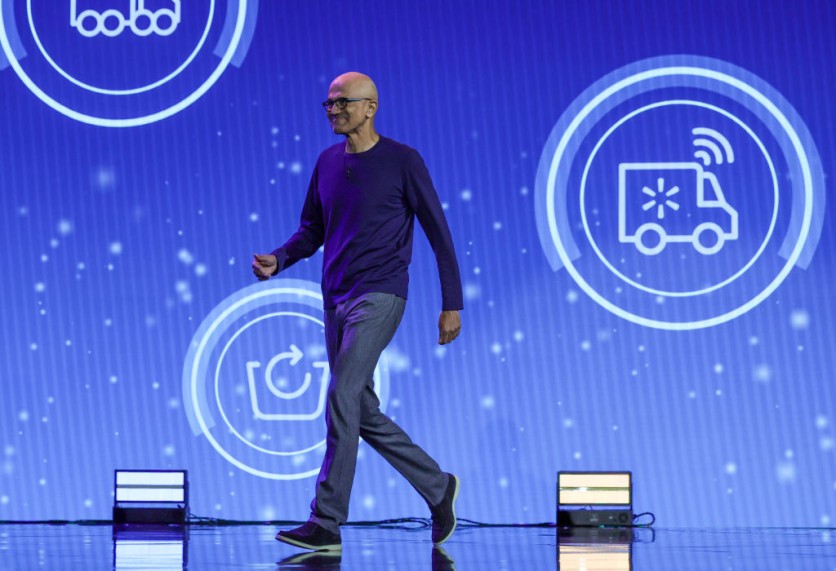
Microsoft's enterprise AI push is increasingly becoming a central part of digital transformation strategies. Copilot is now embedded into daily workflows across writing, data analysis, and communication tasks.
With this, the scale of adoption suggests that companies are moving beyond pilot testing and into full-scale deployment across departments.
CEO Satya Nadella noted during the company's latest earnings call that organizations are scaling Copilot usage faster than initially expected.
Nadella said Microsoft has quadrupled the number of companies purchasing more than 50,000 Copilot seats, highlighting Bayer, Johnson & Johnson, Mercedes, and Roche, each with over 90,000 seats.
He also pointed to a recent deal with Accenture covering more than 740,000 seats, calling it the "largest Copilot win to date."
Read more: Elon Musk Says He Warned Obama About AI Risks as $100 Billion OpenAI Lawsuit Heads to Trial
Usage Growth Signals Deeper Workplace Integration
Microsoft also reported a notable increase in user engagement. Copilot queries per user rose by nearly 20% quarter over quarter, indicating more frequent and sustained use across daily tasks.
Nadella added that weekly engagement levels are now comparable to Outlook, one of Microsoft's most widely used enterprise applications.
Based on this, Copilot is becoming part of routine work behavior, with employees increasingly relying on AI assistance for drafting content, analyzing data, and managing communications.
Multi-Model AI Strategy Enhances Copilot Performance
According to TechCrunch, a key factor behind Copilot's expansion is Microsoft's multi-model AI approach. Instead of relying on a single system, Copilot dynamically routes tasks across different AI models to improve accuracy and performance.
The platform also integrates external models such as Claude, allowing broader capability within Microsoft 365 applications.
What's more, this flexible architecture enables more context-aware responses and improves output quality across complex enterprise tasks.
Agent Mode Automates Multi-Step Workflows
Microsoft is also rolling out Agent Mode as the default experience in Word, Excel, and PowerPoint.
The feature allows Copilot to perform multi-step actions directly inside documents, effectively functioning as an automated digital assistant.
According to Nadella, this shift is a new phase of AI-driven productivity where users can delegate entire workflows rather than individual tasks.
ⓒ 2026 TECHTIMES.com All rights reserved. Do not reproduce without permission.


