Articles by Richard L. Wells
-

Meta Builds AI Data Centers in Tents: Strategy Halves Build Time Amid $145 Billion Bet
Meta is building AI data centers inside giant fabric tents to bring computing capacity online in roughly half the usual time, according to satellite imagery and city permits surfaced on June 4 by Cleanview Energy founder Michael Thomas.
-

Meta AI Instagram Hack Outlasts Fix: Company Alerts Victims as Account Takeovers Continue
Meta has started emailing Instagram users this week to warn that their accounts may have been compromised, days after attackers found they could seize profiles simply by asking Meta's AI support chatbot to change the email address on someone else's account.
-

X Petitions FTC to End Twitter Privacy Order as Grok AI Data Questions Resurface
Elon Musk's X has asked the Federal Trade Commission to scrap the privacy order that has governed the platform for years, and on June 3 the agency opened public comment on the request.
-

NVIDIA OpenAI Investment Shrinks From $100B to $30B: Compute Lock-In War Continues
NVIDIA OpenAI investment dropped from a $100 billion letter of intent to a $30 billion equity stake in early 2026. As Vera Rubin GPUs now enter production with OpenAI as an early customer, the restructured deal reveals how AI chip lock-in and circular investment have become the real battleground in frontier AI development.
-

ChatGPT Memory Dreaming Update: OpenAI Rewrites Personalization Engine, Limits Audit Trail
OpenAI is upgrading ChatGPT's memory from a list of stored facts into a more active system that can synthesize information across conversations and update it over time.
-

ChatGPT Reaches 1 Billion App Users: Claude's 640% Growth Splits Session Time
ChatGPT Claude monthly active users data from Sensor Tower reveals a split market: ChatGPT reached 1 billion monthly app users in May 2026, the fastest app ever, while Claude grew 640% year over year and US dual-platform users reduced ChatGPT session time by 5% after installing Claude, as both companies filed for IPOs.
-
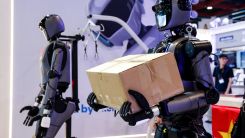
Unitree IPO Cleared, AGIBOT Hits 10,000 Units: China Humanoid Robot Duopoly Takes Shape
In the same week, the two companies that look set to define the next phase of humanoid robotics did very different things to make the same point. On June 1, Unitree Robotics cleared the listing-committee review for an IPO
-

Microsoft Build 2026: MAI-Thinking-1 Is First In-House Reasoning Model, Trained Without OpenAI Data
Microsoft Build 2026 launched MAI-Thinking-1, the company's first in-house reasoning model, trained without OpenAI data. MAI-Code-1-Flash rolls out to all GitHub Copilot plans today. Independent physicists challenge Majorana 2 quantum chip claims based on an unreviewed preprint. Claude stays in Azure AI Foundry but runs on Anthropic's infrastructure, not Azure's.
-
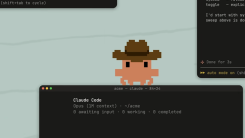
Anthropic Ends Subscription Subsidy for Agents June 15: Credit Pool Replaces Flat-Rate Access
Claude subscription billing changes June 15 as Anthropic moves Agent SDK and claude -p to a separate per-user credit of $20 to $200 at full API rates. Automation stops when credits run out unless overflow billing is enabled. Standard Enterprise Standard seats receive no credit. Every developer and admin must act before the deadline.
-

AI Agent Economics: Token Tax Locks Gross Margins 30 Points Below SaaS Baseline
AI agent economics face a structural token tax: inference consumes 23% of revenue at scaling-stage companies, locking gross margins 30 points below SaaS norms. Microsoft's Claude Code cancellations and Uber's blown budget confirm the cost is now impossible to ignore. Two proven escape routes exist: owning inference or selling verifiable outcomes.
-

Software Stocks Rally 21% in May: AI Agents Are Sorting Winners From Losers
Software stocks AI agents split May 2026's 21% rally into infrastructure winners and seat-model losers. Snowflake surged 37%, ServiceNow earned a Bank of America Buy, and Salesforce beat but barely moved. Here is which names the market rewards, which it punishes, and why the SaaSpocalypse recovery is not uniform.
-

Anthropic Enterprise Hiring Tops Research as IPO Filing Reveals Commercial Shift
Anthropic enterprise hiring now favors Sales over AI Research, with 72 open sales roles versus 67 in research as of late May 2026 — a commercial shift clarified by the company's same-day IPO filing, its $65 billion Series H, and $47 billion in run-rate revenue driven almost entirely by enterprise clients.
-
OpenAI Codex Computer Use Now on Windows: Foreground Takeover, Europe Excluded
OpenAI has expanded Codex from a coding assistant into a desktop-operating agent on Windows, officially documenting support for Computer Use
-

MiniMax M3 Open-Weight Coding Model: Frontier Claims, Unverified Benchmarks
MiniMax M3 launched June 1, 2026 with a 1-million-token context window and company-reported SWE-Bench Pro scores that edge out GPT-5.5 — but benchmarks are vendor-run, open weights have not shipped, and China's 2017 National Intelligence Law requires MiniMax to cooperate with government intelligence requests for any data its API processes.
-

Enterprise AI Agent Stack Takes Shape: Asana and Palo Alto Buy Execution and Security Layers
Enterprise AI agent acquisitions moved fast this week: Asana paid $75 million for StackAI to execute workflows across Salesforce, Oracle, and AWS, while Palo Alto Networks closed its Portkey deal to govern autonomous agents as privileged insiders — two adjacent infrastructure layers with price tags now attached.
-

NASA Moon Base 2026: New Glenn Pad Explosion Puts Blue Origin Delivery Role Under Scrutiny
NASA moon base 2026 contracts named Astrolab, Lunar Outpost, Blue Origin and Firefly for nearly $627 million in rover, lander and drone hardware, with three South Pole missions targeted for launch this year — then Blue Origin's New Glenn exploded on its Cape Canaveral pad, and NASA said it will assess impacts to Moon Base and Artemis schedules.
-

Yann LeCun's World Model Earns a Formal Proof: Benchmark Finds Current Models Brittle
Yann LeCun world model research crossed a milestone in May 2026: two preprints from his group formally proved when the JEPA architecture can recover real-world structure, and a paired benchmark found that current models collapse under minor visual shifts, mapping both the theoretical target and the practical gap that AMI Labs must close.
-

Microsoft Copilot Shifts to Agent Governance: Claude Checks GPT Work, Screen Agents Go Live
Microsoft Copilot enterprise AI agents shifted from chat to governed deployment on May 1, when E7 launched at $99 per user, bundling Agent 365 governance, screen-driving computer-use agents, and a Critique workflow where Claude audits every GPT response before delivery. Enterprise IT teams must now decide if the governance stack justifies the pricing tier.
-

AI Regulation 2026 Opens Three Fronts: CNN Sues Perplexity as OpenAI Aligns With EU Rules
AI regulation 2026 split into three simultaneous fronts: CNN filed a copyright lawsuit against Perplexity AI for scraping 17,000 news items, the DOJ blocked Colorado's AI law in a historic first-ever federal challenge, and OpenAI published its EU AI Act compliance framework. Each front demands a separate strategy.
-

Google Co-Scientist Reaches Nature: Hypothesis Agents Validated in Lab, Not Yet in Clinic
Google Co-Scientist entered peer-reviewed science in May 2026 when Nature published research validating its multi-agent hypothesis tournament in AML drug repurposing and liver fibrosis. Researcher registration opened at Google I/O 2026 via the Gemini for Science suite; an April 2026 study found AI scientific agents ignore available evidence in 68% of reasoning runs.
-

AI Coding Agents: Cognition's $26B Raise Bets Agent-First Architecture Beats IDE Tools
AI coding agents now split into two well-funded architectures. Cognition's $1B raise at a $26B valuation prices Devin's autonomous task delegation at a 53x revenue multiple, above Cursor's 30x despite Cursor earning four times more. Enterprise teams including Goldman Sachs, Mercedes-Benz, and the US Army report major gains on well-scoped tasks; researchers warn reliability still lags accuracy.
-
Chinese AI Models Lead OpenRouter Traffic: Coding Gains Come With China Data Risk
The most-tracked third-party measure of which artificial intelligence models the world's developers actually use, and the most-tracked third-party measure of which open-weight models perform best, now point in the same direction.
-
AI Gateway OpenRouter Raises $113M From Google and NVIDIA to Route Between Their Models
OpenRouter, the New York-based AI gateway company that lets developers send a single API call out to 400-plus large language models, announced a $113 million Series B. TechCrunch, citing New York Times reporting, said the round valued the company at about $1.3 billion post-money
-
Musk Memphis Week: Colossus Lease Recast, $185M Land Buy, Pollution Suit
SpaceX Anthropic Colossus lease was recast from a potential $45 billion multi-year deal to a 180-day base commitment — a gap IPO investors are only now learning about. The same week, a SpaceX subsidiary bought the Memphis data center for $185 million, and a federal Clean Air Act lawsuit over xAI unpermitted turbines drew a DOJ intervention signal.
-
Claude Code Dynamic Workflows: Scripts Replace Context Windows, Ultracode Automates Orchestration
Claude Code Dynamic Workflows, launched May 28, 2026, replaces context-window orchestration with a JavaScript script Claude writes on the fly for each task. Runs cap at 1,000 parallel subagents with ultracode setting; Max and Team default on; Pro needs manual activation; large runs multiply token costs.
-

Open Source Robotics Model MolmoAct2: Ai2 Beats π0.5, Releases 720-Hour Bimanual Dataset
Open source robotics AI model MolmoAct2 from the Allen Institute for AI runs up to 37 times faster than its predecessor, outperforms Physical Intelligence's π0.5 on multiple real-world benchmarks, and releases full training data — making a competitive vision-language-action model fully reproducible for the first time.
-
Gemini Spark: Google's 24/7 Cloud AI Agent Now Executes Tasks in Third-Party Apps
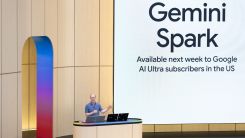
Gemini Spark is Google's first 24/7 cloud AI agent, launched at I/O 2026: it runs in the background on Google's servers and can now execute tasks in Canva, OpenTable, and Instacart via MCP, with US AI Ultra beta access starting this week at $100 per month.
-

Notion Opens Workspace to Claude Code, Cursor, and Codex as Native AI Agents
Notion AI agents workspace now includes Claude Code, Cursor, and OpenAI's Codex as native participants via the new External Agents API, with Workers offering free hosted code execution through August 11, 2026.
-
Meta Employee Surveillance for AI Training Draws Protest: Zuckerberg Defends No-Opt-Out Program, 8,000 Layoff
On May 20, 2026, Meta began notifying roughly 8,000 employees that they were being laid off, while moving thousands more into AI-focused roles and canceling thousands of open positions.
-

Apple Registers GenAI Subdomain Ahead of WWDC: Siri Overhaul Finally Arrives in iOS 27
Apple Siri WWDC 2026 preparations are underway: Apple registered the genai.apple.com subdomain two weeks before its June 8 keynote, where a Gemini-powered iOS 27 Siri overhaul is expected — alongside a $250 million class action settlement over previously delayed Apple Intelligence features.


