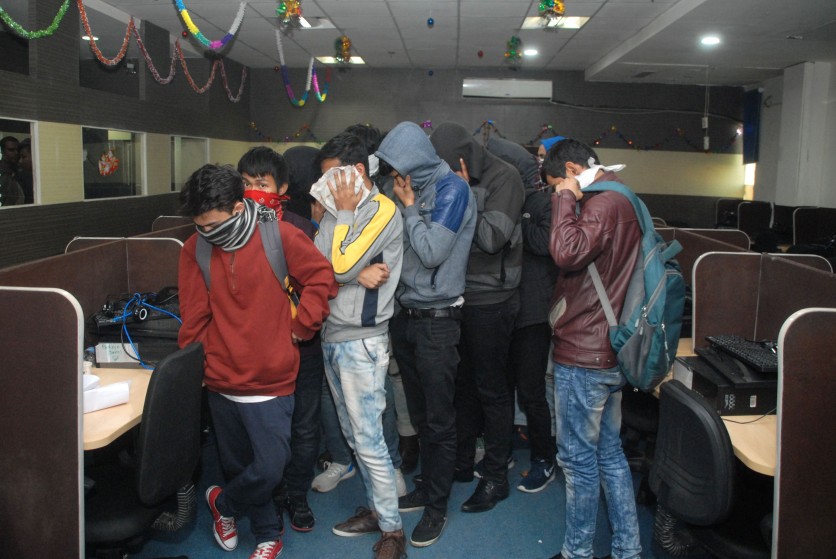
Indian police on May 28, 2026, arrested 26 people and dismantled an industrial-scale call centre targeting American consumers at the Verna Industrial Estate in South Goa, seizing 145 laptops, 45 mobile phones, and networking equipment used to impersonate US bank officials and demand payment through gift cards. The bust, carried out by Verna Police in the early hours of May 28, came five weeks after a near-identical raid at a rented villa in Verem, Goa, and months after the FBI and India's Central Bureau of Investigation jointly dismantled three call centres tied to a $48 million fraud scheme that had victimized more than 650 Americans since 2022.
Verna Police said the accused contacted American consumers by phone using voice-over-internet calling systems and caller ID spoofing technology to make their calls appear to originate from legitimate US financial institutions, then falsely presented themselves as officials of US banks and loan companies. Callers told victims their credit scores were low, their accounts had been flagged, or that outstanding penalties required immediate resolution. Once sufficiently alarmed, victims were directed to purchase gift cards and read the codes aloud — a payment method that is functionally irreversible once completed. No legitimate US bank or government agency has ever demanded payment through gift cards on an unsolicited phone call.
All 26 suspects, who had been living in rented accommodation in the nearby village of Sancoale, were recruited from seven Indian states: Nagaland, Assam, West Bengal, Bihar, Madhya Pradesh, Gujarat, and Maharashtra. The geographic spread signals a deliberate nationwide recruitment operation, with investigators identifying distinct roles for call handlers, data operators, and financial processors. A local court in Goa remanded all 26 to police custody for two days of interrogation. Charges were filed under India's Bharatiya Nyaya Sanhita — the country's updated criminal code — and the Information Technology Act.
Bank Impersonation Script: Fear First, Gift Cards Second
The Verna facility ran what cybersecurity professionals call a vishing operation — voice phishing conducted at industrial scale. Operators used VPN-based calling systems and caller ID spoofing technology to make their calls appear to originate from legitimate US financial institutions. Authorities estimated the total value of the seized equipment at approximately ₹55 lakh (around $66,000). The headphones, routers, and digital storage devices recovered at the scene completed the toolkit.
The script the Verna operatives followed is a variant of a fraud pattern the FBI has documented across multiple prosecutions: impersonate a trusted financial institution, invoke a fabricated emergency, apply time pressure, and direct the victim to resolve the problem by purchasing gift cards. The technique is designed to exploit trust in familiar institutions and manufactured urgency — making it particularly effective against adults who have no prior reason to doubt a call that appears to come from their own bank. The FBI has stated publicly that no legitimate bank, government agency, or technical support provider will call you unsolicited, claim your account is in jeopardy, and demand resolution through gift card payments.
Part of Wider India-Based Fraud Network, Investigators Say
Authorities said the Verna operation was not an isolated setup but a probable node in a broader international cybercrime network. Investigators said they were tracing financial transaction trails, analyzing the seized digital evidence for communication channels, and interrogating the accused to map the command structure — particularly who controlled money flows out of India. Further arrests had not been ruled out as of May 29, 2026.
The Verna bust arrived five weeks after Saligao police in Goa arrested nine people at a rented villa in Verem on April 24, 2026, in a near-identical operation: that group also impersonated US bank officials and Apple technical support staff, obtained American consumer data through illegal means, and funneled payments through gift cards. Two significant Goa enforcement actions in five weeks point to a sustained policing push in a state that has repeatedly seen such operations.
The pattern mirrors a national and international crackdown. In February 2026, the FBI and India's Central Bureau of Investigation jointly dismantled three India-based call centres tied to a $48 million fraud scheme targeting more than 650 US victims between 2022 and 2025, with victims coerced into transferring money through cryptocurrency, gold bars, and wire transfers. Six leaders were arrested in India, and authorities said most victims were unlikely to recover their losses.
Why Gift Card Scams Are Irreversible by Design
The Verna operation's use of gift cards was not incidental. Gift cards are the default payment instrument of phone fraud targeting Americans for a precise reason: once a victim reads the card number over the phone, the funds are instantly accessible to the fraudster from anywhere in the world and are virtually impossible to recover. Unlike wire transfers, which banks can sometimes recall within a short window, or credit card charges, which carry chargeback protections, gift card transactions leave victims with no practical recourse after the call ends.
According to the FBI's 2025 Internet Crime Complaint Center annual report, released in April 2026, Americans aged 60 and older reported more than $7.7 billion in total internet crime losses in 2025, an increase of approximately 59 percent from 2024. Government and business impersonation scams — the category that covers bank impersonation calls of the kind made by the Verna operatives — generated more than 32,400 complaints and nearly $798 million in reported losses across all age groups in 2025. Total internet crime losses across all age groups reached $20.9 billion.
India has also acknowledged the scale of its domestic enforcement challenge. Home Minister Amit Shah, speaking at a national conference on cybercrime in February 2026, said approximately 8.2 million cybercrime complaints had been registered across India as of November 2025, of which roughly 184,000 had been converted into formal cases, with over 20,000 arrests made through December 2025. In May 2026, India announced an artificial-intelligence partnership between the country's national cybercrime coordination centre and the Reserve Bank of India to detect money-mule accounts used to launder fraud proceeds.
How to Protect Yourself From Phone Scams Targeting Americans
The FBI, the Federal Trade Commission, and India's cybercrime authorities offer the same core guidance. No legitimate American bank, loan company, government agency, or technical support provider will call you unsolicited, claim your account or credit score is in immediate jeopardy, and demand resolution through gift card purchases. The script used at the Verna call centre — urgency, fabricated threat, then gift cards — is the universal signature of this fraud category.
If you receive a call matching this description: hang up. Do not engage with the caller's framing or verify the threat by calling any number the caller provides. Call the institution they claim to represent using the number printed on the back of your card or listed on its official website. Report the call to the Federal Trade Commission at reportfraud.ftc.gov and to the FBI's Internet Crime Complaint Center at ic3.gov. Every report strengthens the case investigators use to build charges against call centre networks of the kind dismantled in Verna.
Frequently Asked Questions
How do I know if a phone call is a scam targeting Americans from India?
The clearest indicators are an unsolicited caller claiming to represent a US bank, government agency, or technology company; an urgent claim that your account has been flagged, your credit score is damaged, or a legal problem requires immediate payment; and a demand to purchase gift cards and read the codes aloud. No legitimate financial institution or US government agency makes unsolicited calls demanding gift card payments. Hang up immediately and call the institution directly using its official contact number.
Why do phone scammers demand gift cards instead of wire transfers?
Gift cards are functionally irreversible once the card number has been communicated to the caller. Unlike wire transfers, which banks can sometimes recall within a short window, or credit card charges, which carry chargeback protections, gift card transactions offer victims no practical means of recovery after the call ends. The funds are instantly accessible to the fraudster anywhere in the world.
How can I report a phone scam to US authorities?
File a complaint with the Federal Trade Commission at reportfraud.ftc.gov and with the FBI's Internet Crime Complaint Center at ic3.gov. Provide as many specifics as possible: the phone number shown on your caller ID, the date and time of the call, what the caller claimed, and any financial losses incurred. Reports help law enforcement identify recurring patterns and build cases against transnational call centre networks.
What happened to the 26 people arrested in the Goa phone scam bust?
Verna Police arrested all 26 on May 28, 2026, at an illegal call centre inside the Verna Industrial Estate in South Goa. A local court in Goa remanded them to police custody for two days of interrogation. Charges were registered under India's Bharatiya Nyaya Sanhita and the Information Technology Act. The investigation remains ongoing, and authorities said further arrests had not been ruled out.
ⓒ 2026 TECHTIMES.com All rights reserved. Do not reproduce without permission.


