Articles by Allen Lee
-
Samsung Court Order Locks 7,087 Chip Workers Into Fabs as Final Talks Run Out Before Thursday Strike
A South Korean court has narrowed the blast radius of a looming Samsung Electronics strike by legally mandating that 7,087 essential workers keep the company's semiconductor fabrication lines running through any walkout — but it has not stopped one, and the world's largest memory chipmaker is down to its last day of negotiations before up to 50,000 employees walk off the job Thursday, May 21.
-

South Korean Court Limits Samsung Strike Scope as Government Threatens Emergency Arbitration
South Korea's government issued its starkest warning yet against a Samsung Electronics strike on Sunday, with Prime Minister Kim Min-seok publicly threatening to invoke emergency arbitration — a legal mechanism used only four times since 1963 — if labor and management fail to reach a deal.
-

TerraPower Buys South Korea's Sodium Reactor Safety-Test IP as Seoul's Own Program Lost a Year to Budget Cuts
TerraPower, the Bellevue, Washington-based nuclear company now under full construction at its first commercial sodium-cooled reactor site in Kemmerer, Wyoming, completed a 7-billion-won ($4.67 million) technology transfer last year from South Korea's Korea Atomic Energy Research Institute, acquiring the intellectual property and manufacturing know-how behind STELLA-2.
-

Samsung Swaps Lead Negotiator as 18-Day Chip Strike Threatens Global Memory Supply
Samsung Electronics and its largest union agreed on May 16 to resume post-mediation talks on May 18 at the National Labor Relations Commission in Sejong, South Korea — five days before a planned 18-day walkout that analysts warn could remove up to 4 percent of global DRAM supply and cost the company as much as 43 trillion won ($28.9 billion) in combined losses.
-

Samsung Begins HBM4 Shipments as SK Hynix Lags and a 50,000-Worker Strike in Five Days Threatens the AI Chip Supply
Samsung Electronics and SK hynix sharply increased their research and development (R&D) spending in the first quarter, with SK hynix's outlay surging as much as 68% year-on-year. Industry watchers attribute the jump to intensifying competition in the development of memory chips for artificial intelligence (AI).
-
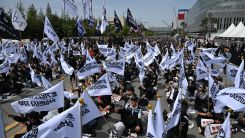
Samsung's 50,000-Worker Walkout Begins May 21 — AI Memory Bonus Dispute Puts $43 Billion at Risk
Samsung Electronics has initiated an emergency production management regime for its semiconductor division, exactly one week before a scheduled general strike.
-

Lotte Energy Materials Bets Big on AI Substrate Circuit Foil: A High-Value Strategic Pivot
South Korean materials manufacturer Lotte Energy Materials announced this week that it will quadruple annual circuit foil output — from 3,700 to 16,000 metric tons by 2027 — making the Iksan-based company the only South Korean manufacturer formally expanding capacity in the material that sits at the very front of the AI server supply chain.
-
LG Innotek Targets U.S. AI Chip Clients as Substrate Revenue Climbs 16%
South Korean electronics manufacturer LG Innotek arrived in Orlando, Florida this week to court North American chip designers at the IEEE Electronic Components and Technology Conference (ECTC 2026), running May 26–29 — a direct push into the U.S. supply chain for AI semiconductors at the precise moment the company's substrate business is posting its fastest growth in years.
-
Samsung Executives Apologize as 18-Day Walkout Threatens Global AI Chip Supply
Samsung Electronics' entire executive leadership issued a rare public apology in Seoul on Thursday after government-mediated wage talks collapsed, leaving more than 50,000 workers poised to walk off the job on May 21 in an 18-day walkout that analysts warn could disrupt the global supply of artificial intelligence memory chips and cost the company up to $11.7 billion in direct losses.
-

Nexon Q1 Revenue Rises 34% to $953M as ARC Raiders Passes 16 Million Sales, Drives 310% Western Revenue Surge
Nexon reported record quarterly revenue of ¥152.2 billion (approximately $953 million) on Wednesday, May 14, after its extraction shooter ARC Raiders sold an additional 4.6 million units in the first three months of 2026.
-

Hyundai Chair Euisun Chung Calls Tesla and BYD Pressure an Opening to Build Better EVs
Hyundai Motor Group Executive Chair Euisun Chung said on Thursday that intensifying pressure from Tesla and BYD is "a good opportunity to develop the specific features and products that our customers truly desire."
-
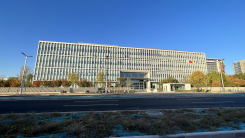
BOE Begins Gen 8.6 OLED Production This Month, Beating Rival Samsung Display to Market
China's BOE Technology Group has begun loading glass substrates into its Generation 8.6 OLED production line at the Chengdu B16 factory this month with Taiwanese laptop makers ASUS and Acer confirmed as the first customers.
-
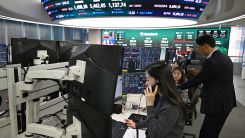
Samsung and SK Hynix Rise in Pre-Market as Trump-Xi Summit Lifts AI Chip Optimism Despite 3-Year Inflation High
South Korean memory chipmakers Samsung Electronics and SK hynix posted pre-market gains on Wednesday morning, May 14, as Wall Street's overnight rally in AI semiconductor stocks and the opening of the Trump-Xi Beijing summit lifted risk appetite on the Korea Exchange—even as a blowout April producer-price reading rattled bond markets.
-

South Korea's ICT Exports Hit All-Time Growth Rate of 125.9% in April, Driven by AI Server Chip Demand
South Korea's information technology exports reached $42.71 billion in April 2026 as global spending on AI server infrastructure sent demand for memory chips and solid-state drives to record levels.
-

Crimson Desert Earns $179M in Six Weeks, Pushing Pearl Abyss to Its Highest Quarterly Revenue on Record
Pearl Abyss posted record-breaking quarterly results on the back of strong sales from its new title Crimson Desert.
-

Apple Plans Transparent-Electrode Upgrade for 2028 Four-Edge OLED iPhone: Samsung, LG Display Production Lines
Apple has told its two Korean OLED suppliers to develop an indium-zinc-oxide cathode layer for a second-generation all-edge display, with LG Display already committing ₩1.106 trillion to the effort.
-

Samsung Revives Shelved Chip Programs as Worker Walkout Looms
Samsung Electronics' Device Solutions (DS) Division, now stabilized after a year-long emergency push to rescue its core memory business, is resuming investment in next-generation NAND flash, compound semiconductors, and advanced packaging — but an 18-day worker walkout looming as soon as May 21 could freeze those plans before they start.
-

Samsung Electronics Labor-Management Post-Mediation Talks Collapse Despite Government Intervention
Samsung Electronics' labor and management have ultimately failed to reach an agreement in the post-mediation process before the National Labor Relations Commission. The two sides had been undergoing post-mediation procedures since May 12 under government mediation but were unable to narrow their differences. With the union having announced a general strike for the 21st, forecasts are growing that the government may invoke its emergency adjustment authority.


