Articles by Allen Lee
-
LG Innotek Bets on AI Chip Substrates, Slimmer 5G Phones at ECTC 2026 Debut
AI chip substrate maker LG Innotek debuted at ECTC 2026 in Orlando on May 27, unveiling an embedded-chip FC-BGA substrate that cuts electrical resistance about 25% for AI accelerators and a world-first Cu-Post process making 5G smartphone substrates roughly 20% thinner, as it courts Intel, IBM, and other chipmakers.
-
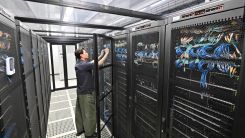
Naver AI Search Fund Pays 3,000 Creators Monthly to Feed Its AI Briefing
Naver AI search just got a $670 million bet: South Korea's search leader will spend 1 trillion won over five years and pay 3,000 creators a month through its new Naver Mate program, where payouts track how often a creator is cited in AI Briefing. The wager is that better training data, not a bigger model, wins the AI race against Google.
-
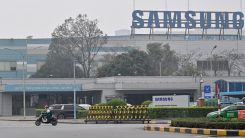
Samsung to Build $1.5 Billion Semiconductor Test Plant in Vietnam, Eyeing Legacy Memory Shortage
Samsung Vietnam chip plant: the $1.5 billion semiconductor test facility in Thai Nguyen Province will validate scarce legacy DRAM and NAND memory from November 2027. The plant targets a memory chip shortage created as Samsung and SK Hynix shift wafer capacity toward high-bandwidth memory for AI data centers, leaving older chips scarce.
-
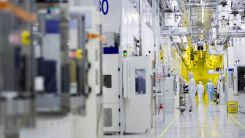
Samsung Foundry Chiplet Platform Eyes 2027 Production for Robotics, Automotive AI
Samsung foundry chiplet platform targets Physical AI production in 2027: Samsung Foundry and Cadence plan a tape-out of their pre-verified robotics and automotive chiplet platform in early 2027, with volume manufacturing on Samsung's 5nm SF5A process expected in the second half of that year, opening advanced chip design to Physical AI startups at lower cost.
-
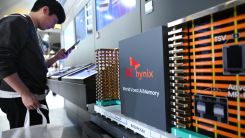
SK hynix HBM Cooling Breakthrough: iHBM Cuts Thermal Resistance 30% for HBM5
SK hynix HBM cooling takes a new form: the South Korean chipmaker embeds silicon-based elements directly inside the HBM package, cutting thermal resistance by more than 30 percent. The iHBM architecture targets AI memory overheating at the D2D PHY hotspot and slots into existing System-in-Package designs without customer redesign, with HBM5 as its launch generation.
-

Hanwha Solutions Cuts Rights Offering to $1.14 Billion, Plans U.S. Venture Fund Sale
Hanwha Solutions rights offering faces a third revision, cutting the total to $1.14 billion and forcing the Korean solar giant to sell U.S. venture fund stakes it had held since 2022. South Korea's Financial Supervisory Service twice rejected prior filings and minority shareholders protested the dilutive equity raise and debt-repayment focus.
-
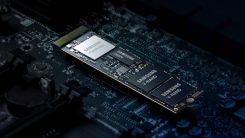
Samsung 900-Layer NAND Prototype Sets World Record: CMB Technique Doubles Stack Height
Samsung 900-layer NAND prototype — the world's first — uses Cell Multi-Bonding to fuse two 450-layer wafers into one chip, nearly tripling the 321-layer mass-production record held by SK Hynix and placing Samsung's 1,000-layer target for 2030 within reach.
-
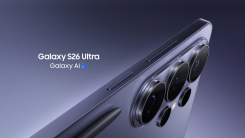
Samsung Leads Latin America, Middle East, Southeast Asia: Galaxy A Drives 37% Share
Samsung smartphone market share 2026 reached a three-year regional high in Latin America as Omdia data released Monday confirmed the company held the No. 1 position across Latin America, the Middle East, and Southeast Asia in Q1 2026, driven by dual-engine Galaxy S26 and Galaxy A series sales.
-
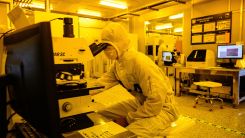
Semiconductor Substrate Warpage Has a New Korean Fix: Viacore and Aqlaser Target Glass
Semiconductor substrate warpage and signal loss now have a Korean challenger to glass: Viacore and Aqlaser's low-CTE polyimide substrate and molecular bonding process claim 40% lower manufacturing cost than glass, targeting AI server and 6G antenna-in-package applications.
-

Global TV Market Share Q1 2026: Samsung Leads, TCL Surges, Memory Costs Threaten Prices
Global TV market share in Q1 2026 reached its highest first-quarter shipment total since 2020, with Samsung holding 19.1% and TCL posting the fastest growth at 11.3% year-on-year. Rising memory costs are expected to push retail prices higher through the rest of 2026 — and both TCL and Hisense face active U.S. privacy lawsuits.
-

Samsung Google Smart Glasses Ship Fall 2026: Gemini Sees, Data Policy Missing
Samsung Google smart glasses launching fall 2026 give Gemini AI hands-free access to navigation, real-time translation, and your surroundings — but neither company has published a data retention policy for footage the 12-megapixel camera captures, the same gap that triggered a class-action lawsuit against Meta's Ray-Ban glasses in March 2026.
-

Samsung Electronics Bonus Deal Faces Shareholder Lawsuit as Micron, TSMC Widen Capex Lead
Samsung Electronics bonus deal faces a shareholder lawsuit and a Commercial Act challenge as the company commits 12% of chip division operating profit to employee payouts — while Micron tops $25 billion in capex and TSMC targets $56 billion, raising questions about Korea's semiconductor competitiveness.
-

Naver and Kakao Deploy ChatGPT and Claude Code Together: Inside South Korea's Dual-Stack Enterprise AI Shift
Enterprise AI strategy is splitting in two: Naver and Kakao are deploying both ChatGPT for general productivity and Claude Code for software development, formalizing a multi-model approach that 43% of enterprise employees worldwide already practice informally. Here is how South Korea's biggest platforms are managing the dual-stack shift — and why vendor lock-in is the primary risk they are hedging against.
-

Olive Young Builds Internal AI Sandbox: Non-Developer Staff Now Build Their Own Tools
Olive Young AI strategy takes a workforce-first approach: South Korea's largest K-beauty retailer launched an internal AI sandbox and Gemini Enterprise deployment that lets merchandisers, marketers, and other non-developer staff build and test their own AI tools before production.
-
Kioxia NAND Flash Mass Production Accelerates: BiCS10 Target Puts Samsung and SK hynix on Edge
Japan's Kioxia has set the mass production of its next-generation NAND flash memory as a top priority for next year — a move that could help the company quickly narrow its technology gap with South Korean rivals Samsung Electronics and SK hynix, both of which have pushed back their own timelines for next-generation NAND
-

Samsung Bundles Memory With Foundry Pitch to Lure MediaTek From TSMC
Samsung Electronics Chairman Lee Jae-yong landed in Taiwan on May 21, 2026 — less than 24 hours after his company's labor union suspended an 18-day strike that threatened to remove up to 4 percent of global DRAM supply — and went directly to MediaTek's headquarters in Hsinchu for closed-door talks with Chief Executive Rick Tsai.
-
Samsung Chip Workers Vote on $400K Bonuses: Shareholders Sue to Block Payout
Some 89,000 Samsung Electronics union members began casting ballots Friday on a 2026 wage agreement that could deliver semiconductor workers up to 600 million won — roughly $400,000 — in performance bonuses this year, funded by the South Korean chipmaker's record-breaking windfall from the AI hardware boom.
-
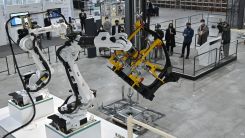
South Korea's AI Manufacturing Gap: 95% Say It's Essential, Only 28% Have Invested
South Korean manufacturers have the strongest conviction of any surveyed country that artificial intelligence is essential to staying competitive. That gap between declaration and investment, now quantified in a major global survey released this week, poses a direct threat to the export industries that power one of the world's most advanced manufacturing economies.
-
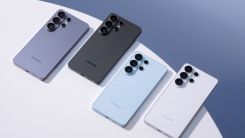
Galaxy S27 Pro Leaks With Ultra Cameras, No S Pen: Samsung Builds Its First Compact Flagship
The company is developing a Galaxy S27 Pro — a fourth mainline Galaxy S model — with a 6.47-inch OLED display, positioning it between the standard Galaxy S27 and the Galaxy S27 Plus in size. "Next year's Galaxy S27 is being prepared with four models, and the new model is scheduled to feature a new 6.47-inch display size that Samsung Electronics has never attempted before."
-
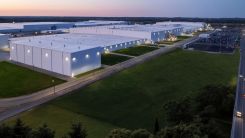
Ford Kentucky Plant Now Runs CATL Tech: Pentagon-Listed Chinese Firm Operates Inside U.S. Battery Factory
Seven days after Ford Motor Company formally launched Ford Energy, its new battery storage subsidiary, the automaker announced its first commercial contract: a five-year, up-to-20-gigawatt-hour supply agreement with EDF Power Solutions North America, signed May 18, 2026.
-
Samsung Electro-Mechanics Wins $1B Silicon Capacitor Deal: Murata-TSMC Duopoly Faces New Rival
Samsung Electro-Mechanics disclosed on May 20, 2026, that it had signed a contract worth 1.557 trillion won to supply silicon capacitors to an undisclosed U.S. technology company developing next-generation AI chips. This is the company's first large-scale, long-term order since designating silicon capacitors a core new business for the AI era.
-

Samsung GaN Discrete Devices Fail Customer Benchmarks: Foundry Line Launches July
Samsung Electronics delivered gallium nitride (GaN) power semiconductor samples to multiple customers earlier this year and received no purchase orders in return, according to industry sources cited May 20 by The Elec. The chips failed to meet required quality and performance standards — specifically falling short on on-resistance targets — and never reached mass production.
-
AWS Launches Physical AI Frontier Program in South Korea, Backed by $8.46 Billion Investment
Amazon Web Services unveiled a new accelerator for Korea's physical AI industry on Wednesday at AWS Summit Seoul 2026, pairing the launch with a reaffirmation of what it calls the largest greenfield foreign investment ever made in Korea — 12.6 trillion won, or approximately $8.46 billion, committed through 2031.
-

Micron Posts Permanent Seoul HBM Design Roles, Targeting Samsung Engineers as Strike Resolves
U.S. memory chipmaker Micron has launched a recruitment push for senior high-bandwidth memory (HBM) design engineers in South Korea, offering Seoul-based roles in a market long dominated by Samsung Electronics and SK hynix.
-

OCI Energy Breaks Ground on 480 MWh Texas BESS, Claiming Up to 40% Federal Tax Credits
OCI Energy, the San Antonio-based subsidiary of South Korean conglomerate OCI Holdings, broke ground May 19 on the Alamo City Battery Energy Storage System (BESS) in southeastern Bexar County, Texas — one of the largest standalone battery storage facilities among the first major projects to begin building under the federal tax credit structure established by the One Big Beautiful Bill Act.
-

Uber Becomes Delivery Hero's Top Shareholder, Joins Naver in $5.3B Bid for Baemin
Uber Technologies became the largest shareholder in Germany's Delivery Hero on May 18, 2026, disclosing a 19.5% stake — plus options for an additional 5.6% — in a move that gives the ride-hailing giant a blocking minority over the German parent of South Korea's dominant food delivery app, Baemin.
-

Samsung Electronics Averts 48,000-Worker Strike With Bonus Deferral Deal: Member Vote Runs May 22–27
Samsung Electronics and its labor union reached a tentative agreement on 2026 wage and performance bonus terms just hours before a general strike was set to begin. The breakthrough came after the company agreed to delay — by one year — a contentious change to how performance bonuses are distributed across loss-making divisions, which had been the central sticking point in the talks.
-
Kakao Workers Authorize Strike at Five Affiliates, Threatening KakaoTalk Service for 45 Million Users
Workers at five Kakao affiliates voted Wednesday to authorize strikes, bringing South Korea's dominant messaging platform one step closer to its first-ever headquarters walkout — and the tens of millions of users who depend on KakaoTalk for payments, ride-hailing, and daily communication one step closer to a potentially nationwide disruption.
-
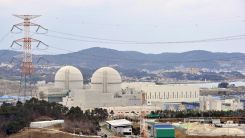
South Korea Wins ISO Lead Role to Write First Global Nuclear Plant Decommissioning Rules
South Korea secured the right Monday to author the world's first international rulebook for dismantling nuclear power plants, a standards victory that positions Seoul to set the terms of competition in a global decommissioning market worth roughly $10 billion a year and growing.
-
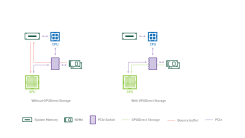
Nvidia's Vera Rubin Will Let GPUs Command Storage Directly: Opening the Path for 16× AI Memory Capacity
Nvidia plans to introduce an architecture in its upcoming Vera Rubin platform that lets GPUs issue storage commands without going through the CPU at all — a shift that a prominent semiconductor researcher says could set the stage for a new class of flash memory offering more than sixteen times the capacity of today's high-bandwidth memory stacks.


